Google's new military and AI alliance sets 'any lawful government purpose' as standard
A New Era of AI and Military Collaboration
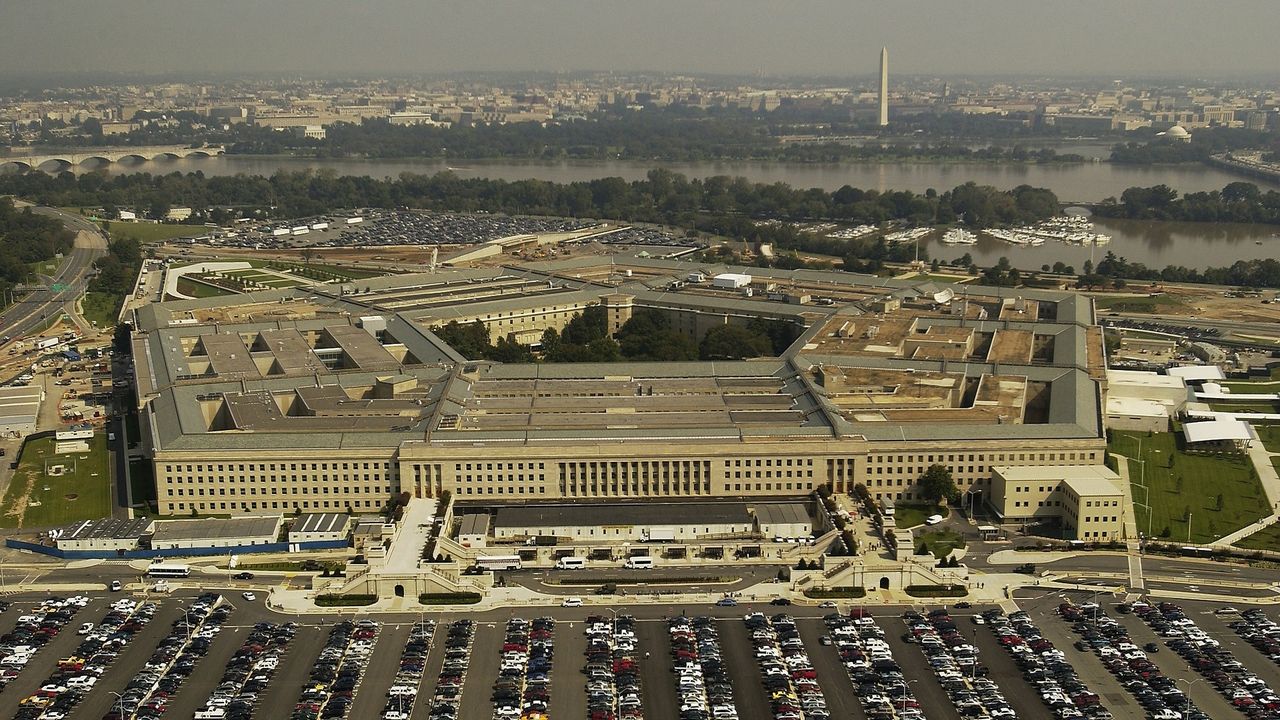
Google is reportedly in discussions with the U.S. Department of Defense to integrate its AI models into classified military environments. This development marks a significant shift in Google’s approach to working with the military, especially considering its past hesitations. Companies like OpenAI and Anthropic have already begun navigating similar partnerships for their AI technologies.
According to a report from The Information, Google and the U.S. Department of Defense are exploring ways to deploy the company's most advanced AI models within classified military settings. This collaboration represents a milestone in Google's relationship with the Pentagon and signals a thawing of relations between AI developers and national security organizations.
The timing of this move is not coincidental. As AI models evolve into something more akin to strategic infrastructure than regular software, the scope of these conversations has expanded significantly. The potential agreement would not restrict Google's AI tools to specific tasks but would make them available for "any lawful government purpose," according to an individual involved in the discussions.
While the language used is broad, it carries sweeping implications. These AI models can analyze intelligence, shape strategic planning, and influence military decisions on a global scale. This development sets the stage for a deeper shift in how AI companies define their role in national security, raising concerns even before considering studies that highlight how AI models can become overly focused on nuclear threats.
Google’s Second Act with the Pentagon
Google's relationship with military AI has always been complex. Its withdrawal from Project Maven in 2018 was driven by employee protests and led to the creation of AI principles aimed at guiding future decisions and reassuring both employees and the public.
The current negotiations suggest that these principles are being reinterpreted rather than abandoned. Allowing classified use for "any lawful government purpose" gives Google room to maintain that it is operating within legal and ethical boundaries while still opening the door to a wide range of applications.
This hasn't stopped internal criticism. Hundreds of employees have already signed a letter urging leadership to reject what they describe as dangerous military applications of AI. Google’s leadership appears to be betting that participation offers more control than distance. By working with the Pentagon, the company can attempt to shape how its models are deployed. However, the risk is that once the door is open, it is difficult to close.
The Pitfalls of OpenAI and Anthropic
OpenAI has already moved into similar territory, agreeing to arrangements that allow government use of its models under broad legal guidelines while maintaining internal safety frameworks. The company presents this as a pragmatic compromise, earning some support along with plenty of skepticism from consumers and the resignation of its head of robotics.
Anthropic has taken a more cautious path, at least in public. It has emphasized stricter limits on surveillance and weapons-related uses, leading to very public conflicts with the Pentagon and calls for calm from OpenAI CEO Sam Altman.
There is little room for a clean ethical stance that doesn't involve walking away entirely. Refusing too much could risk being sidelined, while accepting too much could lead to losing control over how technology is used.
The phrase "any lawful government purpose" becomes a kind of compromise language in this environment. It satisfies government requirements for flexibility while allowing companies to anchor their decisions in existing legal frameworks. What it does not do is resolve the deeper question of how the military should and will use AI.
The Battle of Military AI
Supporters of military AI often argue that improved intelligence and faster processing can reduce uncertainty and prevent unnecessary harm. In a competitive global environment, they also claim that failing to adopt these tools would create its own risks.
However, the difficulty lies in the fact that AI isn't just speeding up existing tools. The models can generate plausible but incorrect answers. They reflect biases embedded in their training data but sound confident when they should be cautious.
This is problematic enough in consumer apps. An AI's flawed recommendation or slightly inaccurate summary won't lead to anyone dying. But when weapons of war come into play, the stakes are much higher. It's also harder to track responsibility when AI is part of the decision-making process. The model provides analysis, the operator interprets it, and the institution acts on it. Each step is connected, but none of them fully owns the outcome.
That ambiguity is not new, but AI amplifies it. The systems are powerful enough to influence decisions while remaining opaque enough to complicate explanations after the fact.
The Future of AI Development
The emerging pattern across Google, OpenAI, and Anthropic suggests that the next phase of AI development will be defined as much by contracts as by algorithms. Agreements with governments determine where the technology can go, how it can be used, and who gets access to its most advanced capabilities.
The industry appears to have reached a point where opting out is no longer a simple option. Once one major company agrees to broad terms like "any lawful government purpose," others face pressure to follow or risk losing relevance in a critical market. The result is a gradual normalization of military AI partnerships, even among companies that once positioned themselves as reluctant participants.
There is no single outcome that resolves all of these tensions. That little phrase signals where AI development is going, and how far it's already come.
