Tech expert dissects Xeon using blowtorch and knife
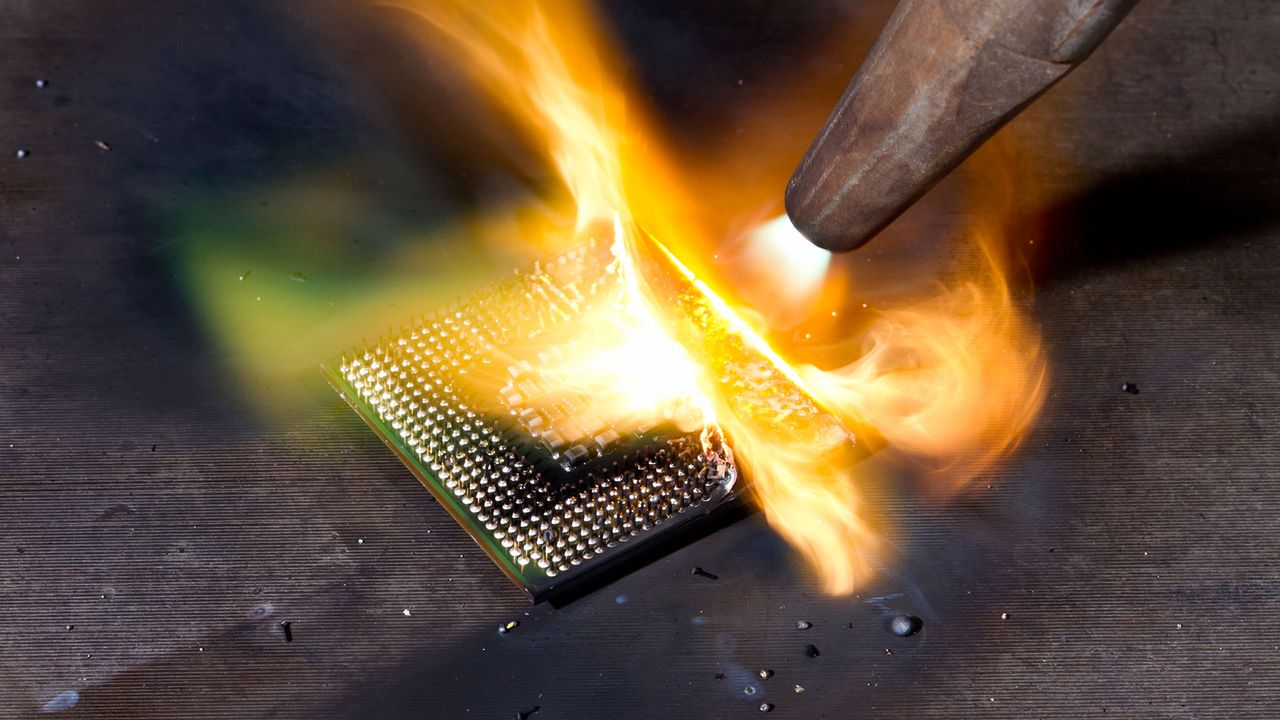
A unique tech channel has recently caught the attention of many with its unconventional approach to delidding CPUs and revealing the silicon underneath. In a recent video, the Hackinator demonstrates the process of delidding an Intel Xeon Silver 4110 processor. The video showcases the removal of the die and the etching away of remaining material to expose the intricate patterns of the silicon. While similar processes have been seen before, the Hackinator’s method stands out for its bold and unorthodox techniques, using tools such as a butcher knife and a blowtorch.
The Xeon processor is first placed on a wooden chopping block. The process begins by driving washers around the screw heads into the wood, effectively clamping the chip in place and preventing any movement. This sets the stage for what follows, which can only be described as a form of digital torture.
The next step involves the use of a hot air soldering gun mounted on a tripod. This tool helps weaken the solder or glue that holds the integrated heat spreader (IHS) in place. It's at this point that the Hackinator truly lives up to their name, as they proceed with a Gerber hunting knife and a flat-edged screwdriver. The prying is rough and not done with the precision typically associated with such tasks. The result is a processor that will no longer be used for its intended purpose.
Once the IHS is removed, the Hackinator adds a metal frame and reattaches the grip screws to the substrate. More heating and prying follow, eventually revealing the silicon sliver. However, it isn't fully freed until a blowtorch is used to burn away the substrate.
After the scorched die is liberated, the next step is to clean away soot and residue using a spray and a toothbrush. With this completed, the Hackinator prepares some fine etching paste. This is applied and brushed onto the silicon die, seemingly removing a protective layer that obscures the underlying structure.
Compared to previous die shots, which are often the result of more clinical and precise methods involving meticulous lapping stages, the Hackinator's work appears rough. However, when viewed under a powerful microscope, the intricacies of the Xeon Silver silicon die become apparent. There is some evidence of material that wasn’t entirely removed, but the results achieved through this brutal methodology are surprisingly good.
This kind of content is sure to appeal to those interested in the inner workings of technology and the creative methods used to explore them. For more stories like this, consider following relevant channels and platforms that share such unique insights.
