Are European Car Brands Losing Ground to China?
The Changing Landscape of the Automotive Industry in China
For many years, European automakers viewed China as a prime market for growth. Companies such as Volkswagen, BMW, Mercedes-Benz, Audi, and Porsche entered the Chinese market with global prestige, engineering expertise, and strong brand recognition that appealed to Chinese consumers. However, recent developments have shown a significant shift in this dynamic.
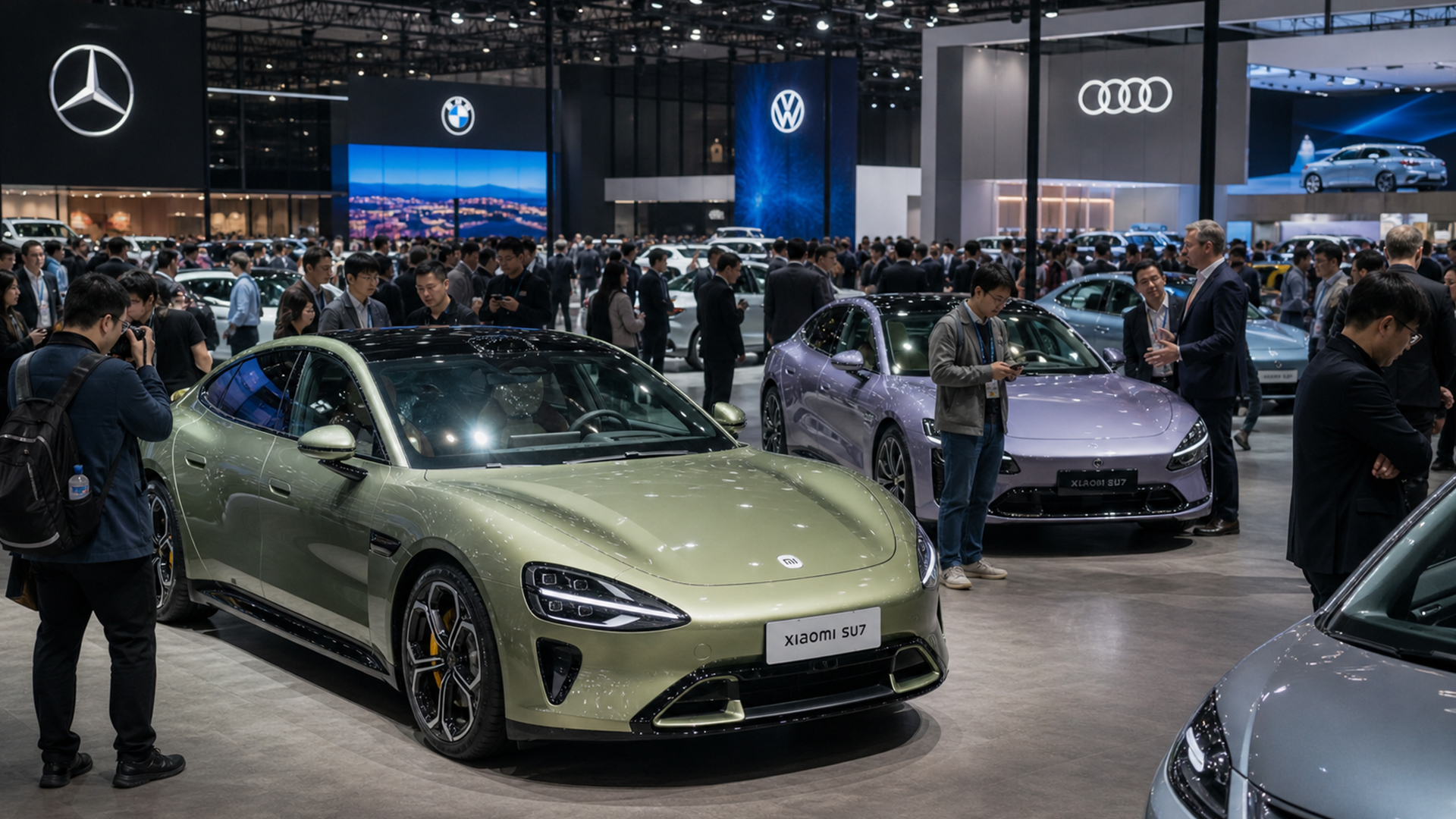
At Auto China 2026, it became evident that Chinese automakers are no longer just catching up—they are setting the pace in several key areas. This change has prompted European brands to rethink their strategies, adapting to new challenges and forming partnerships to stay competitive.
The Gap in Speed and Software
One of the most significant advantages that Chinese automakers hold is their speed and digital capabilities. While European companies still excel in traditional aspects such as ride quality, safety, luxury materials, and brand heritage, they face challenges in keeping up with the fast-paced evolution of software-defined vehicles and smart cabin technologies.
Chinese brands are leading in areas like voice assistants, driver-assistance systems, and battery technology. For example, companies such as Huawei, CATL, and BYD showcased impressive innovations at the event. Huawei introduced AI and safety systems, while CATL presented batteries capable of over 1,000 kilometers of range and ultra-fast charging. These advancements highlight the urgency for European automakers to adapt.
In a market where consumer electronics-like updates and features are expected, the traditional five-to-seven-year product cycle of European brands seems outdated. The pressure to deliver constant software improvements, semi-autonomous functions, and intelligent cabin systems is forcing European automakers to reconsider their approach.
Volkswagen’s Shift Toward Localization
Volkswagen serves as a clear example of how European automakers are adjusting their strategies. Once dominant in China, the company now faces a challenge from younger buyers who perceive its brand as more suitable for older generations. To counter this, Volkswagen has embraced localization, co-developing electric models with Chinese partners like Xpeng.
The ID. UNYX 08, an electric SUV developed in collaboration with Xpeng, represents Volkswagen’s “in China, for China” strategy. The company plans to launch over 20 new-energy models in 2026 and 50 by 2030, showing a commitment to closing the gap created by faster-moving Chinese competitors.
Mercedes Navigates a Roller Coaster Market
Mercedes-Benz, another major player, is also rethinking its approach. Despite its prestigious status, the brand faces increasing competition from Chinese premium EV makers. Companies like Geely and Nio are targeting the same luxury segment with lower prices and advanced technology.
Mercedes has responded by planning seven new models for China by 2027 and developing advanced driver-assistance systems in partnership with Chinese tech firms like Momenta. This move reflects the broader trend of European automakers relying on local partnerships to remain relevant in the evolving Chinese market.
Audi’s Dual Identity Strategy
Audi has taken a unique approach by creating a sister brand called AUDI, tailored specifically for the Chinese market. This brand, designed to appeal to younger buyers, highlights Audi’s recognition of the need for a different identity in China. The AUDI models will be built on a platform jointly developed with SAIC and designed to meet the specific needs of Chinese consumers.
This strategy underscores how seriously European automakers are taking the challenge posed by Chinese competitors. By splitting their brand identities, Audi acknowledges that the traditional European premium formula may not be sufficient in the digital-first era.
BMW’s Emphasis on Cooperation
BMW has made it clear that withdrawing from China is not an option. CEO Oliver Zipse emphasized that ignoring China would risk future economic success, highlighting the importance of cooperation with Beijing. This sentiment reflects a broader reality: China is not just a sales market but a hub for critical developments in EVs, batteries, software, and supply chains.
While BMW does not believe Chinese brands are unbeatable, it recognizes the need to learn, partner, and compete directly in the Chinese market. This shift in mindset marks a significant change from past strategies.
The Broader Implications
The gap between European and Chinese automakers varies by category. In areas such as brand heritage, engineering depth, and safety culture, European brands still hold an advantage. However, in China-specific EV development, software speed, and price-to-technology value, many European brands are behind their Chinese counterparts.
This gap is not just measured in years but in product rhythm. Chinese automakers can develop and launch products faster, integrate domestic suppliers more effectively, and align more closely with the expectations of Chinese consumers.
The Premium Market Becomes a New Battlefield
The threat extends beyond affordable EVs. Chinese automakers are now targeting Europe’s premium brands, launching models that compete with Porsche, BMW, and Mercedes-Benz. This shift poses a significant challenge, as European automakers have historically relied on the premium end of the market for pricing power and profitability.
The real danger lies in the cultural differences between European and Chinese automakers. Chinese brands operate more like technology companies, embracing rapid iteration, short product cycles, and aggressive pricing. European brands, built around engineering discipline and long development cycles, may struggle to keep up.
Expanding Challenges Beyond China
The pressure on European automakers is not limited to China. Chinese brands are expanding into Europe, with their share of car sales growing significantly. Despite tariffs and regulations, Chinese EVs remain competitive, challenging European automakers on their home turf.
This dual-front pressure means European brands must defend their market share in China while also protecting their position in Europe against the rising influence of Chinese competitors.
Partnerships as a Survival Strategy
One of the most significant shifts in the industry is the willingness of European automakers to form partnerships with Chinese companies. From Volkswagen working with Xpeng to Audi collaborating with SAIC, these alliances reflect a new mindset focused on sourcing speed and digital capability from China.
While this does not mean European automakers have surrendered, it indicates a recognition of the real advantages held by Chinese competitors. Cooperation is becoming essential for survival in an increasingly competitive landscape.
The Cultural Challenge
The greatest risk for European brands is not just technical but cultural. Chinese automakers are reshaping the automotive industry with a focus on innovation, agility, and digital integration. European brands, built on tradition and consistency, may find it difficult to adapt to this new environment.
Auto China 2026 served as a warning: the industry is moving faster than traditional systems can handle. European automakers must evolve quickly to remain relevant in a market that rewards speed and innovation.
A New Era for European Automakers
European automakers may be behind in certain areas, but they are not defeated. Their strengths in engineering, global networks, and brand equity remain real. However, the challenge is whether they can move quickly enough to close the gap.
Auto China 2026 highlighted the urgency for European brands to adapt. The gap is no longer theoretical—it is visible on the show floor, in sales numbers, and in the way younger buyers view cars. For European automakers, China is no longer just a market to win; it is the exam they cannot afford to fail.
