Scottish startup creating a 'Tinder' for filmmakers and investors
The Founders of My SMASH Media Explain Why Early-Stage Startups Should Focus on Solving Real Industry Problems
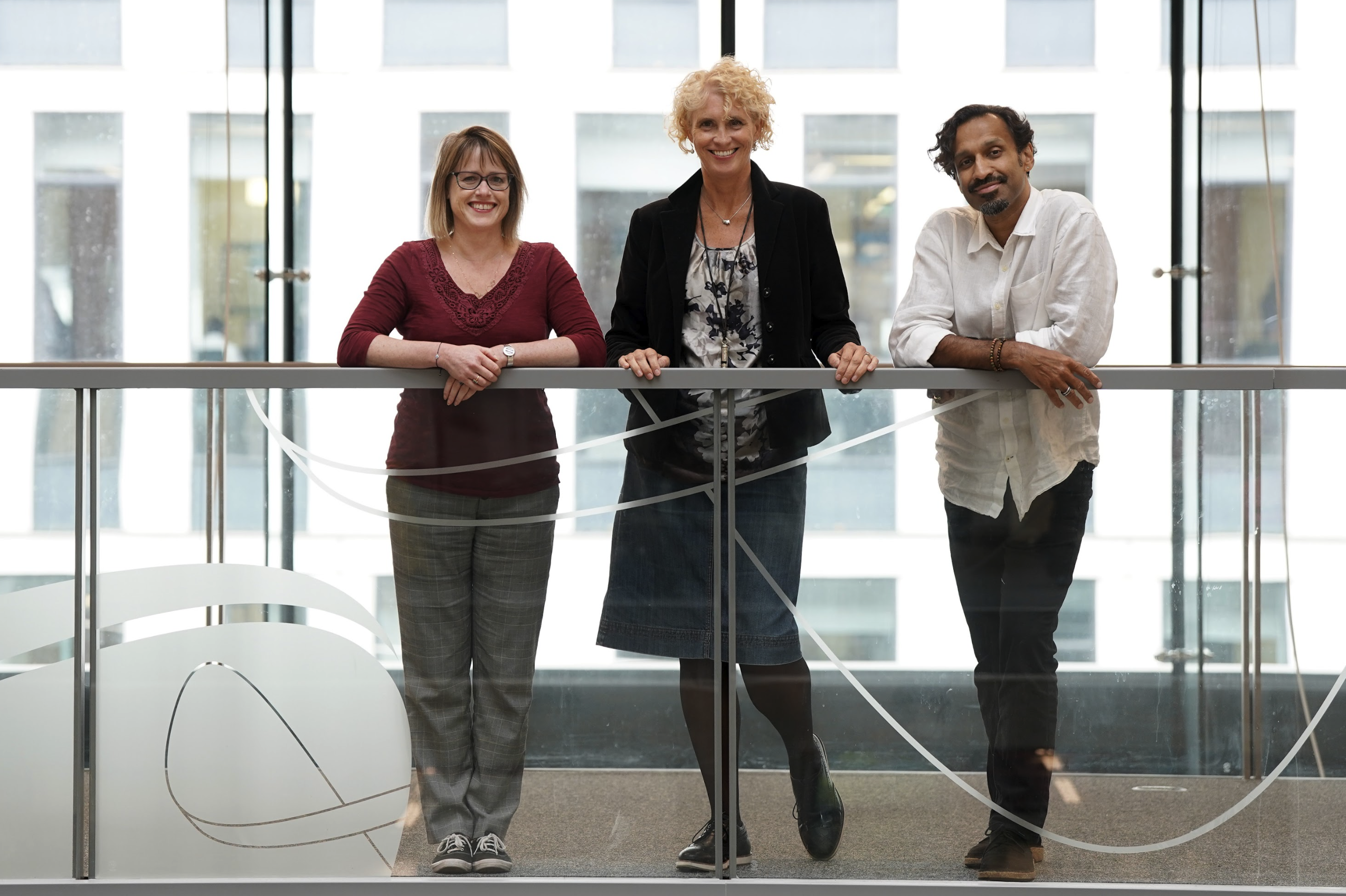
When Fiona Gillies and Christine Hartland began discussing the idea that would eventually become My SMASH Media, it did not start with a pitch deck. Instead, it began with frustration. Both founders had spent years working as producers in the film and television industry, navigating a system that often relied heavily on personal networks and lunch dates to discover new projects.
While the industry thrives on creativity and new ideas, the path for creators trying to get projects in front of decision-makers has traditionally been slow, opaque, and difficult to access. It was during a conversation while preparing to attend the Galway Film Festival that the pair began to reflect on these challenges and question why technology had not yet addressed them.
“We were talking about the problems that we had faced as creators and the problems we faced as producers,” Fiona said. “And we started asking why those problems had not been solved by technology.”
From that conversation emerged the concept behind My SMASH Media, a platform designed to help creators and commissioners find each other more efficiently by matching projects with buyers based on their specific needs.
The founders later joined forces with Mahesh Ramachandra, a digital product expert, to build the technology behind the platform. At its core, the platform aims to address one of the most persistent challenges in the creative industries, namely how to identify and evaluate new intellectual property at scale.
Traditionally, broadcasters, production companies, and studios rely on established relationships and existing networks to source projects. While this system can work for experienced producers, it often means that talented creators outside those networks struggle to gain access to commissioning opportunities.
Christine Hartland describes the platform as shifting the focus away from who someone knows and back onto the strength of the project itself. “What we’ve done is put the focus on the project,” she says. “It’s about finding the right project that fits a brief. The person with the right idea might come from somewhere completely unexpected.”
By structuring project submissions and analysing them through artificial intelligence, the platform is designed to help buyers filter large numbers of potential ideas and identify those that match a specific brief. The technology developed by the company includes a matching tool which scans submissions and highlights projects that closely match what a broadcaster, studio, or production company is seeking.
Those results are then reviewed by a human team with industry experience before being presented as a curated slate of potential projects. For the founders, the aim is not to replace human judgement but to improve the efficiency of discovery within an industry that generates thousands of potential ideas every year.
Growth and Expansion
The company has grown quickly since launching the platform. It now has users in more than 100 countries and almost 9,000 creators registered on the system. Much of that growth has been organic, driven by word of mouth within the creative community.
“We’re in an industry where people share information,” Fiona says. “Word of mouth is important, and building trust has been central to what we do.”
Trust is particularly significant in a sector where intellectual property is the foundation of value. The platform has been designed to protect creators’ ideas, ensuring that projects remain secure while still allowing industry buyers to discover them.
Alongside its growth among creators, the company has also begun to attract interest from broadcasters and studios seeking new sources of intellectual property. The next stage of development will focus on expanding the user base, increasing the number of matches between creators and buyers, and further developing agentic AI tools.
The founders are targeting around 20,000 users by the end of the year while continuing to build traction across the UK and European markets. While the platform has global potential, the founders say Scotland has played an important role in supporting its early development.
The company has worked with organisations including Scottish Enterprise and participated in the University of Edinburgh’s AI accelerator programme. It has also received support through Innovate UK funding, which helped develop the first iteration of the platform during lockdown.
Despite this support, fundraising has not always been straightforward. Fiona says one challenge has been that some investors feel unfamiliar with the economics of the creative industries. “People often assume they don’t understand the creative industries,” she says. “But if you’ve watched something you enjoy or read a book you love, then you already understand the value of storytelling.”
Lessons for Early-Stage Founders
For the founders, the business ultimately comes down to facilitating the exchange of intellectual property. “All SMASH is doing is trading IP,” Gillies says. “We are bringing together the people who sell IP and the people who buy IP.”
As the platform continues to expand, the company believes tools like SMASH will increasingly become part of the infrastructure that underpins the creative economy. For early-stage founders watching from outside the sector, the company’s story offers a broader lesson: the strongest startups often emerge from a deep understanding of the problems within a specific industry.
Key Takeaways
- Solve a real industry problem – Startups are strongest when they address challenges founders have experienced first-hand. Deep industry knowledge can help identify gaps that others overlook.
- Focus on the idea, not the network – Many industries rely on established relationships. Platforms that open access and allow ideas to be judged on merit can unlock new opportunities.
- Use technology to manage complexity – Tools such as artificial intelligence are most effective when they help filter large volumes of information while still allowing human judgement to guide decisions.
- Build visibility early – Press coverage, industry events, and strong networks can help early-stage businesses build credibility and attract users.
- Find the right partners – Launching a startup can be demanding. Working with trusted co-founders can provide support, resilience, and a broader range of expertise.
