Japan's Military Embraces Low-Cost Cardboard Drones
Japan’s Minister of Defense, Shinjirō Koizumi, recently shared on X that the country has started using expendable drones made by AirKamuy. These drones, developed by a Japanese startup, are now being used as aerial targets by the Japan Maritime Self-Defense Force. This marks an important step in Japan’s broader strategy to increase the use of unmanned systems within its military.
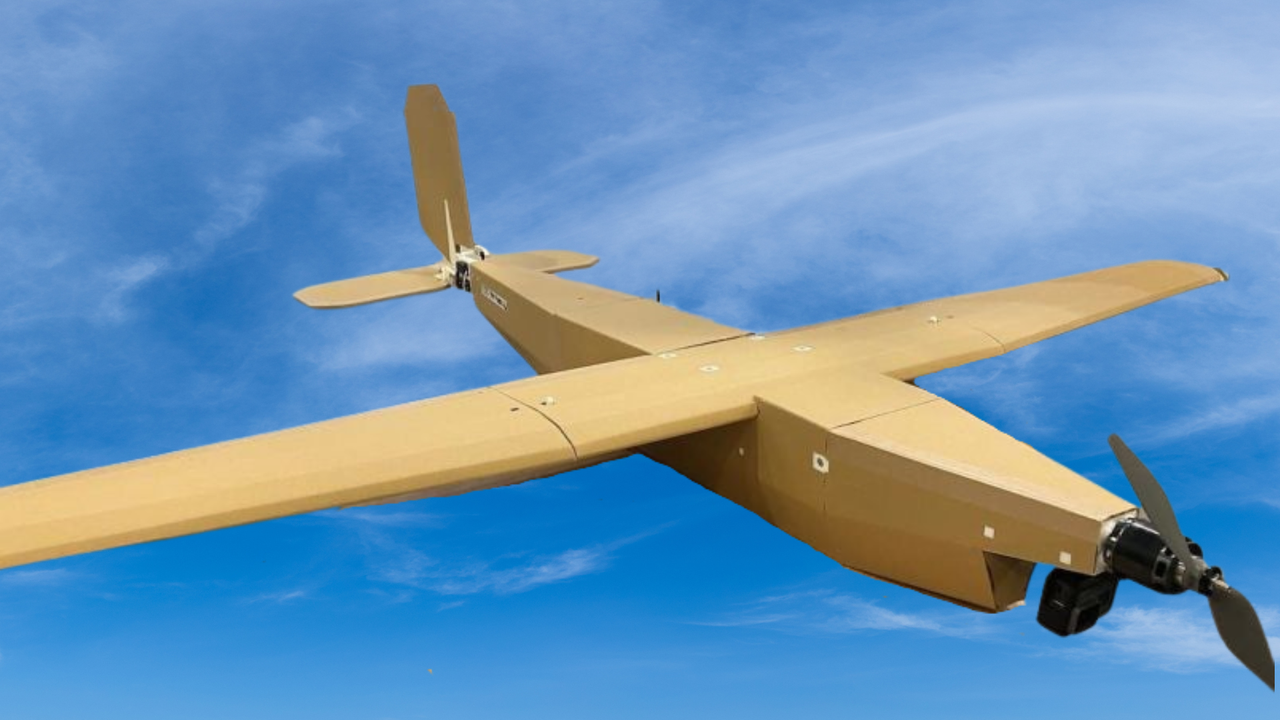
The drone in question is called the AirKamuy 150. It is a lightweight, fixed-wing aircraft constructed mainly from corrugated cardboard with a water-resistant coating. Unlike traditional military drones that use costly composite materials and specialized aerospace manufacturing, the AirKamuy 150 is designed for affordability and mass production.
Cost-Effective Design
One of the most notable features of the AirKamuy 150 is its low cost. Each unit reportedly costs between $2,000 and $2,500. That is significantly lower than conventional military drones, which can range from tens of thousands to millions of dollars. Even Iran’s Shahed drones, known for their use in the Ukraine conflict, cost roughly $20,000 to $50,000 each — potentially ten times more than the AirKamuy model.
AirKamuy achieved this cost reduction by simplifying the drone’s construction. The use of corrugated cardboard instead of expensive aerospace composites or carbon-fiber airframes is a key factor. According to the company, this approach allows the drones to be manufactured using standard cardboard production facilities rather than specialized aerospace plants. This could enable rapid mass production during conflicts.
Performance and Functionality
The AirKamuy 150 can travel approximately 50 miles or stay airborne for around 80 minutes using an electric propulsion system. It can carry payloads weighing up to three pounds. The drones are prefab and can be assembled in five to ten minutes. They are also shipped flat-packed, allowing about 500 units to fit into a single shipping container.
At the Singapore Airshow earlier this year, AirKamuy Chief Engineer Naoki Morita described the platform as primarily intended for counter-drone operations. Beyond acting as aerial targets, the lightweight drones could be deployed in swarms to overwhelm air-defense systems, force enemy radar activation, absorb defensive fire ahead of more valuable assets, or carry small reconnaissance payloads, electronic warfare equipment, or limited munitions for one-way attack missions.
Strategic Advantages
AirKamuy CEO Yamaguchi Takumi highlighted the demand for low-cost drones that can operate in large numbers and over long distances. He stated that this model can be manufactured at any cardboard plant, ensuring high mass production capability and a robust supply chain.
Another potential advantage of the cardboard construction is its lower radar reflectivity compared to many conventional aerospace materials. While this does not make the drones invisible to radar, it may make them harder to track, especially when operating in large numbers and at low altitudes.
Future of Drone Warfare
The broader concept behind the AirKamuy 150 reflects a growing trend in military thinking toward low-cost, expendable autonomous systems. Rather than focusing on protecting a few expensive platforms, militaries are increasingly exploring cheap drones that can be sacrificed during reconnaissance, decoy, interception, or attack missions.
Recent conflicts have demonstrated this shift. In Ukraine, both Russian and Ukrainian forces have used large numbers of low-cost drones for reconnaissance and direct attacks. Similar tactics involving inexpensive unmanned systems have also emerged in conflicts across the Middle East.
Conclusion
The AirKamuy 150 may represent more than just an unusual cardboard aircraft. It could offer a glimpse into the future of industrial-scale drone warfare — one where vast numbers of cheap, rapidly replaceable autonomous systems define military operations.
Komentar (0)