The Evolution of Canon's Autofocus Technology
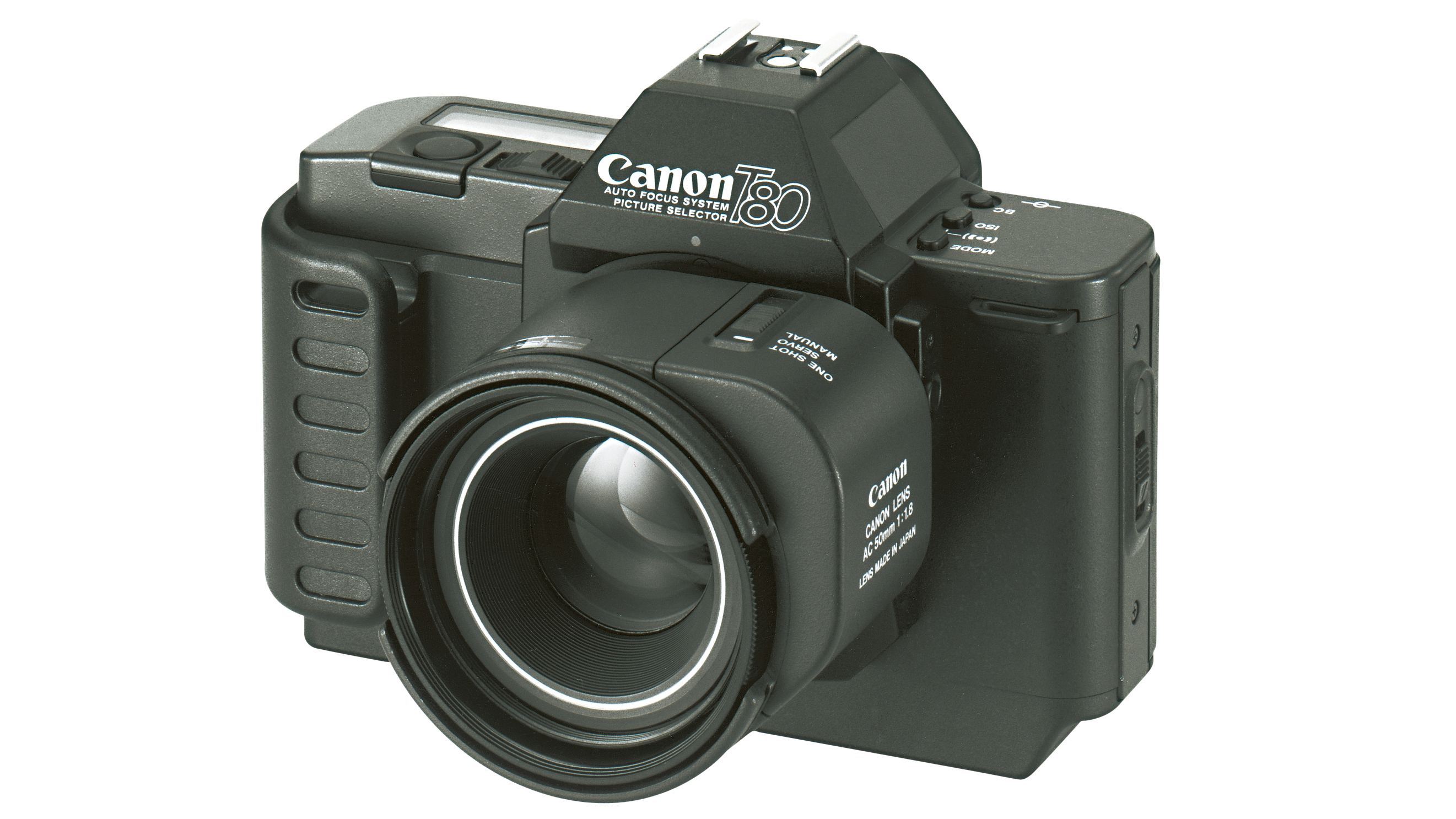
Canon's journey into the world of autofocus began with the T70, a manual focus camera that was well-received in the market. However, the company quickly realized that to stay competitive, it needed to embrace autofocus technology. In April 1985, Canon launched the T80, which featured an autofocus system based on its FD lens mount. Despite this innovation, the T80 did not achieve the success that Canon had hoped for. Its performance lagged behind Minolta's Maxxum 7000, which was dominating the early autofocus SLR market at the time.
The sales of the T80 were further hindered by the limited number of autofocus lenses available for the camera. Canon only offered three lenses: a 50mm f/1.8 and two zooms – a 35-70mm f/3.5-4.5 and a 75-200mm f/4. These limitations contributed to the T80 being discontinued after just 14 months. It marked the last significant use of the FD lens mount, and relatively few units were produced.
A New Beginning: The EOS System
By March 1985, Canon’s engineers recognized that adapting their existing FD mount for autofocus would be challenging and ultimately unsatisfactory. To overtake Nikon, the market leader at the time, Canon decided to start fresh. They aimed to design a system that prioritized autofocus from the ground up. This led to the development of the EOS (Electro Optical System) system, which took two years of intensive research and development.
The new EF lens mount was essentially a computer data port, allowing for electronic control of both focus and diaphragm. This approach enabled the use of compact, lightweight, and fast ultrasonic motors in the lenses. The design was revolutionary, offering improved reliability, lower costs, and lighter weight compared to previous systems.
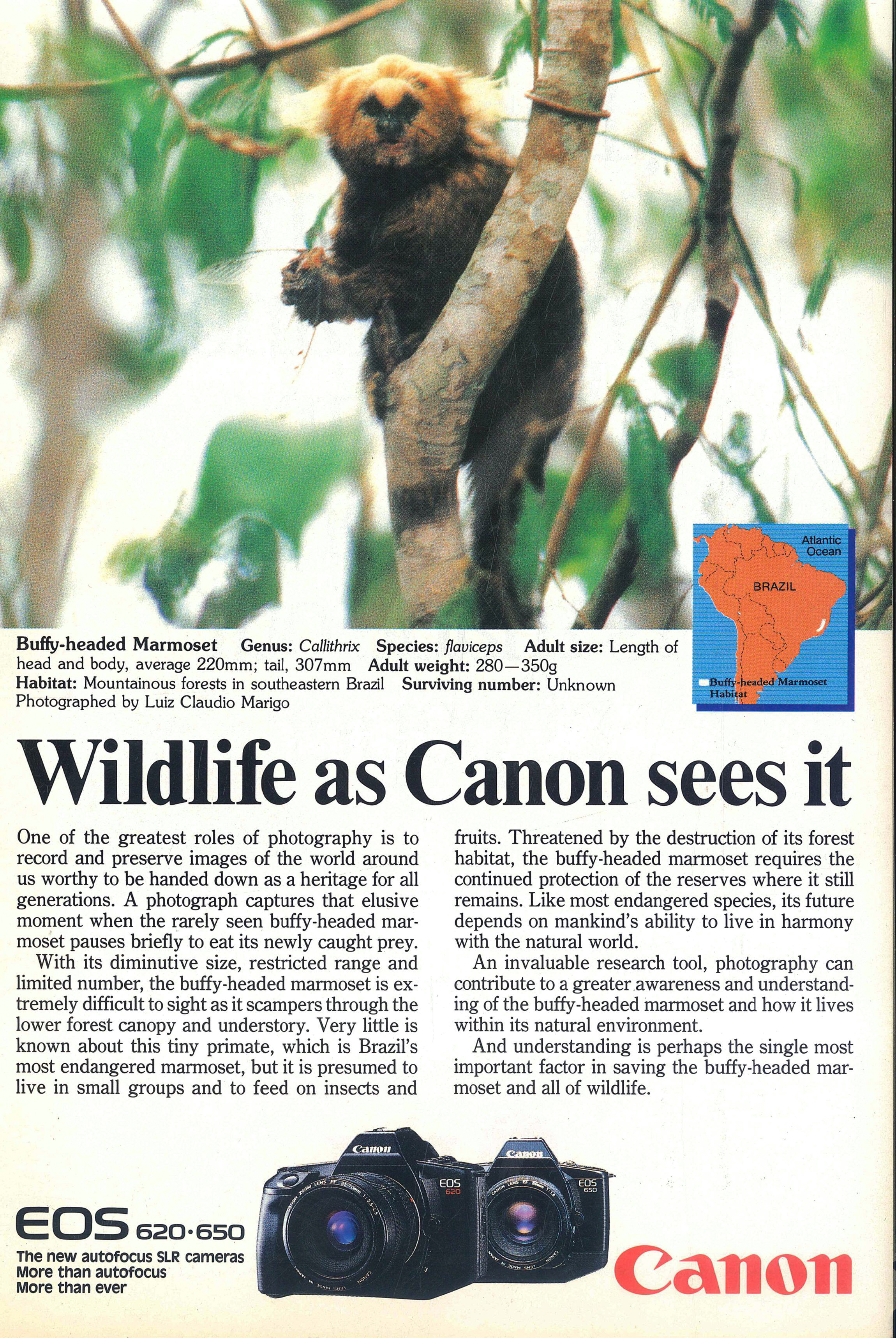
On March 1, 1987, marking Canon’s 50th anniversary, the company launched the EOS 650 with its new EF lens mount. At the time, the system offered only five lenses, including a fisheye, a 28mm, a 50mm, and a couple of zooms. Despite the limited selection, the design was robust and remains compatible with every Canon EOS EF lens ever made, with over 100 million lenses produced.
Features of the EOS 650
The EOS 650 was equipped with impressive features for its time. It boasted precise, high-speed phase detection autofocus, a built-in 3 fps motor drive, which was a significant advancement at the time. The camera also featured automatic ISO settings, fully automatic film loading and rewind, and a bright pentaprism viewfinder with 0.8x magnification and 94% field of view coverage. The viewfinder displayed essential information such as shutter speed, aperture, focus lock, and exposure compensation.
Additionally, the EOS 650 included a 6-segment evaluative (matrix) metering system, along with A, T, P, and Manual modes. These features made the camera highly versatile and user-friendly.
Expanding the EOS Lineup
Following the release of the EOS 650, Canon introduced the EOS 620 a few months later. This model added a faster shutter speed, with flash sync at 1/250sec and a top speed of 1/4000sec. The 620 also featured a back-lit LCD and automatic exposure bracketing. Notably, it lacked the confusing depth-of-field priority mode that was present on the EOS 650. In all other respects, the 620 and 650 were identical.
The EOS cameras quickly gained market share in Japan and Europe, and the US market followed shortly thereafter. Canon never looked back, solidifying its position as a leading camera manufacturer.
A Bold Move with Long-Term Benefits
Putting everything under electronic control was a bold move by Canon, as it rendered all previous Canon lenses and camera bodies obsolete. This decision initially upset some of Canon's established customers. However, the gamble paid off, and despite the recent shift to the newer RF mount for mirrorless models, EF lenses are still being manufactured by Canon, albeit in limited quantities, nearly 40 years later.
A Historical Milestone
One final interesting fact is worth noting. In 1992, nuclear scientist and avid photographer Silvano de Gennaro used his EOS 650 to capture a photo of four young singers at the CERN Hardonic Music Festival. Tim Berners-Lee, the inventor of the World Wide Web, asked de Gennaro to scan the photo for him, which he then posted on an early website. This photo is often cited as "the first photograph uploaded to the internet," although this is not entirely accurate. De Gennaro's photo was the first picture posted to the web simply for fun, not work. As de Gennaro himself stated:
“It was the photo that opened the web to life.”
And it was shot with a Canon EOS 650.
Komentar (0)