The removal of HMS Victory’s masts has been described as a “great success” by the teams involved in the conservation project.
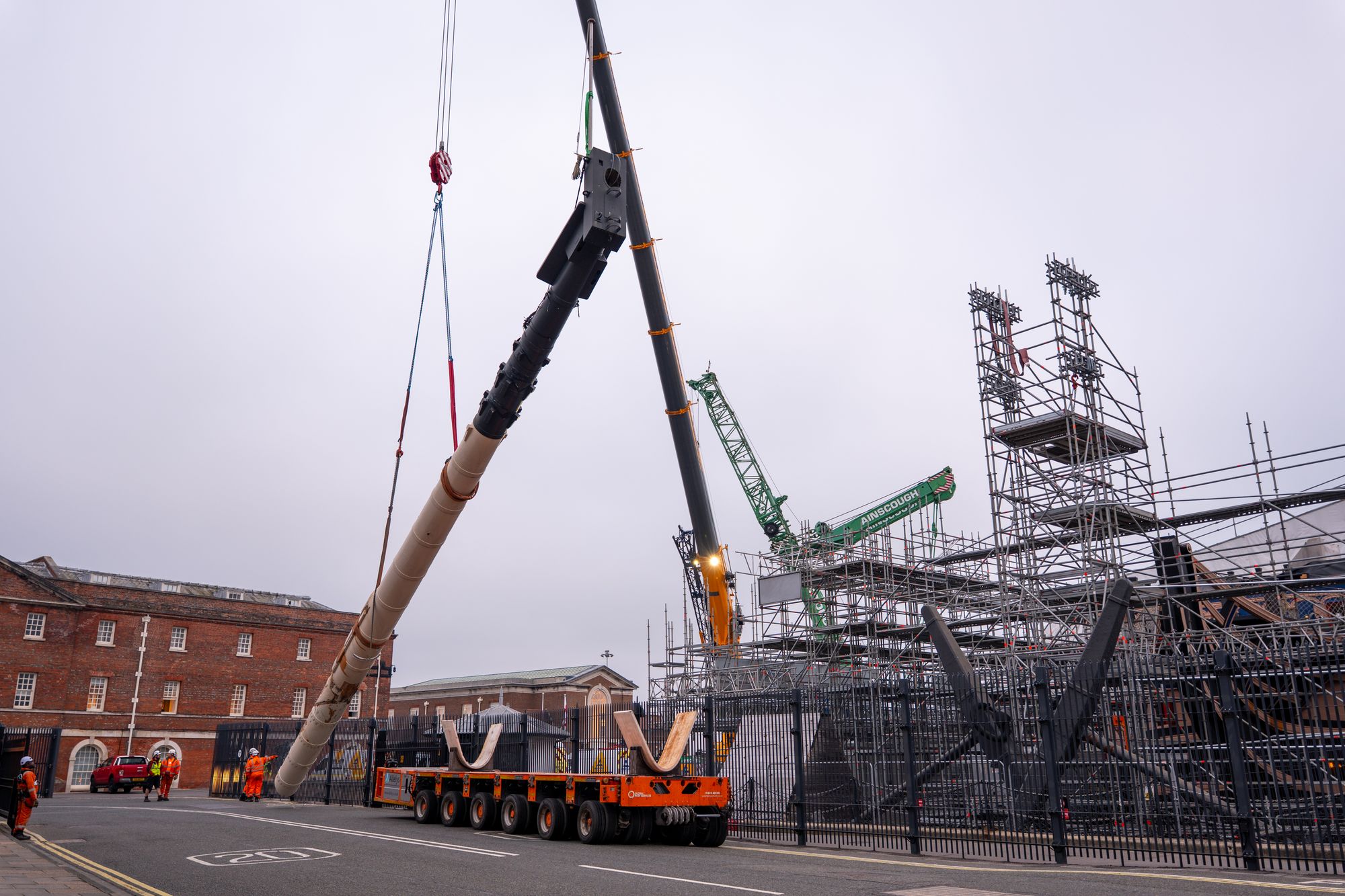
For the first time since the 1890s, the iconic warship HMS Victory is without all of her masts as specialist teams continue their work on a multi-million-pound mission to preserve the historic vessel. This marks a significant milestone in what is known as The Big Repair, a ten-year conservation project aimed at ensuring the survival of the world’s oldest commissioned warship.
A Historic Vessel in Need of Care
HMS Victory, which served as Admiral Horatio Nelson’s flagship during the Battle of Trafalgar in 1805, was the site of one of the most pivotal moments in British naval history. It was on the ship’s quarterdeck that Nelson was fatally shot by a French sniper on October 21, 1805, cementing his legacy as one of Britain’s greatest naval heroes.
Originally launched in 1765 at Chatham, the ship fell into disrepair by the 1920s and was moved to dry dock in Portsmouth, Hampshire, in 1922. Since then, it has remained a symbol of maritime heritage and a crucial part of the National Museum of the Royal Navy (NMRN) collection.
The Big Repair Project
The Big Repair project involves replacing rotten timber with modern materials, removing all masts to reduce structural stress, and covering the vessel in a massive, three-storey scaffold "tent" to protect it from the elements. This ambitious effort is expected to last until 2033.
The recent phase of the project focused on the removal of the rear, front, and bow masts using a 750-tonne crane. This process took place over three nights and involved more than 50 specialists working meticulously to ensure the operation was carried out safely and precisely.
Patrizia Pierazzo, HMS Victory deputy project director, praised the team’s efforts, stating: “The removal of the mizzen mast and bowsprit was a great success and lessons learned from the foremast removal earlier in the week really helped the team. This was a precise operation that required input from a wide range of specialists, and we’re very pleased with the outcome.”
Progress and Future Steps
The main mast was removed at the start of the programme in 2021, and now that the remaining masts have been taken down, the project team can move onto the next phase, which includes constructing the large scaffolding structure that will be in place for the duration of the conservation work.
Andrew Baines, executive director of museum operations for NMRN, highlighted the significance of this moment, saying: “This is a key moment for The Big Repair project - being the first time Victory will have been without all her masts since the early 1890s.”
Keeping the Public Engaged
Visitors to the museum will also be able to follow this exciting chapter of the project. The team plans to publish behind-the-scenes films, short reels, and progress updates across official channels. Where conditions allow, footage will be released after each night of the works so audiences can track the operation step-by-step.
The removal of the masts is not just a technical achievement but a symbolic one, marking a new era in the preservation of HMS Victory. As the project continues, it remains a testament to the dedication of the teams involved and the importance of safeguarding our maritime heritage for future generations.
Komentar (0)