Rager VR review – battle robots and stay fit
The Evolution of Fitness in Virtual Reality
Virtual reality (VR) has long been a playground for immersive experiences, but it's also becoming a powerful tool for fitness. A new game for the PSVR2 is pushing the boundaries of this intersection by transforming first-person combat into a full-body workout. With swords and maces in hand, players are not just fighting digital enemies—they're working out to stay in shape.
The Kinetic Potential of VR
One of the most compelling aspects of VR is its ability to transport users into different spaces, making them feel physically present in a virtual world. This is achieved through precise tracking of arm and head movements, which are replicated in-game. Unlike traditional gaming, where players often sit back and rely on their thumbs, VR encourages more active participation. However, this kinetic potential comes with its own set of challenges.
The bulky headsets that come with VR systems can be uncomfortable, especially during extended play sessions. The plastic encasing your face may lead to sweat and discomfort, particularly when playing games designed to keep you moving. While future headset designs are expected to be lighter and more comfortable, current games like Rager are already pushing the limits of what VR can offer in terms of physical activity.
Rager: A New Kind of Combat Game
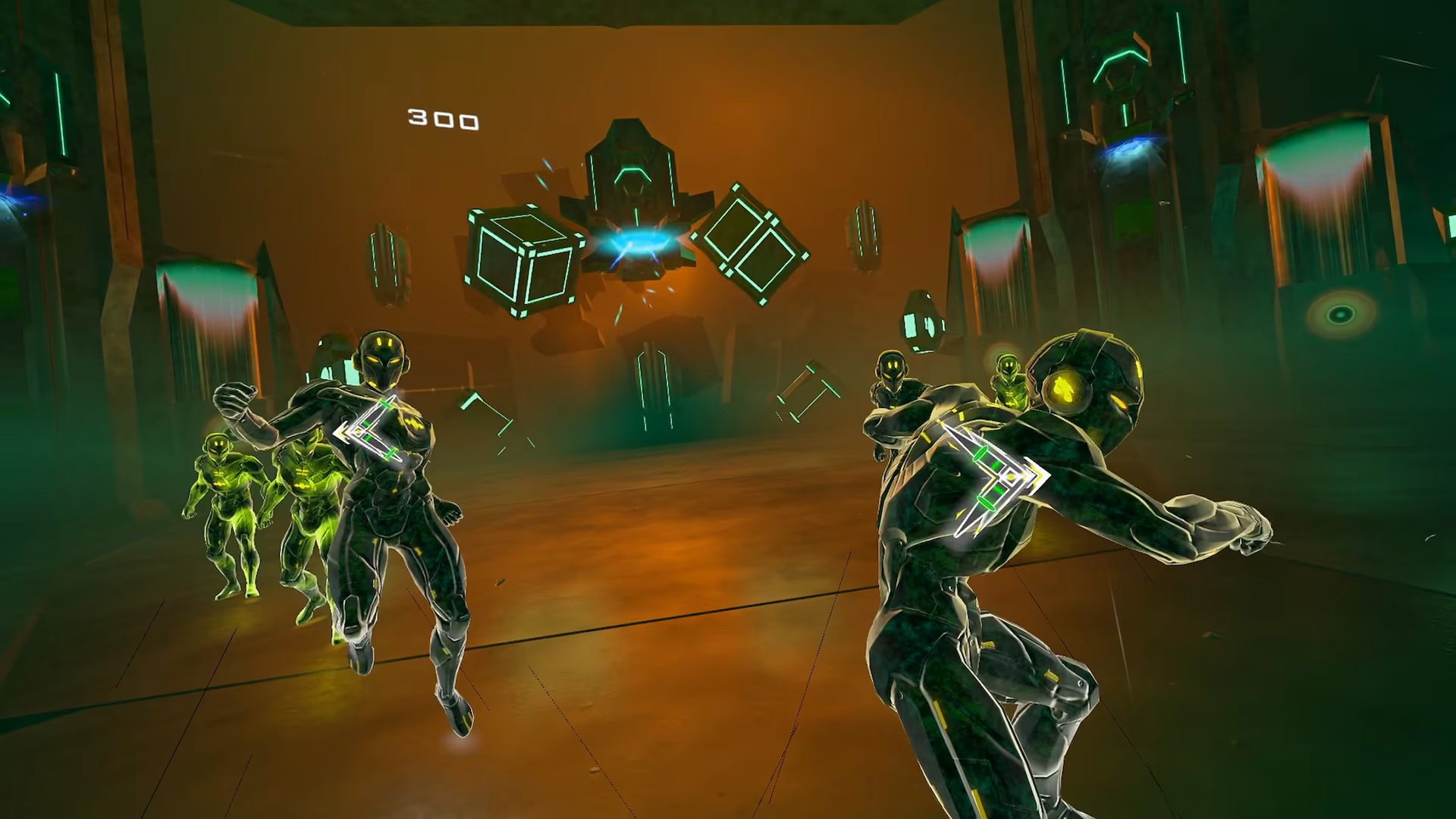
Rager is a rhythm-based combat game that draws inspiration from titles like Beat Saber and Pistol Whip. In this game, players use various weapons—swords, maces, claws, and two-handed weapons—to fight off digital attackers in time with an intense EDM soundtrack. The game takes place in a circular, neon-lit arena where muscular humanoid robots approach, launching kicks, punches, and melee attacks.
Players must navigate through three zones, each containing three levels and a boss battle. As they progress, they encounter a variety of weapons, all of which provide haptic feedback to enhance the experience. The sensory engagement is heightened by the electric crackle of the weapons and the tactile sensations of blocking and striking enemies.
Strategic Combat and Adaptive Play
The gameplay in Rager requires players to be strategic and adaptive. As robotic assailants leap at them, symbols appear in front of the enemies, indicating the angle and weapon needed to parry or attack. Many levels require dual-wielding, forcing players to combine different melee weapons to defend and attack effectively.
Each combatant has unique assaults and vulnerabilities, requiring players to adjust their strategies on the fly. This dynamic approach keeps the gameplay engaging and challenging, ensuring that players remain focused and active throughout the experience.
Navigating the VR Environment
Originally released on the Meta Quest, Rager offers a seamless experience in VR. When playing on the PlayStation VR2, players must be mindful of the cable attached to the headset. To avoid getting tangled, players can use an analog stick to flick their viewpoint around and face enemies coming from behind. However, this feature can be somewhat unreliable, as the angle of rotation varies unpredictably.
While turning around is an alternative, it often results in the cable wrapping around the player’s legs by the end of each level. Despite these minor issues, the game remains a compelling example of how VR can be used to promote physical activity.
Conclusion
Rager exemplifies the growing trend of using VR for fitness, blending entertainment with exercise in a way that is both engaging and effective. As technology continues to evolve, we can expect even more innovative games that push the boundaries of what VR can achieve. For now, Rager stands as a testament to the potential of virtual reality as a tool for staying active and healthy.
