Iran's Nuclear Program Simplified for All Readers
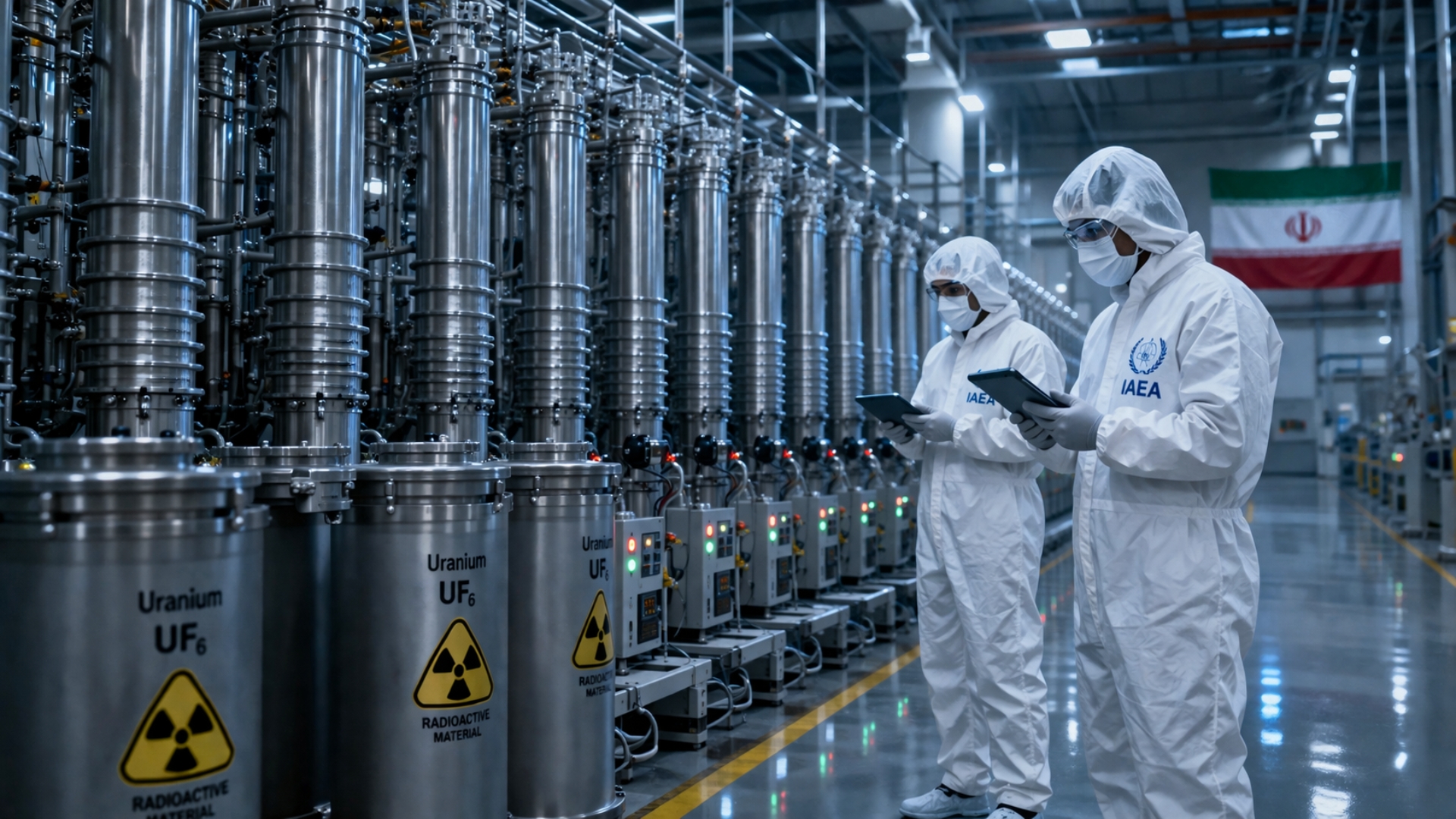
Understanding Iran’s Nuclear Program
Iran claims its nuclear program is solely for peaceful purposes, such as energy production, research, and medical applications. Under the Nuclear Non-Proliferation Treaty (NPT), Iran is permitted to engage in civilian nuclear activities, including uranium enrichment, provided these activities are under international safeguards and not diverted towards weapons development. However, concerns have persisted due to the nature of Iran’s program, which includes various activities, facilities, and unresolved questions that have raised doubts among the International Atomic Energy Agency (IAEA) and Western governments.
For general readers, the key issue lies in the dual-use nature of nuclear technology. While it can be used for peaceful purposes, some of the same technology can also bring a country closer to developing a nuclear weapon. This is why discussions about centrifuges, uranium stockpiles, and inspections are so significant. These elements serve as practical indicators that experts use to assess how close a country might be to acquiring nuclear weapons capability.
The Significance of Uranium Enrichment
Natural uranium contains only a small amount of the isotope necessary for most nuclear applications, so it must be enriched. Low-enriched uranium is suitable for fueling nuclear power plants, while higher levels of enrichment are typically used in research reactors. Weapons-grade uranium is generally considered to be around 90% purity. Iran has enriched uranium up to 60%, which is significantly higher than what is typically required for civilian power generation and much closer to weapons-grade than low-enriched uranium. Both Reuters and the Arms Control Association highlight this as one of the primary reasons for concern regarding Iran’s nuclear program.
It is important to note that enriched uranium alone does not equate to a usable nuclear weapon. A country would still need to further enrich the material and address challenges related to weaponization and delivery. However, producing and stockpiling uranium at 60% purity reduces the technical distance to a bomb option, which is why inspectors and governments view it as a critical threshold.
Key Nuclear Facilities in Iran
Natanz and Fordo are the most well-known sites for uranium enrichment in Iran. Natanz has been a central location for this activity, while Fordo is particularly sensitive due to its underground construction, making it more difficult to destroy or monitor through military pressure. Isfahan plays a crucial role in fuel-cycle work and the storage of nuclear materials, while Bushehr is Iran’s commercial nuclear power plant, built with Russian assistance and generally treated differently from other, more proliferation-sensitive sites.
These locations are essential because they serve different roles in the nuclear fuel cycle. Some facilities convert uranium, others enrich it, some support research, and others generate electricity. Public discourse often conflates these sites, but the primary international concern centers on those linked to enrichment capacity, stockpiles, and potential undeclared activities.
The Role of Inspections
The IAEA is the international organization responsible for monitoring whether Iran’s declared nuclear material remains in peaceful use and for investigating unresolved safeguards issues. Its reports indicate that the main challenge is not just what Iran has declared, but what inspectors are unable to fully verify. In its February 27, 2026 safeguards report, the agency stated that without Iran implementing the Additional Protocol, it cannot provide credible assurance about the absence of undeclared nuclear material and activities within the country.
This is the core of the dispute. A country may claim its program is peaceful, but inspectors require sufficient access, data, and cooperation to independently verify this. When monitoring is limited or access is restricted, uncertainty increases, leading to heightened risks of crisis, sanctions, or even military escalation.
The Impact of the 2015 Nuclear Deal
The 2015 nuclear deal, known as the Joint Comprehensive Plan of Action (JCPOA), did not eliminate Iran’s nuclear program but imposed limits on enrichment, stockpiles, and centrifuges while expanding monitoring to provide early warning if Iran moved toward developing a nuclear weapon. According to summaries by the Arms Control Association, these restrictions were intended to increase Iran’s “breakout time,” meaning the time needed to produce enough fissile material for a single nuclear weapon.
After the United States withdrew from the deal in 2018, Iran gradually violated many of its provisions. Since then, it has expanded its enrichment activities, installed more advanced centrifuges, and accumulated higher levels of enriched uranium. This history means that today’s debate is less about whether the old deal exists in practice and more about whether any new agreement can effectively cap the program and restore comprehensive monitoring.
The Future of Iran’s Nuclear Program
As of 2026, the overall situation is clear, although many details remain contested. Iran possesses significant nuclear expertise, a large and sensitive enrichment program, and stockpiles of highly enriched uranium that raise concerns among the IAEA and various governments. At the same time, Iran continues to publicly deny any intention to pursue a nuclear weapon, and diplomatic efforts focus on inspections, stockpile limits, and the fate of already produced enriched uranium.
For general readers, the main takeaway is straightforward: Iran’s nuclear program is not simply a story about the possibility of a future bomb. It is a story about capability, transparency, and trust. The more material Iran enriches and the less inspectors can verify, the greater the risk becomes for the region and global non-proliferation efforts.
