AI Crafts 100+ Real-World Designs in Seconds
The Rise of AI in Design: A New Era of Innovation
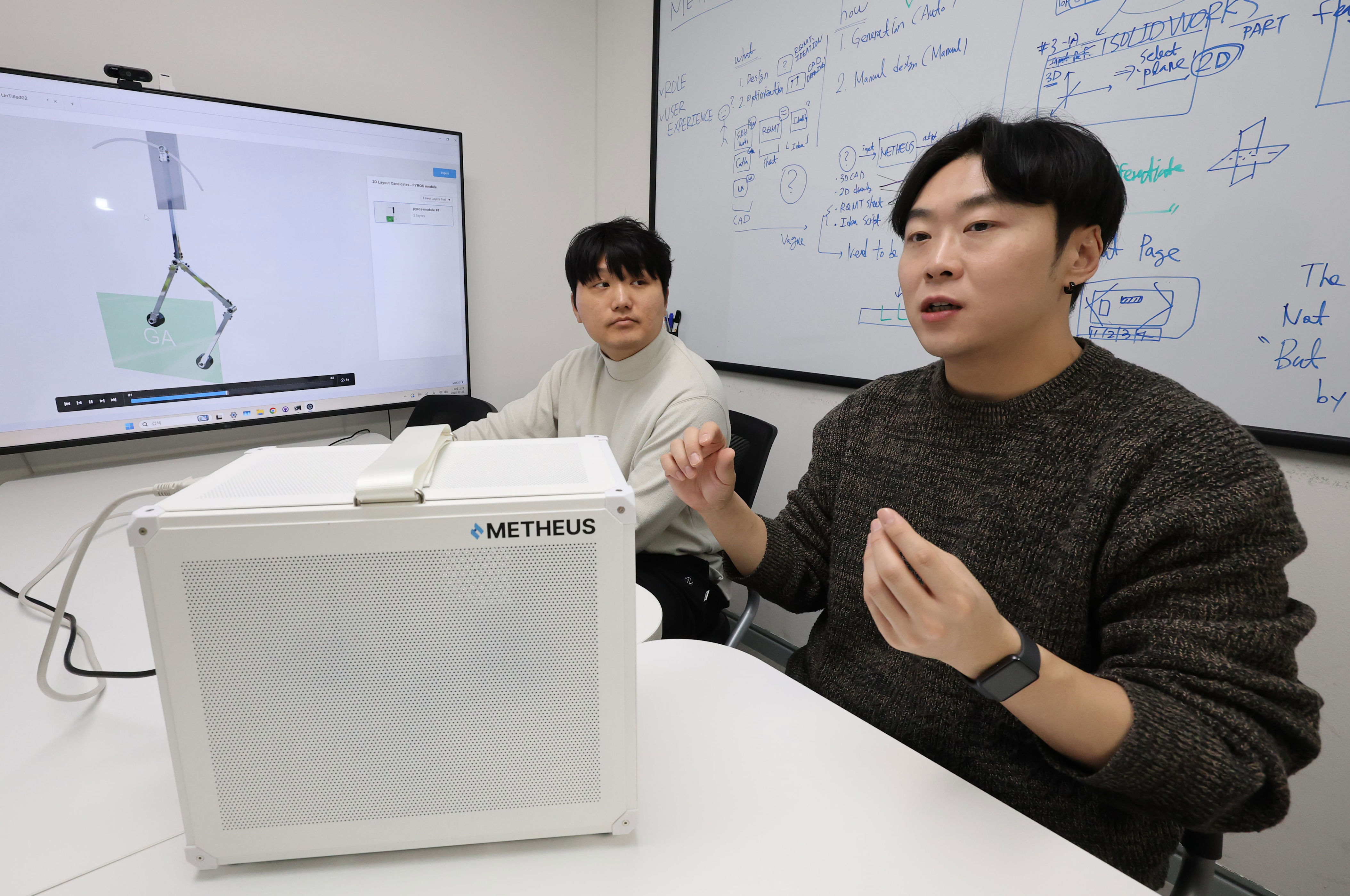
Last December, at Ideaocean’s headquarters in Gwanak-gu, Seoul, a groundbreaking event took place. Engineers and designers gathered around a computer screen displaying a wing-shaped blueprint. By setting moving and fixed areas on the blueprint and pressing the “generate” button, over 100 designs for movable airplane wings were created in just one minute. Each design was meticulously implemented with links (bones), joints (articulations), and actuators (muscles) to ensure they could function in the real world.
This impressive feat was made possible by Ideaocean’s AI design solution called “Meteus.” The system generates as many designs as desired, a task that previously required weeks of work by PhD-level engineers. Meteus is trained in the laws of physics, ensuring that all generated designs operate correctly in the real world. Kim Joong-ho, CEO of Ideaocean, explained, “Users don’t need to design directly; they just input conditions and choose from multiple designs as if shopping. In the future, we plan to develop it so that simply inputting ‘create a robot arm’ will generate the design.”
Generative AI is now entering the “design” domain, which is fundamental to all manufacturing. For years, design has been the realm of human experience and intuition. However, AI trained in physics is replacing tens of thousands of trial-and-errors with just minutes of computation. Instead of drawing designs one by one, users can now select the optimal design from AI-generated candidates.
AI-Powered Design Solutions
Another company making waves in this space is Nania Labs, founded by KAIST Professor Kang Nam-woo. The company operates an AI-based design solution called “Aslan X.” Aslan X predicts engineering performance in real-time during the design phase and, when a desired target performance is input, generates the optimal design meeting it in real-time. This tool is being utilized by companies including LG Electronics and LS Electric for design optimization.
The impact of such AI-driven solutions is profound. They not only speed up the design process but also allow for more innovative and efficient designs. By leveraging AI, companies can explore a wider range of possibilities and make data-driven decisions that were previously impossible.
The Future of Design
As AI continues to evolve, its role in design is expected to grow even further. Companies are investing heavily in AI technologies to streamline their workflows and reduce costs. With AI handling the repetitive and time-consuming aspects of design, human designers can focus on more creative and strategic tasks.
Moreover, the integration of AI into design processes is opening up new opportunities for collaboration between humans and machines. Designers can now work alongside AI systems to refine and enhance their ideas, leading to more sophisticated and functional designs.
Benefits for Businesses and Consumers
For businesses, the benefits of AI-driven design are clear. It reduces the time and resources needed to develop new products, allowing companies to bring innovations to market faster. Additionally, AI can help identify potential issues early in the design process, saving time and money in the long run.
Consumers also stand to gain from these advancements. With AI generating optimized designs, products are likely to be more efficient, durable, and user-friendly. This means better quality products at potentially lower prices, as companies can reduce their development costs.
Challenges and Considerations
Despite the many advantages, there are also challenges to consider. One of the main concerns is the need for skilled professionals who can effectively use and interpret AI-generated designs. While AI can generate designs quickly, it still requires human oversight to ensure that the final product meets all necessary standards and requirements.
Another challenge is the ethical implications of relying on AI for critical design tasks. Ensuring transparency and accountability in AI decision-making is essential to build trust and avoid potential risks.
Conclusion
The integration of AI into the design domain marks a significant shift in how products are developed and optimized. Companies like Ideaocean and Nania Labs are leading the way with innovative solutions that leverage AI to create efficient, functional, and cost-effective designs. As this technology continues to advance, it is likely to transform the design industry in ways we have yet to fully understand. The future of design is bright, and AI is set to play a central role in shaping it.
