Breathtaking Hubble photos unveil a star's final mysteries
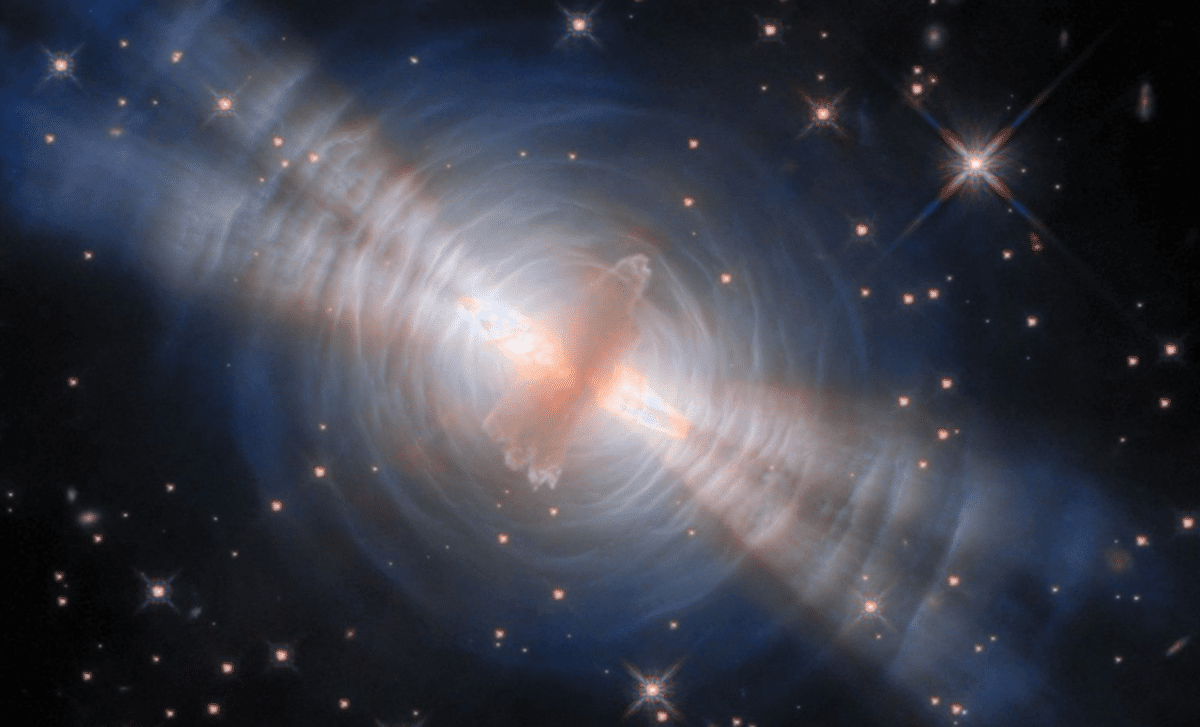
NASA’s Hubble Space Telescope has provided some of the clearest views of the Egg Nebula, a stunning cosmic structure located about 1,000 light-years away in the constellation Cygnus. The findings, released on February 10, 2026, reveal dramatic patterns of light and shadow shaped by a dying star, showcasing the intricate details of a nebula in its pre-planetary phase. As this stellar environment offers valuable insights into the death throes of stars like our Sun, the new Hubble images promise to deepen our understanding of the processes behind nebula formation and stellar evolution.
The Egg Nebula: A Glimpse into the Final Days of a Dying Star
The Egg Nebula, located about 1,000 light-years away in the constellation Cygnus, provides an exceptional opportunity to study the processes of stellar death. It is a pre-planetary nebula, a precursor stage of a planetary nebula, which forms when a star similar to our Sun sheds its outer layers. This dramatic phase, captured by NASA’s Hubble Space Telescope, showcases the complex interplay between gas, dust, and light surrounding the dying star.
In its final stages, a star like our Sun exhausts its fuel, causing it to expand and shed its outer layers. This results in the creation of a nebula, a glowing shell of gas and dust. The Egg Nebula is particularly important for astronomers because it offers a rare chance to study this transitional phase while the stellar processes are still fresh and ongoing. The latest Hubble images, obtained using the Wide Field Camera 3, reveal stunning details of the nebula’s structure, offering an unprecedented view of its gas and dust shells.
Hubble’s Unmatched Clarity: A Close-Up of the Cosmic Egg
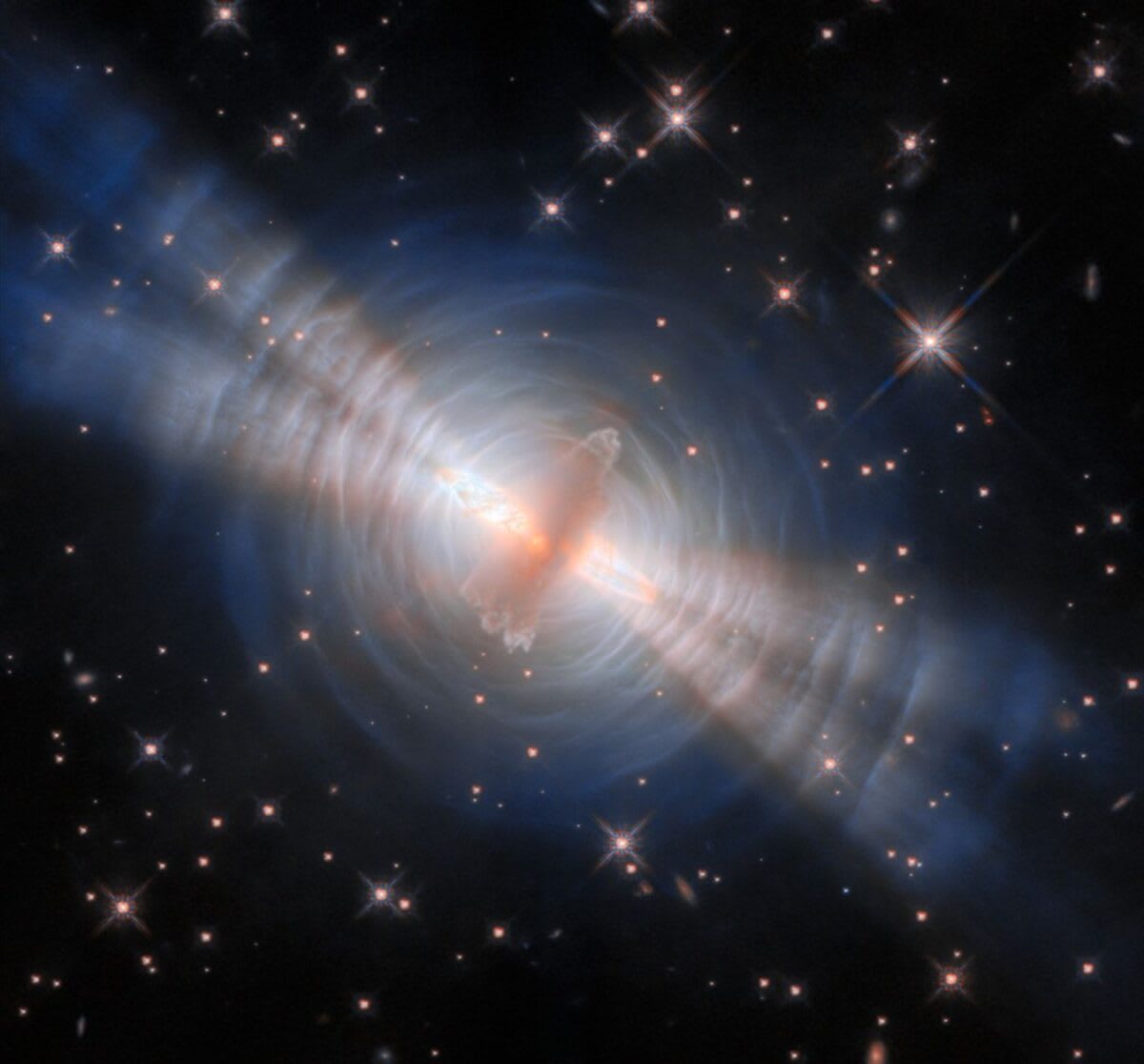
The Egg Nebula has been observed by Hubble on several occasions, but the new images mark the clearest view of its intricate structure yet. What makes this image so special is the combination of sharpness and depth that only Hubble can provide. According to NASA Science, the dust clouds surrounding the central star create a striking visual contrast, where the star’s light emerges through polar “eyes” in the dust, illuminating the surrounding gas and dust in an ethereal glow. These polarized beams highlight the complex symmetry of the nebula, making it look like an intricate cosmic egg.
The nebula’s symmetrical patterns are not the result of a violent event like a supernova explosion but instead indicate a coordinated process involving the star’s core and its surrounding material. The patterns suggest a series of sputtering events on the star’s carbon-enriched core, which is expelling material in a structured way. This discovery challenges our understanding of the mechanisms behind stellar death, providing vital clues about how stars like our Sun may end their life cycles.
The Importance of Studying Pre-Planetary Nebulae
The study of pre-planetary nebulae, such as the Egg Nebula, provides crucial insights into the processes that lead to the formation of planetary nebulae. During this brief transitional phase, which lasts only a few thousand years, the star’s outer layers are expelled, and the exposed core heats up, ionizing the surrounding gas. This ionized gas creates a glowing shell that can later give rise to new star systems, as the expelled material mixes with other gases in the universe.
Understanding this process is key to learning how the elements essential for life on Earth, like carbon and oxygen, were formed and distributed in space. In fact, the dust and gas expelled by dying stars ultimately seeded future star systems, including our own solar system. Without these elements, the formation of planets like Earth would not have been possible. Studying nebulae like the Egg Nebula allows scientists to trace the origins of the material that formed our planet and, by extension, life itself.
The Egg Nebula: Evidence of Gravitational Interactions
One of the most intriguing aspects of the Egg Nebula is the suggestion that there are hidden companion stars interacting with the dying star at its core. Hubble’s latest observations have revealed twin beams of light that illuminate the nebula’s polar lobes, suggesting the presence of gravitational interactions between the star and one or more companion stars. These companions, likely buried deep within the nebula’s thick dust, could be influencing the shape and behavior of the gas and dust shells expelled by the central star.
The gravitational pull from companion stars could be causing the nebula’s gas and dust to form in symmetrical arcs and lobes. This discovery challenges traditional models of stellar evolution and suggests that the dynamics of dying stars are more complex than previously thought. By studying these interactions, scientists can gain a deeper understanding of the forces that shape the final stages of a star’s life.
