Britain's Tank Spending: Ukraine's Smart Solution
The Future of Tanks in Modern Warfare
At the major Detroit auto show this year, the prize exhibit was the new Abrams M1E3. Many critics believe this will be the last new heavy tank ordered by the US Army – and that they had therefore witnessed the unveiling of the latest battlefield dinosaur. The UK is on the brink of committing to a similar battlefield beast. The new Challenger 3, a £11m monster of nearly 80 tons and fine-tooled for the digital age, is undergoing trials, but it is feared that the Government, in the new “welfare not warfare” mood of the Starmer leadership, may cancel it. The contract for full production is currently suspended and its fate is uncertain.
Almost a century after the first tanks entered the fighting on the Western Front, they are being seen as things of the past. A big reason is the bitter lesson from the fighting in Ukraine. Time and again, Russian and Ukrainian tanks, including versions of the Abrams M1 and Challenger 2, have been halted and trashed to scrap metal by drones, many of which cost less than the tank’s ammunition magazines.
Ukraine claims to have destroyed over 11,000 Russian tanks in just under four years of fighting. This is almost certainly a propaganda exaggeration – but verified reporting suggests that Russia has lost between 3,800 and 4,000 tanks. This is equivalent to 140 per cent of the Russian tanks available when the country launched its full-scale invasion of Ukraine on 24 February 2022.
One of Russia’s top strategists, General Yuri Baluyevsky, gave his verdict last month: “It is not clear what battlefield utility can be had from a vulnerable vehicle, with a limited armament, that approaches a fighter jet in cost.” Russia is already struggling to build or repair the 200 tanks it needs as frontline replacements each month, according to the Washington DC-based Institute for the Study of War.
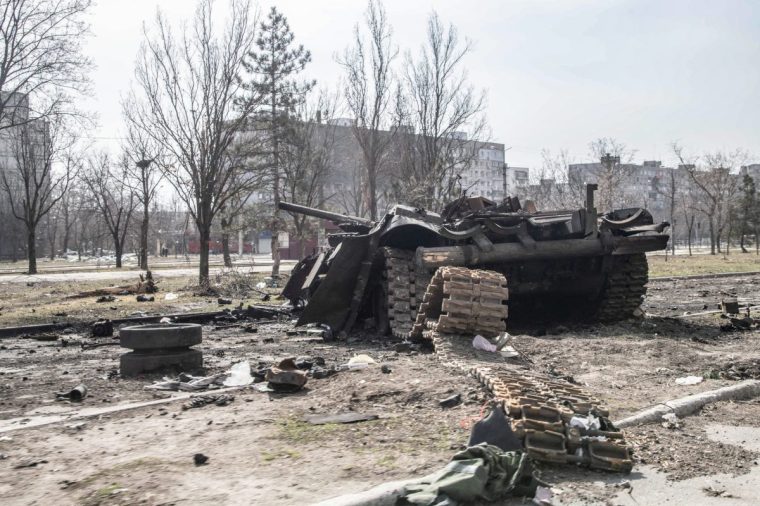
Of course, Ukraine has been careful not to divulge its own losses, which are considerable. But the failure of massed armour operation explains why Russian forces achieved so little last year – a gain of roughly 0.08 per cent of Ukrainian territory for a potential loss of over 415,000 battle casualties, killed, wounded and missing.
Both Russia and Ukraine have been skilled at outdoing each other with battlefield drones and the use of electronic warfare. This means the immediate battlefront stretches for nearly 825 miles and is at least 25 miles deep – a zone in which almost every movement by enemy forces and vehicles can be tracked and targeted.
This has led to serious questions about the future role of the tank – and its aerial equivalents, such as the Apache AH-64 and the Russian Mi-24 Hind and Mi-28 Havoc.
The first tanks, a British innovation, appeared at the Battle of the Somme in the summer of 1916. They were used at mobile pillboxes, moving at walking pace to protect infantry.
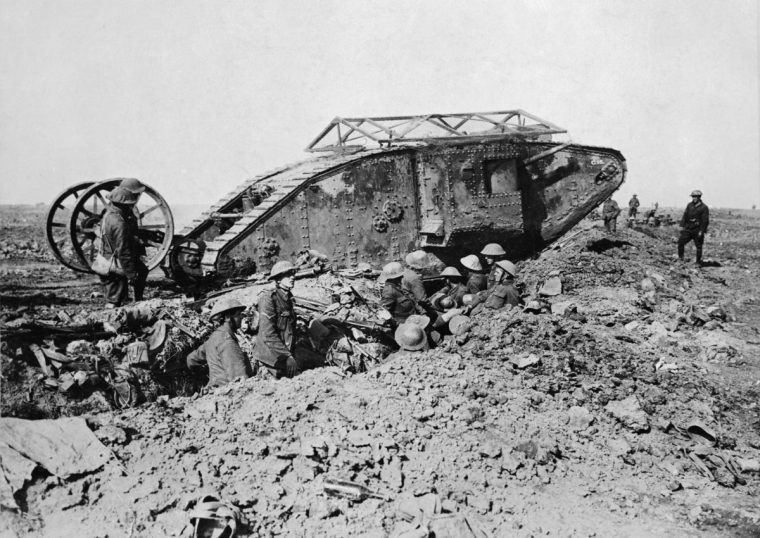
The following year, a massed force of tanks broke through the German lines at Cambrai, and despite the dreadful stalemate in the third Ypres Offensive, culminating in the mud and horror of Passchendaele, a new tactic was born that has lasted the best part of a century.
This tactic was the notion of a combined air and armour attack, born out of Cambrai and the successful air operation at Messines Ridge. The use of massed armour and supporting infantry, with close air cover, was perfected by an eccentric British officer called JFC “Boney” Fuller. His ideas were adopted enthusiastically by the German Wehrmacht in the late 1930s as the Blitzkrieg (Fuller himself became an enthusiastic fascist).
In the Second World War, large-scale tank action took place in North Africa, in Normandy and across Eastern Europe. Coincidentally, the biggest massed tank battles ever occurred in and around Kursk and Kharkov, Ukraine, in July and August 1943.
Towards the end of the last century, the US military produced its AirLand 2000 doctrine – little more than an upgrade on Blitzkrieg: massed tanks and artillery supported by helicopter gunships and preceded by heavy air attack. This was most notably used against Iraqi forces in Kuwait in 1991.
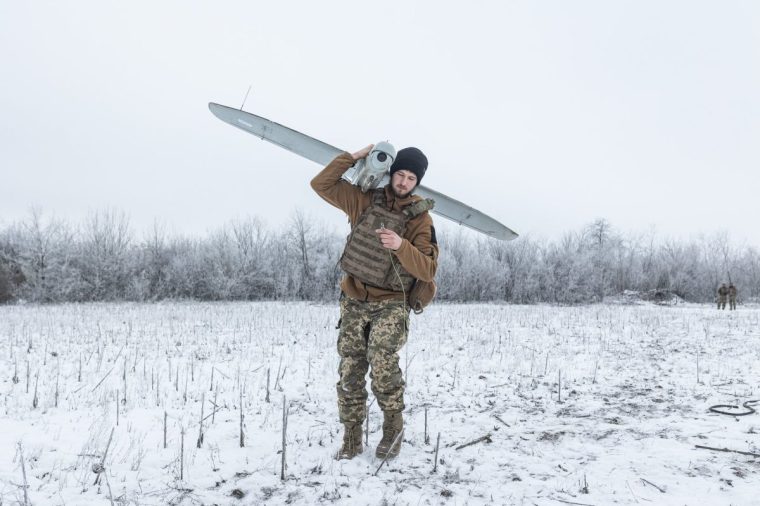
But do drones mean it is now game over for the use of massed armour and tanks like Abrams M1E3 and Challenger 3, as well as attack helicopters like the Cobra (think Apocalypse Now) and the Apache?
“Not necessarily,” says one senior British general, speaking privately. “You still have to drive to work on the main battlefront – which means using tanks and armoured carriers. But they can’t mass – Ukraine shows that.”
Instead, he said that they now have to be combined effectively with autonomous systems, with cover from cheap, one-way disposable drones. Ukraine has just announced plans to build or buy 4.5 million drones a year.
Russia has tried to use small squads of special forces commandos to get into front line towns like Pokrovsk, but they have been easily dislodged. “To hold ground, they need discreet protection from tanks, well-concealed and protected,” the general said.
He added that this is what Ukraine does, per a Ukrainian general, who told him that tanks now wait and then go in to protect.
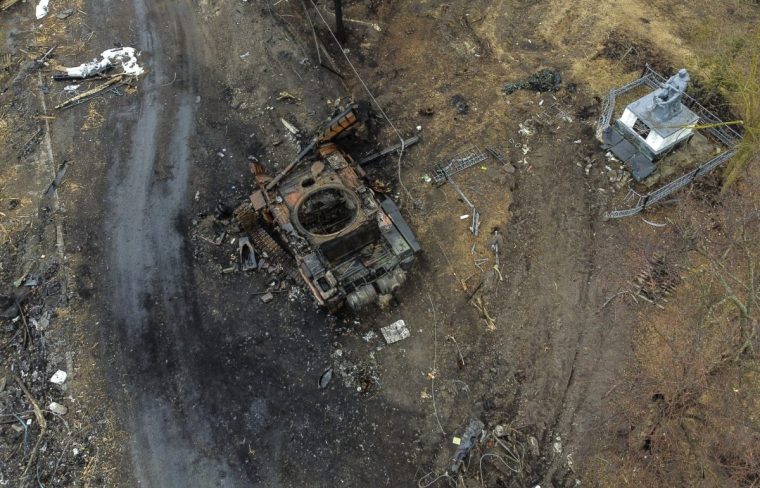
In the latest tactics, there is a hint of back to the future. Tanks are being used for the protection of infantry, like the mobile pillboxes on the Somme. They are also concealed and bunkered to give fire support to infantry and drone attacks.
Meanwhile, efforts to create protection against drones, so-called hedgehog tanks with layers of top protection, don’t seem to have been successful. Last year, Russia experimented with a Frankenstein, a huge chunk of barely mobile armour. It resisted several drone swarms but was ultimately destroyed.
The argument now in the British Army is whether to go ahead with the full order of 140 Challenger 3 tanks. One view is that the order might be cut in half.
More money is needed, Army commanders say, to develop AI and wholly autonomous, robotic weapons. These might be able to fly as well as traverse the ground.
Even so, a British officer with direct experience of the front lines in Ukraine told The i Paper that we should not write off the tank, or indeed the helicopter.
“It’s not a matter of extinction but evolution,” he said. “Dinosaurs roam the earth in the form of birds. Years hence, one may well see tanks in the form of small, hard-tracked robots, miniature helicopters in the form of drones. And these transitions will take time, just as nature often does.”
