CNBC Daily Open: AI Set to Transform More Sectors, Accelerating Fast
AI’s Impact on Markets and Industries
Artificial intelligence is currently making waves across various sectors, and its influence is being felt in financial markets. This trend has led to some industries experiencing significant challenges, particularly real estate, trucking, and logistics stocks.
The AI Effect on Stock Markets
The S&P 500 saw a decline on Thursday, with the index falling for the third consecutive day. Analysts at JPMorgan Chase noted that the S&P 500 could either lose up to 2.5% or gain as much as 1.7%, depending on the U.S. Consumer Price Index (CPI) numbers. The CPI for January is expected to show a 2.5% increase compared to the previous year.
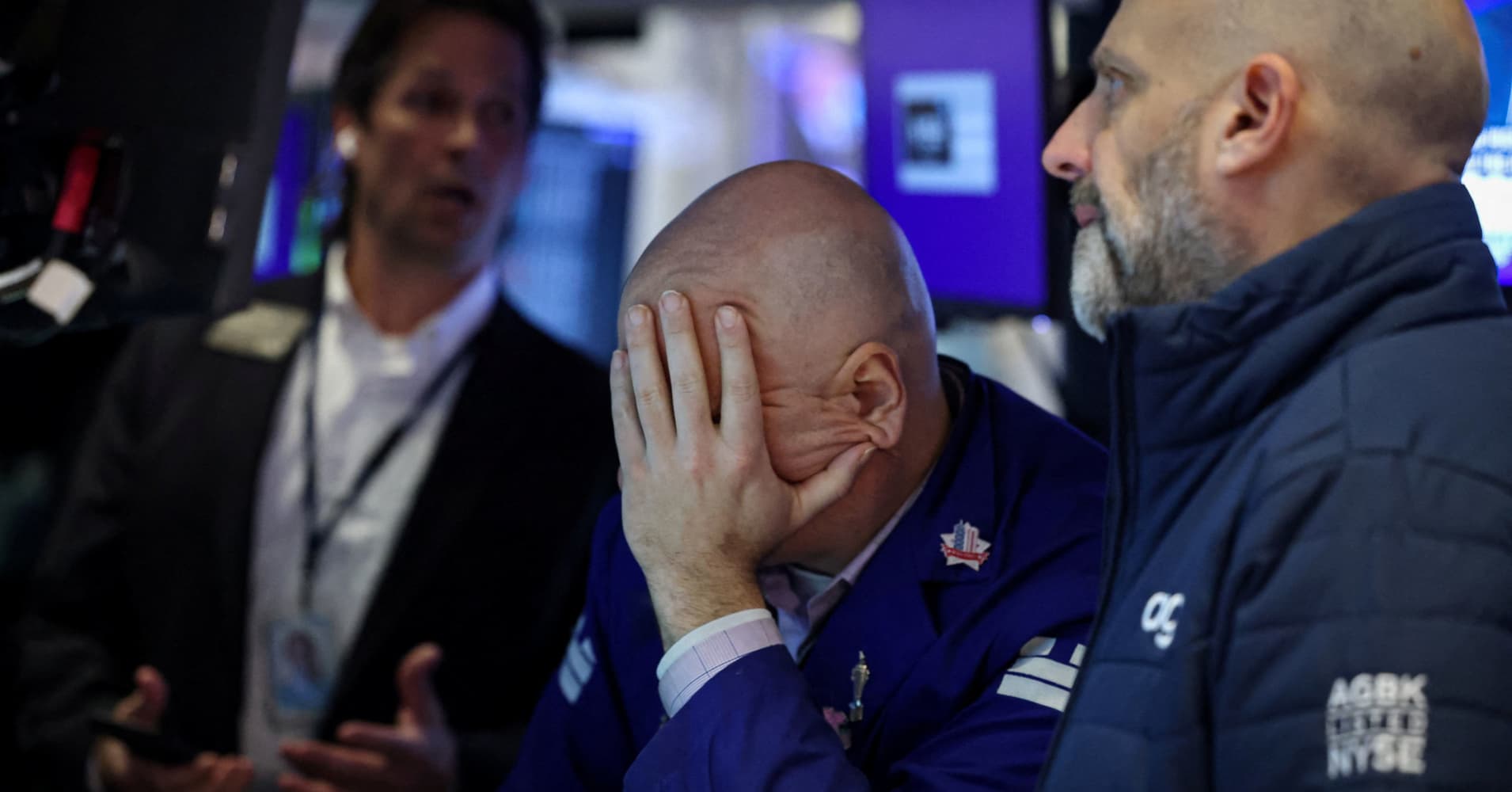
Apple also faced a tough day on Thursday, with its stock dropping by 5%. This was the company's worst day since April. Factors contributing to this decline included reports of delays with Siri and regulatory scrutiny over its news app.
AI’s Influence on Real Estate and Logistics
Elon Musk recently commented on a podcast that office towers might soon be empty as AI replaces workers. This sentiment was echoed by Matt Shumer, co-founder and CEO of OtherSide AI, who argued that AI could eliminate entry-level, white-collar jobs. If fewer people are working, fewer leases may be signed, affecting the real estate market.
In the freight industry, the pressure from AI is more concrete. Algorhythm Holdings, an AI company, released a tool that claims to allow operators to scale freight volumes by 300% to 400% without hiring more employees. This development has caused trucking and logistics stocks to plummet.
Jade Rahmani, an analyst at Keefe, Bruyette & Woods, stated that investors are moving away from high-fee, labor-intensive business models that are seen as vulnerable to AI-driven disruption.
Positive Developments in AI Investment
Not all sectors are suffering under the weight of AI. Japan's SoftBank reported adding $4.2 billion in value to its OpenAI investment, which helped boost its Vision Fund by $2.4 billion in the December quarter.
Additionally, Prime Minister Lawrence Wong announced plans to launch a "national AI council" in Singapore as part of the 2026 budget. This initiative aims to support firms leveraging AI and provide citizens with six months of free access to advanced AI tools after completing select courses.
Legal Disputes in the Shipping Industry
CK Hutchinson Holdings has announced it will take legal action against APM Terminals, an affiliate of Danish shipping giant Maersk, if the company takes over operations at the Balboa or Cristobal ports in Panama. A CK Hutchinson subsidiary currently manages these ports, but Panama's Supreme Court recently ruled to void the firm's license, which is seen as a win for the Trump administration.
Safe-Haven Currencies in Question
Traditionally, safe-haven currencies like the U.S. dollar, Swiss franc, and Japanese yen have been relied upon during times of geopolitical or economic uncertainty. However, recent trends show these currencies have experienced volatility themselves. The dollar and yen saw sharp declines in 2025 and into 2026, while the Swiss franc has strengthened despite low inflation and a reliance on exports.
This shift in market dynamics highlights how even traditionally stable currencies are being reevaluated in the current economic climate. Investors are now looking for new ways to navigate the uncertainties brought about by AI and other global factors.
