Cold water for BYD Korea's expansion strategy? Charging error controversy of the Celeyan 7
[USER PARABOLA=Jeong Ho reporter] As Chinese electric vehicle manufacturer BYD accelerates its efforts to enter the domestic market, a problem with fast charging has been raised regarding the mid-size electric sports utility vehicle (SUV) "Seal 7," which was released last year, leading to an expanding controversy.
According to the industry on the 13th, the charging failure and quality controversy in this vehicle model have led to consumer complaints. There is a growing need to clearly identify the causes, whether technical defects or the impact of usage environment.
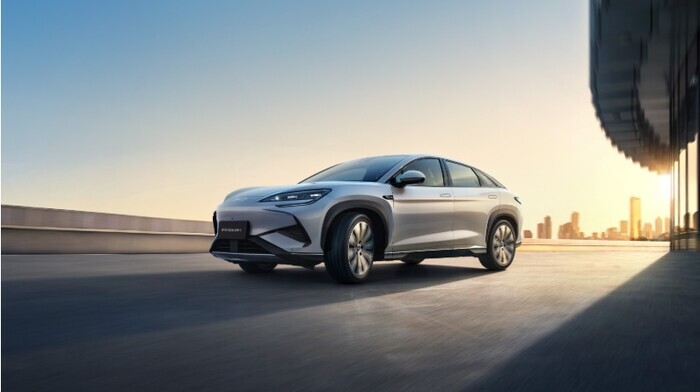
The Cirus RYAN7 sold approximately 2,600 units in total since its domestic release in September 2025 up to January 2026. The problem is that the number of cases where charging is stopped in low-temperature environments has increased as winter approached. Considering that similar symptoms were rarely reported at the time of launch, seasonal factors or system issues under specific conditions are also being raised as possibilities.
It is known that the first charge driving range of C-ROARION7 under normal temperature conditions is approximately 398 km, and about 385 km in low temperature environments. This is a structure that highly depends on fast charging at highway rest areas during long-distance travel. It is reported that the manufacturer has informed users that it takes about 30 minutes to charge from 20% to 80% battery level when using a 150kW fast charger.
It is reported that some users have limited long-distance travel due to the inability to charge in low temperatures.
Some owners have claimed that they experienced the same charging interruption and reduced speed not only in private charging networks but also in public fast-charging stations. In particular, some point out that other brands of electric vehicles were charged normally at the same charging equipment, suggesting the possibility that the problem lies in the vehicle's own system rather than the charging infrastructure.
In the electric vehicle industry, the stability of communication between the battery management system (BMS), vehicle software, and charging equipment during fast charging is considered a key factor. Analysts suggest that if a specific model repeatedly exhibits the same issue, it is necessary to check for problems with the vehicle's software settings or hardware compatibility.
The possibility of cold-temperature effects is being raised. The charging speed and power capacity of electric vehicle batteries vary depending on temperature conditions, and lithium iron phosphate (LFP) batteries are known to have relatively significant performance differences depending on whether they are preheated. However, some users claim that even after battery preheating, the inability to charge persisted, indicating that it may be difficult to explain this issue solely as a temperature-related problem.
For example, some electric vehicles automatically activate the battery pre-heating function when setting a fast charging station as the destination via navigation, but the C-Lion7 requires the user to set it separately.
In addition, various quality-related complaints have been raised online, including unintended emergency braking due to misidentification of driving assistance functions, noise and wind noise in low-speed sections, unstable remote control communication, and infotainment errors. However, these issues are currently limited to individual cases, and further investigation and official explanations from the manufacturer are needed to determine whether they constitute actual defects.
At the same time, BYD's past quality records are once again drawing attention. According to a statement from Chinese regulatory authorities, BYD had previously conducted a recall for approximately 110,000 SUVs due to the possibility of corrosion in the drive control unit and issues with battery waterproof performance. At that time, the company stated that it had completed the necessary inspections and part replacements, but large-scale recall cases were evaluated as issues directly related to quality credibility in the global market.
An industry insider said, "The domestic electric vehicle market is an environment where the utilization of charging infrastructure and consumer expectations are both high," and added, "initial quality stability, response speed when defects occur, and the reliability of the service network will be key factors for brand establishment."
It is expected that the resolution of fast-charging issues and additional quality improvement measures will influence the domestic electric vehicle competitive landscape as well as the overall credibility of Chinese brands. The industry believes that whether this incident will be resolved as a short-term issue or escalate into a structural risk will depend on BYD Korea's technical explanation and subsequent response.
A BYD Korea official said, "Various opinions received from customers during the use of the vehicle are recognized as important core improvement factors," and "we are continuously reviewing and inspecting them in close cooperation with the relevant departments of the headquarters."
Live popular news articles
- Jeju Air, Air Busan, and Air Seoul conduct on-site events for the Lunar New Year
- "Preventing the airport chaos during the Lunar New Year holiday" ... T'way Airlines activates online check-in and 24-hour emergency system
- From exhibition center to daily life... CN Motors, changing consultation and test drive methods for the Carnival High Limousine
