Ex-US Soldier Claims Alien Telepathy Proves God Exists
The Unusual Claims of a Former Military Official
A recently uncovered military interview has brought forth extraordinary claims about extraterrestrial intelligence, the scientific confirmation of a single creator, and technology that could blur the line between life and death. These statements were made by Clifford Stone, a former U.S. Army sergeant who claimed to have had direct involvement in classified encounters with non-human intelligence during his military service.
Stone maintained that his accounts were based on firsthand experiences rather than speculation. He described these encounters as transformative, altering his understanding of religion, mortality, and humanity's place in the universe. According to him, some of these interactions involved telepathic communication with an extraterrestrial entity he referred to as 'Korona.' This being, he said, was calm, curious, and technologically advanced.
Korona, according to Stone, showed interest in human belief systems and shared information that could challenge long-standing debates about the relationship between science and faith. Stone claimed that Korona’s civilization had reached a scientific conclusion about the existence of a creator—not as a matter of belief, but as an empirically established reality. This assertion raises questions about whether scientific inquiry can ever address metaphysical questions like the existence of God.
Stone argued that belief in a singular creator is no longer a faith-based ideal, suggesting that science from advanced intelligence now supports the existence of what many people call God. His claims have sparked discussions among scholars of religion and philosophy, who continue to debate the intersection of science and spirituality.
Technology That Connects the Living and the Dead
Stone further alleged that this same intelligence possessed technology capable of facilitating communication between the living and the dead. However, he emphasized that such interactions were tightly constrained. "They even have the means to communicate with their loved ones. It's not some parlour trick," he stated. "They really have the means to do it. But there are forbidden questions that you can't ask about what happens after death."
This restriction, he claimed, was not presented as a technical limitation but as an enforced boundary, preventing deeper inquiry into the nature of death itself. Stone suggested that certain knowledge might be dangerous, destabilizing, or simply inaccessible to human understanding at this stage of development.
Observers Among Us
Beyond theology and mortality, Stone made one of his most controversial assertions. He claimed that non-human beings are not distant visitors but active observers already present on Earth. According to him, these entities move quietly among humans, studying behavior, emotion, and belief to better understand the species. He did not explain how such beings might conceal themselves or provide physical evidence to support the claim. Instead, he framed the idea as a long-term observational effort, similar to anthropological fieldwork conducted by a more advanced civilization.
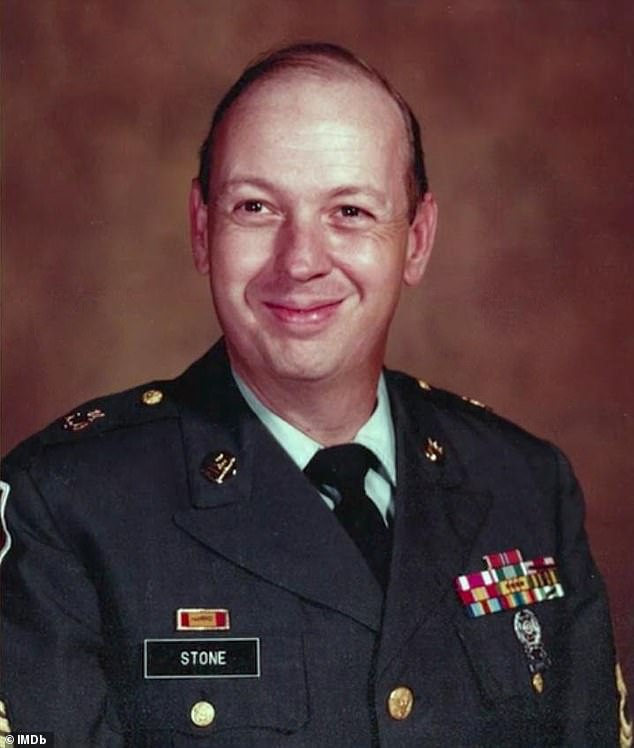
Background of Clifford Stone
Born on January 2, 1949, in Portsmouth, Ohio, Stone joined the U.S. Army in 1969. His official military records list his primary role as an administrative and legal specialist, a position he held while serving for more than two decades. Over time, however, Stone asserted that his duties extended far beyond clerical work. He claimed he was reassigned to classified recovery operations involving unidentified craft and, in some cases, non-human biological entities. These assertions have never been independently verified.
The Department of Defense has never confirmed Stone's involvement in any program related to extraterrestrial recovery or communication, and no declassified documents substantiate his account. Critics have pointed out this absence of evidence, noting that extraordinary claims demand extraordinary proof. Still, Stone remained steadfast throughout the interview, presenting his experiences as factual rather than speculative.
Public Perception and Ongoing Debates
During his lifetime, Stone became a recognizable figure within UFO research circles, where supporters viewed him as an insider willing to speak openly after years of silence. Skeptics, by contrast, argued that his claims relied too heavily on personal testimony and unverifiable experiences.
The renewed attention surrounding Stone's interview comes amid heightened public interest in unidentified aerial phenomena. It follows recent acknowledgments by U.S. government agencies that objects of unknown origin have been tracked performing maneuvers beyond known human technology—though the government has stopped short of attributing them to extraterrestrial intelligence.
That shifting landscape has prompted renewed scrutiny of historical testimonies that were once dismissed outright, including Stone's. For some, his account now appears less fringe; for others, it remains firmly outside the boundaries of evidence-based inquiry. Whether interpreted as testimony, belief, or speculation, Stone's claims occupy a volatile space where science, religion, and the unknown intersect.
His account challenges conventional frameworks by suggesting that humanity's most profound questions—about God, death, and existence itself—may already have answers that lie beyond current human comprehension. What remains unresolved is whether those answers exist only in belief, or if they are waiting, as Stone claimed, just beyond the limits of what humanity is allowed to know.
