New Brunswick Power Lawyer's Battery Evidence Dismissed
Regulatory Hearings Take a New Turn
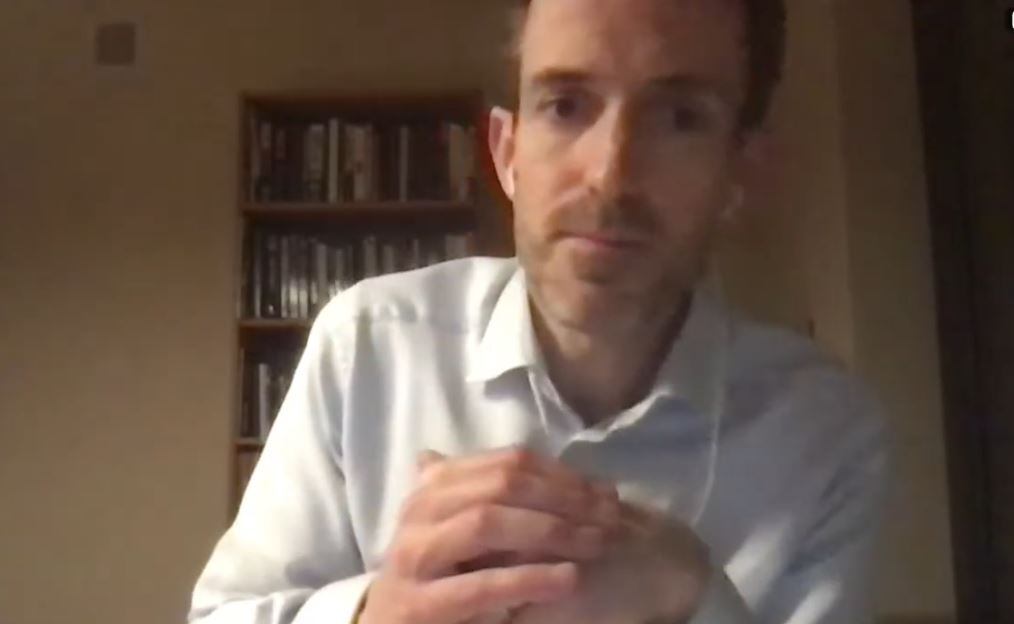
The regulatory hearings into N.B. Power’s proposed Tantramar gas and diesel plant made significant progress on Thursday, as the first expert witness to speak against the project provided testimony before the Energy and Utilities Board. Toby Couture, a battery and renewable energy expert, was hired by the Conservation Council of New Brunswick to assess the controversial energy project. His pre-filed evidence presents a strong case for renewables backed by battery storage as a more viable option for meeting power capacity needs compared to the gas-and-diesel-fueled power plant proposed by N.B. Power.
However, before Couture could present his testimony, N.B. Power’s lawyer, John Furey, spent about an hour attempting to disqualify Couture and his evidence. Among the issues raised was the fact that Couture, while working for the Conservation Council in 2007, co-authored a paper with New Brunswick Green Party Leader David Coon. Furey pointed out statements from the paper that linked global climate targets to the energy transition and called for moving away from fossil fuels. Although Couture did not fully endorse the nearly 20-year-old statements, the line of questioning prompted him to recall a well-known quote attributed to former Saudi Arabian oil minister Sheikh Zaki Yamani: “The Stone Age didn’t end because we ran out of stones. It ended because we developed better ways of doing things.”
Couture, who spoke to the hearing from his home in Germany, emphasized that technological change is what drives the market forward and that the current era is marked by a technological revolution. Furey’s main objection to Couture centered on the claim that he was “selectively reaching for data that supports the position he wants to take” and would not be able to provide objective and non-partisan evidence. He pointed to inconsistencies or omissions in the 35-page document Couture had submitted as evidence.
Kostantina Northrup, the lawyer for the Conservation Council, rejected the idea that Couture had made a “deliberate attempt to doctor evidence.” She noted that there had been instances over the past week where she had identified “errors and unintentional mischaracterizations” in other testimony. However, Northrup argued that these should affect how the board weighs the evidence, not whether it is admissible. The board ultimately agreed with Northrup, and Couture’s evidence was accepted for consideration.
During his cross-examination, Couture repeatedly referenced a previous claim made by N.B. Power that to meet its need for 400 megawatts of additional capacity, it would require a 1,000-megawatt battery. Couture challenged this assertion, arguing that it was a miscalculation of the “effective load carrying capacity” of batteries—how much energy they can reliably provide at any given time.
Battery systems do not contribute their full size value to a utility’s “effective load carrying capacity” calculation. N.B. Power claims the capacity factor should be 40 per cent, meaning a 1,000-megawatt battery would provide 400 megawatts of reliable capacity. Couture, however, cited evidence suggesting the capacity factor should start much higher, at 80 per cent, and then decrease as more battery storage is added. Given that N.B. Power currently has “little to no installed utility scale battery storage,” Couture argued that the first 500 megawatts installed would actually provide 400 megawatts of “effective load carrying capacity.”
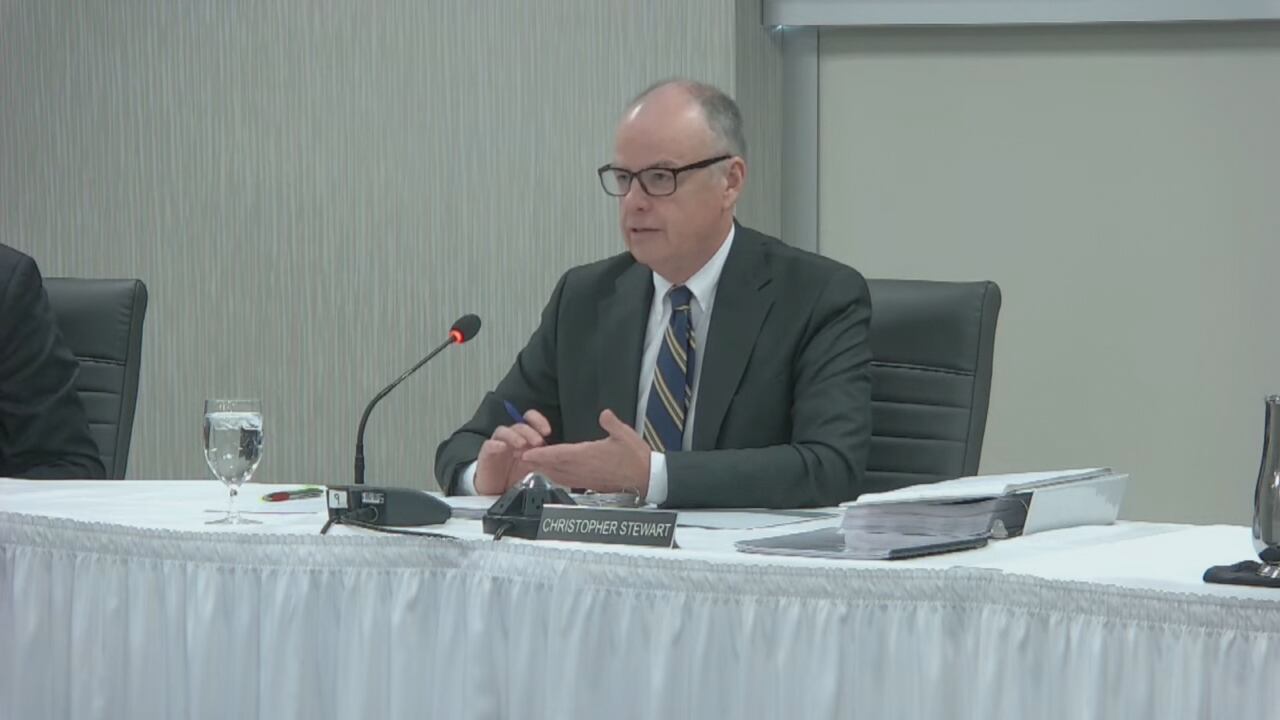
This point sparked interest among Christopher Steward, the chair of the Energy and Utilities Board, and board member Kenneth McCullough, who both asked Couture to further clarify the issue.
The cross-examination of expert witnesses is expected to conclude on Friday, following the testimony of those hired by the public intervener. Final arguments to the board will be held at a later date, the timing of which has yet to be determined.
