Robocop on the Streets: Robot Police to Patrol Malaysia by 2031
The Future of Policing: Robot Police Officers on the Horizon
In a rapidly evolving world, the role of law enforcement is undergoing a significant transformation. Experts predict that within five years, robot police officers—often referred to as "robocops"—will become a common sight on our streets. These advanced machines are expected to play a crucial role in detecting, pursuing, and apprehending suspects, according to Professor Ivan Sun from the University of Delaware.
Professor Sun highlights that law enforcement agencies around the globe are facing mounting challenges, including increasing crime rates, complex criminal networks, and a shrinking police force. In this context, the integration of technology into policing has become more critical than ever.
The Rise of Humanoid Robots in Law Enforcement
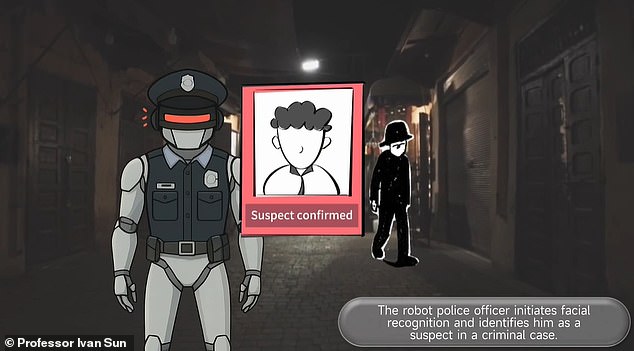
Humanoid robots are already being used in various parts of the world, with China leading the way in their deployment. Professor Sun believes it's only a matter of time before these technologies gain widespread acceptance. By 2031, he predicts that robot police officers will be equipped with facial recognition capabilities, allowing them to identify and track criminals effectively.
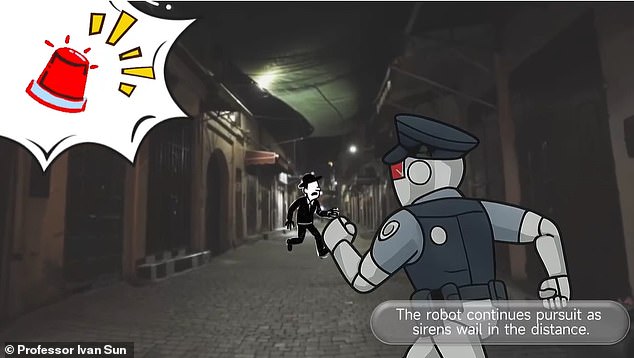
These robots could also chase down suspects and detain them. While they may still require human supervision, their potential in high-risk scenarios is immense. For instance, during a robbery, a robot could take control of the situation, chasing a suspect for miles without tiring. At the same time, its AI system could scan the suspect’s biometric data and detect if they are carrying a weapon from a distance of 200 meters. This level of capability is something human officers simply cannot match.

Legal and Ethical Considerations
Despite the promising advancements, the introduction of robot police officers raises important legal and ethical questions. Professor Sun acknowledges that issues such as the use of force and high-speed chases must be addressed. However, he remains confident that the implementation of these technologies is inevitable.
“The sky is really the limit,” he said. “Engaging in the use of force or high-speed chases isn’t just a fantasy—it’s coming up.”
He also emphasized that while the initial deployment might be limited, the future of policing will likely involve a combination of human officers and AI-powered tools. One such tool is AI-powered helmets, which could assist human officers in making critical decisions during high-stakes situations.
Public Perception and Officer Feedback
To better understand the potential impact of these technologies, Professor Sun is currently conducting polls among police officers worldwide, including those in the UK. As part of his research, officers are shown two clips—one featuring a service robot designed for public relations and community engagement, and another showcasing a crime-fighting robot capable of chasing and detaining suspects.
Professor Sun expects that in Western countries like the UK, police officers will lean more towards the crime-fighting robot. He argues that these robots can significantly reduce the risks associated with dangerous situations.
“You already have bomb robots,” he explained. “You send the bomb robot instead of a human being to handle the bombs.”
He added that a robot could potentially perform the work of three officers without requiring breaks or rest, making them an efficient solution for law enforcement agencies.
Real-World Applications and Research Findings
A recent study published in the Asian Journal of Criminology, led by Professor Sun, explored the views of Chinese police officers on the use of AI-powered robots in policing. The study found that jurisdictions worldwide are increasingly integrating AI into their operations, with countries like China, the USA, Singapore, and the UAE piloting robotic systems with varying degrees of autonomy.
These systems often incorporate technologies such as facial recognition and predictive algorithms, reflecting a broader trend in the technological transformation of policing. The paper notes that while current uses are largely symbolic, the situation is expected to change quickly as the technology continues to evolve.
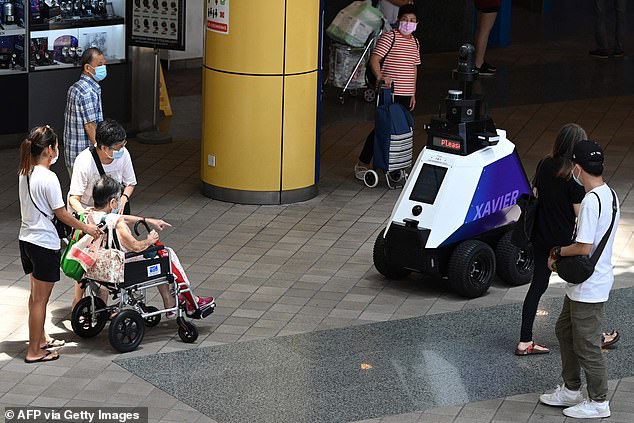
Examples of existing police robots include the Xavier robot in Singapore, which patrols public spaces to detect undesirable behaviors like smoking. In China, AnBot robots are used for surveillance and identity verification at transport hubs. Meanwhile, in the UAE, robots serve more service-oriented roles, such as greeting tourists or providing multilingual assistance during large events.
The study concludes that there is greater support for crime-fighting robots compared to service robots. Officers believe that these advanced machines can enhance their effectiveness in intelligence gathering, offense detection, and criminal apprehension. They also see potential benefits in improved officer safety, as robots can perform risky tasks like controlling armed suspects or disposing of explosive devices.
The Road Ahead
Professor Sun has shared his findings at the American Association for the Advancement of Science (AAAS) conference in Phoenix, Arizona. His research underscores the growing role of AI in modern policing and highlights the need for careful consideration of legal, ethical, and practical implications.
As AI technologies continue to evolve, police forces around the world are already adopting tools such as live facial recognition vans, deepfake detection systems, and smart control rooms with AI triage. These innovations are shaping the future of law enforcement, making it more efficient, safer, and technologically advanced.
