Russian Drones in Ukraine: UK-Made Parts Uncovered
UK Company's Components Found in Russian Drones Targeting Ukraine
An electronics company based in the port town of Hartlepool has been identified as a source of components used in Russian weaponry being launched against Ukraine. The product made by Isocom Components 2004, owned by one of Britain’s largest private equity firms, is being used by Moscow to build its lethal Geran-2 drones. This revelation comes from Ukrainian military intelligence.
Russia has significantly increased production of these Iranian-designed "kamikaze" weapons in recent months, aiming to break Ukrainian morale by targeting energy and heating systems during winter temperatures as low as –24°C. The discovery of the Teesside-made component is the latest evidence of Moscow's success in circumventing multiple sanctions and restrictions placed on its access to Western-made products for its arms industry.
Analysis of missile debris and captured equipment shows that products made by 10 British companies have been found in 24 separate Russian weapons systems since the start of the Ukraine war four years ago. The uptick in drone production comes amid evidence that Iran, which initially provided the blueprints for the Geran drones and sent experts to help set up a factory in Russia as part of a $1.75bn deal, is also assisting the Kremlin in securing the Western components it needs to make its devastating drones.
According to one Ukrainian intelligence estimate, Russia will soon be capable of manufacturing 1,000 drones a day, including long-range attack models such as the Geran class. A Western intelligence source told The i Paper: “The Russians have built not only a manufacturing hub for their drones but also a supply chain from Texas to England in which the Iranians are significant participants.”
Last week, Ukrainian President Volodymyr Zelensky unveiled new sanctions against nearly 70 individuals and 65 entities, including a cryptocurrency network, which he said were responsible for financing and funnelling weapon parts into Russia. He stated: “Without foreign components, such production would be impossible.”
UK-Made Components in Russian Weapons
Devices made or designed by British companies have featured heavily in inventories of components identified by the Ukrainian military in downed missiles and drones used to target Kyiv and other cities. To date, 41 products made or designed by companies either headquartered in the UK or with a major presence in Britain have been singled out. Equipment from hobbyist computers to radar parts have been catalogued alongside components from dozens of other countries including the United States, Germany, Switzerland, and Ireland.
An official log of components compiled by the Ukrainian defence intelligence services, which contains data routinely shared with Western governments and monitoring groups, last month identified a specialised switching device – known as an optocoupler – it said had been manufactured by Isocom Components 2004 Ltd from the wreckage of a Geran-2 drone.
There is no suggestion that the firm—which was bought in 2024 by Foresight Group, a UK private equity investor currently managing assets worth £13bn—is knowingly selling its products to Russia or consciously failing to comply with the multitude of international sanctions in place against Moscow. Indeed, it is probable that the company’s products have been acquired only as the result of an elaborate subterfuge by Russia and, possibly, its allies in China and Iran.
Isocom Components 2004 said: “We can confirm that Isocom is a producer of optocouplers used across the industrial sector and operates globally across a diverse range of customers. We continue to operate in compliance with all applicable UK export control and sanctions legislation. We do not manufacture nor sell products of military specification for defence, aerospace or marine applications.”
The Foresight Group declined to comment.
Geran Drones Aim to Break Ukrainian Morale
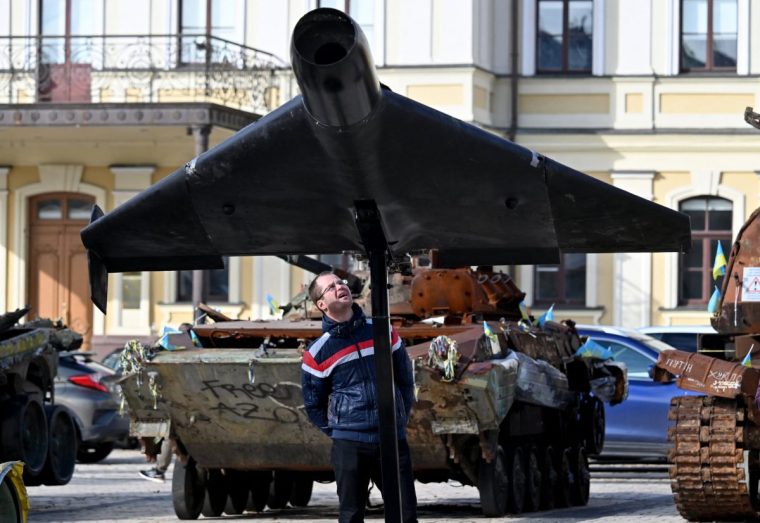
The Geran-2, based on the Shahed-136 perfected by Iranian weapons scientists, is one of several evolving versions of the drone assembled at a purpose-built factory complex known as the Alabuga Special Economic Zone, situated some 600 miles east of Moscow. Gerans have become the mainstay of Moscow’s intensifying bombardments of Ukraine aimed at destroying infrastructure, in particular its energy networks.
An analysis published last month by the Institute for Science and International Security (ISIS), a US think tank, found that Russia launched 54,538 of the Iranian-designed drones last year, averaging about 5,300 per month in the last quarter of 2025. This compares to an average of 1,644 launches a month in the last five months of 2024.
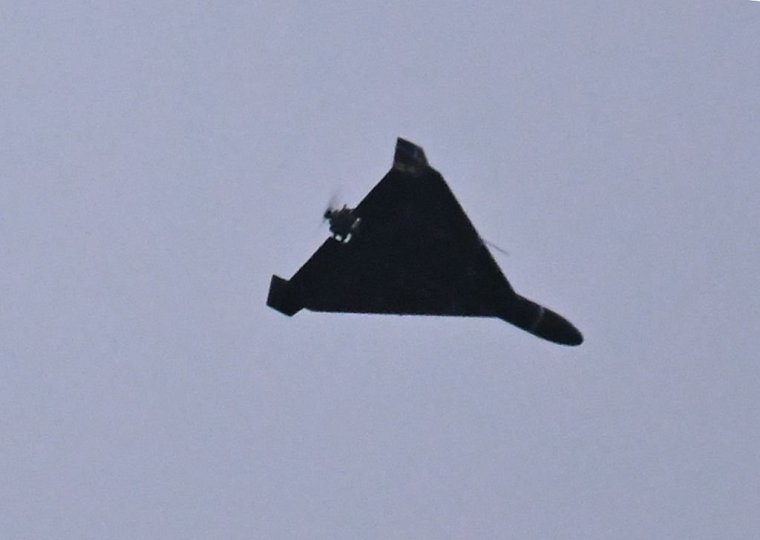
Experts say the Gerans, which can cost as little as $20,000 (£15,000) per unit, are the centrepiece of a strategy aimed at overwhelming Ukrainian air defences by sending waves of armed and decoy drones to deplete Ukraine’s munitions before more advanced missiles—costing over £1m a piece—home in to destroy targets. On some nights, Moscow has launched 800 long-range Gerans against Ukraine and has spoken of an aspiration to use 2,000 in a single bombardment.
In its study, the ISIS noted: “The most salient factor is the constant use of large numbers of Shahed-type drones, which rapidly exhaust air defence resources. By the conclusion of 2025, Ukraine’s air defence capabilities had been significantly depleted.”
Huge Subterfuge Operation by Russian Intelligence
Intelligence and diplomatic sources underline that UK companies are falling foul of a complex Russian operation, bolstered by support from Iran and China. The system uses multiple front companies, many of them based in China and Eurasia, and supply routes to divert dual-use products—capable of integration into civilian or military equipment—from the West into the Kremlin’s war machine.
An analysis of the Ukrainian battlefield data shows that Russia is now using 5,510 types of foreign-made components in 189 separate weapons systems, ranging from the Kinzhal hypersonic missile to the Lancet “kamikaze” drone.
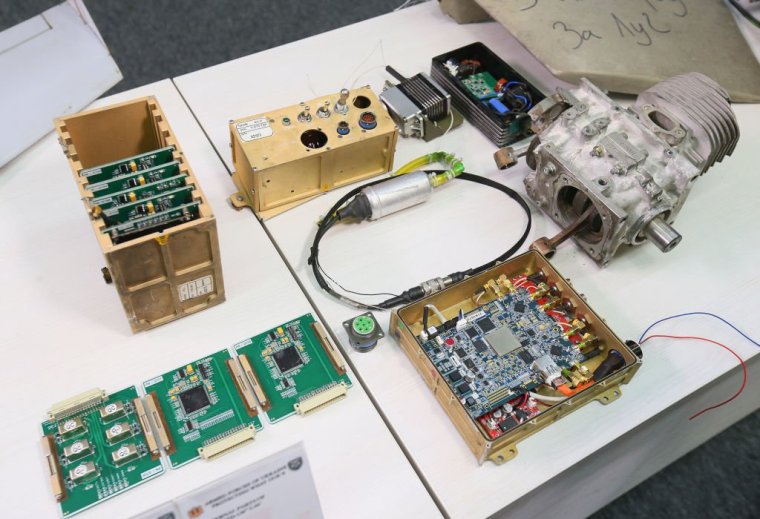
In January, the European Union imposed sanctions on 10 Iranian commanders and companies which it said were involved in providing Moscow with drone and missile components, including Sahara Thunder—a notorious front company used by Tehran to source Western components supplied to Russia. The UK has also previously imposed sanctions designed to thwart Iranian attempts to obtain drone and missile components from abroad.
Such is the complexity of modern component supply chains, stretching from Silicon Valley and European manufacturing hubs to brokers in locations from Hong Kong to Dubai, that experts say individual products can pass through up to a dozen buyers and sellers in different countries before reaching Russian production lines.
Isocom Components 2004 Ltd makes hundreds of thousands of switches a year destined for consumer goods, including the electric vehicle (EV) industry. Raspberry Pi, which in 2023 had nearly £4m of its products imported into Russia by third-party buyers without its knowledge, has said it has since removed distributors linked to Russia and upgraded the traceability of its products.
Iranian Weaponry Networks
Experts said that while the largest share of components heading to the Alabuga weapons plants is coming from China, there is an important role being played by Iran in securing Western products to be used in Russian weaponry. Iran, which has reputedly been paid in part in gold bars for its help in setting up the Alabuga factory, has a long history of subterfuge in obtaining European and American technology for its own weapons programmes—a capability which it is now sharing with Moscow.
Professor Amy McCauliffe, a former senior CIA official and weaponry supply specialist now based at the University of Notre Dame in Indiana, said Russia was still reliant on Western manufacturers for drone components including engines, fuel pumps, antennae and navigation systems. She told The Conversation: “To assist Russia, Iran exploits its networks of brokers and companies in acquiring Western components to evade international sanctions.”
It is understood by The i Paper that Tehran has previously obtained Western technology, including some British components, by using front companies to obtain machinery such as drone engines. In some cases, it has then reverse-engineered the item for use by domestic manufacturers and supply to allies.
John Caves, a senior research associate at the Wisconsin Project on Nuclear Arms Control, a think tank which monitors Iranian arms procurement activity, said there was evidence that Tehran is continuing to source Western products. This activity, however, is part of a wider and complex eco-system in which companies in China, Turkey, and the United Arab Emirates are also supplying Iran and Russia with Western goods.
He added that while Western governments had long fought a battle to thwart the efforts of other states to obtain technology that could be used for nuclear arms or ballistic missiles, they were still rushing to adapt to the advent of “asymmetric weapons”, such as drones which use low-tech components.
Caves said: “Western government are, for the most part, alive to the risk now, but they face the difficult trade-offs inherent in trying to control the export of widely traded goods whose civilian uses are integral to the world economy.”
A Government spokesperson said: “We take reports of goods from UK companies being found in Russian weaponry incredibly seriously. We have banned the export of thousands of goods to Russia, including every battlefield item Ukraine has brought to our attention, and together with our international partners have implemented the most severe package of sanctions ever imposed on a major economy.”
