US and Taiwan Finalize Trade Deal with 15% Tariff Cut, Boosting US Exports
Overview of the New Trade Deal Between the U.S. and Taiwan
A new trade deal has been signed between Washington and Taipei, marking a significant shift in economic relations between the two regions. Under this agreement, the U.S. will lower tariffs on Taiwanese exports to 15%, aligning them with those imposed on Asian allies such as Japan and South Korea. In return, Taiwan has committed to removing or reducing 99% of tariff barriers on U.S. goods. Additionally, the island nation will provide "preferential market access" for U.S. industrial and agricultural exports, including automobiles, beef products, and minerals.
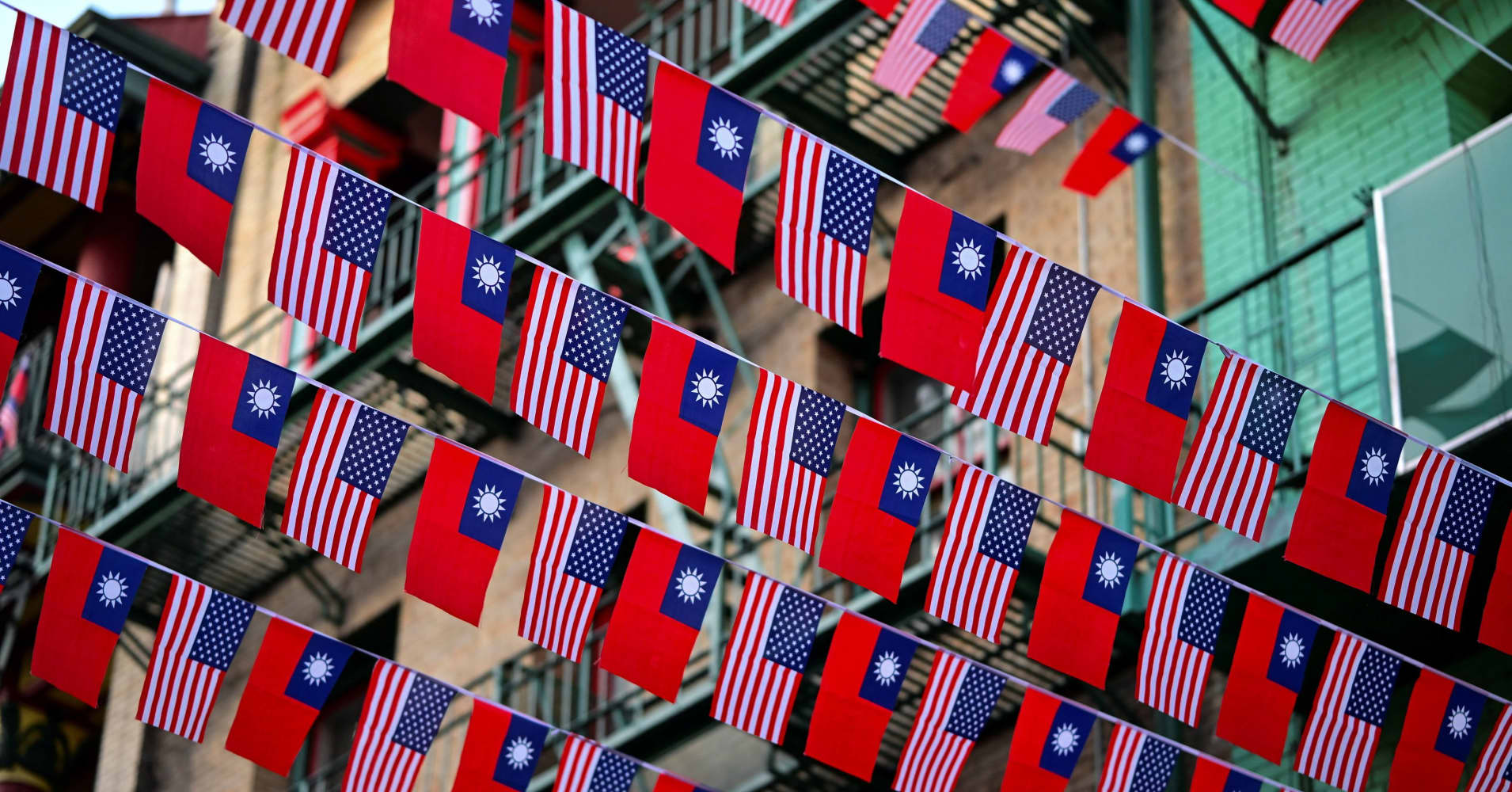
The deal also includes a substantial commitment from Taiwan to purchase over $84 billion worth of U.S. goods between 2025 and 2029. This includes energy products like liquefied natural gas and crude oil, as well as aircraft and power equipment. The U.S. Trade Representative's office emphasized that Taiwan has pledged to resolve longstanding non-tariff barriers, such as accepting U.S. vehicles built to U.S. Federal Motor Vehicle Safety Standards without additional requirements.
Background and Key Provisions of the Agreement
This trade deal was initially announced in January when Taiwanese chip and technology companies pledged to invest at least $250 billion in production capacity in the U.S. This investment is supported by an equal amount of government credit aimed at facilitating further investment by Taiwanese enterprises.
However, despite the positive developments, there are still differences between the U.S. and Taiwan regarding the semiconductor supply chain. The goal, as stated by U.S. President’s Commerce Secretary Howard Lutnick, is to bring 40% of Taiwan’s entire semiconductor supply chain to the U.S. He also mentioned that Taiwanese chip companies not building in the U.S. could face a 100% tariff.
Taiwan has pushed back on this proposal, arguing that relocating 40% of its semiconductor supply chain to the U.S. is "impossible." Vice Premier Cheng Li-chiun highlighted that Taiwan's semiconductor ecosystem, developed over decades, cannot be easily relocated. She emphasized that Taiwan's international expansion, including investments in the U.S., is based on the premise that the industry remains rooted in Taiwan and continues to grow domestic investments.
Geopolitical Implications and Reactions
China, which views Taiwan as part of its territory, criticized the January agreement, claiming it would "only drain Taiwan's economic interests." The Chinese government accused the ruling Democratic Progressive Party of allowing the U.S. to "hollow out" Taiwan's key industries. Chinese President Xi Jinping considers Taiwan's reunification with the mainland "a historical inevitability," a stance that Taiwan firmly rejects.
Although the U.S. does not have a mutual defense treaty with Taiwan, the 1979 Taiwan Relations Act mandates that the U.S. will make available to Taiwan "such defense articles and defense services" as necessary to "enable Taiwan to maintain sufficient self-defense capabilities."
In December, the U.S. approved $11.15 billion in arms sales to Taiwan, one of its largest deals with the island. This move came amid growing threats from China, prompting Beijing to accuse the U.S. of violating the "one-China principle." The foreign affairs spokesperson for China, Guo Jiakun, expressed strong disapproval of the U.S. decision.
Conclusion
The new trade deal between the U.S. and Taiwan represents a strategic effort to strengthen economic ties and address long-standing trade issues. While the agreement brings mutual benefits, it also highlights the complex geopolitical dynamics involving Taiwan, the U.S., and China. As both sides navigate these challenges, the future of their economic and political relationship will remain closely watched.
