US Repels Iranian Missiles and Drones
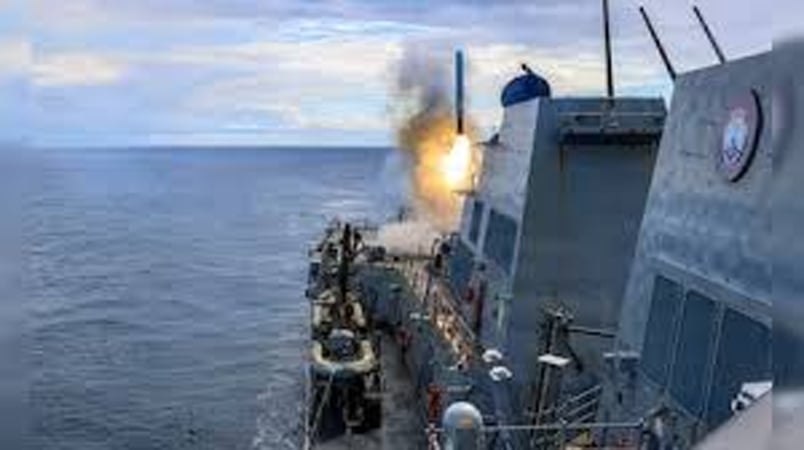
Escalation in the Strait of Hormuz
On May 5, Pakistan witnessed a significant escalation in tensions between the United States and Iran. According to a top US admiral, multiple Iranian missiles and drones were shot down by American forces. The incident involved the destruction of six Iranian small boats, which were perceived as a threat to commercial shipping.
The situation unfolded as part of "Project Freedom," a U.S. initiative aimed at ensuring the safe passage of commercial vessels through the strategically important Strait of Hormuz. This project was announced by former President Donald Trump on Sunday, highlighting the U.S. commitment to maintaining maritime security in the region.
Admiral Brad Cooper, head of the U.S. Central Command (CENTCOM), confirmed that Apache and Seahawk helicopters engaged in targeting the Iranian boats. He emphasized that U.S. forces effectively countered all missiles and drones launched at both military and commercial ships. While some cruise missiles were directed at U.S. Navy vessels, most of them, along with multiple drones, targeted commercial ships.
"We defended both ourselves and, consistent with our commitment, we defended all the commercial ships," Cooper stated. His remarks underscored the U.S. stance on protecting international trade routes, even amidst rising hostilities.
In a post on his Truth Social Platform, Trump mentioned that seven Iranian boats were struck and noted that no damage had occurred in the Strait except for a South Korean ship that was hit. However, he provided no further details about this incident.
Regional Tensions and Military Actions
The conflict between U.S. and Israeli forces and Iran began on February 28, leading to the closure of the Strait of Hormuz by the Islamic Republic. This vital route is crucial for oil and gas exports, and its closure significantly impacted global trade. Subsequently, American forces implemented a blockade of Iranian ports, further escalating tensions in the region.
Iranian state television reported that the country's navy had fired cruise missiles, rockets, and combat drones near U.S. destroyers moving through the strait. This was described as a "warning shot" by Iranian authorities. Meanwhile, CENTCOM confirmed that two U.S. guided-missile destroyers passed through the strait into the Gulf as part of "Project Freedom." Additionally, two U.S.-flagged merchant vessels transited the opposite way and were safely en route.
Cooper explained that while the U.S. military is not directly escorting ships through the strait, it has established "multiple layers" of defense that include ships, helicopters, aircraft, airborne early warning systems, and electronic warfare capabilities. This comprehensive approach aims to provide a broader defensive package than traditional escort missions.
Strategic Implications and Future Outlook
The U.S. military has employed unspecified "exquisite technology" to clear a pathway through the strait over the past few weeks. This effort has created a protective "umbrella" over the area, according to Cooper. He emphasized that the goal is to establish a "two-way path" through the strait, although the immediate priority remains facilitating the movement of ships.
As of April 29, maritime intelligence firm AXSMarine reported that more than 900 commercial vessels were located in the Gulf. This highlights the critical importance of the Strait of Hormuz for global trade and underscores the need for continued U.S. involvement in ensuring its security.
The ongoing conflict between the U.S. and Iran continues to have far-reaching implications for regional stability and global energy markets. As tensions persist, the international community will be closely monitoring developments in the Strait of Hormuz and the broader Middle East.
