Women in Tech at Web Summit: Closing the Gap Ahead
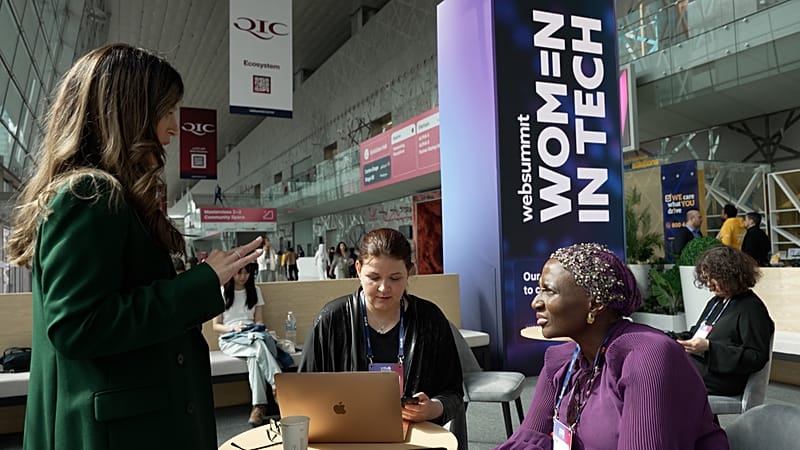
Over the past decade, Web Summit’s Women in Tech programme has made significant strides in addressing the gender gap in the tech and entrepreneurship sectors. Launched in 2015, the initiative aims to empower women by providing them with opportunities, resources, and platforms to thrive in male-dominated industries. This year, the programme reported a 7 per cent increase in women-founded startups, marking a positive shift in the landscape.
Dima Wahbeh, Deputy Country Manager of Web Summit Qatar, shared insights on the programme's achievements during an interview at the Women in Tech networking space. She highlighted that globally, there has been a noticeable rise in women's participation in Web Summit events. In Qatar specifically, the percentage of female founders increased from 31 per cent in 2024 to 38 per cent this year, showcasing a growing commitment to inclusivity.
A major milestone was achieved in Lisbon in 2021 when the number of female attendees at Web Summit surpassed that of their male counterparts for the first time. This moment signified a turning point in the event's history, emphasizing the importance of representation and diversity in the tech community.
Where Conversations Turn Into Action
The Women in Tech initiative is anchored by several key components: discounts, mentorship, and networking opportunities. These elements are designed to support women in building their careers and connecting with industry leaders. Additionally, the programme provides access to successful female global leaders, offering valuable insights and guidance.
At Web Summit Qatar, notable figures such as Justina Nixon-Saintil from IBM and Anie Akpe from Lumo Hubs took part in panel discussions and speeches, highlighting the role of artificial intelligence (AI) in shaping the future of work. Nixon-Saintil emphasized the importance of AI fluency and continuous learning, stating, “Real workforce readiness is not just about access to tools. It means having AI fluency and understanding how AI impacts your role.”
IBM has responded to the evolving landscape by expanding access to learning through its free IBM SkillsBuild platform. The company collaborates with universities, schools, and nonprofit organizations to provide AI training that leads to recognized credentials and job pathways. Nixon-Saintil noted that the goal is practical impact—helping people transition into better-paying roles and new industries, rather than focusing solely on theoretical knowledge.
During the event, IBM announced a partnership with Qatar’s Ministry of Communications and Information Technology to launch a global request for proposals for its Impact Accelerator programme. This collaboration underscores the company’s dedication to AI education and workforce development.
Boosting Accessibility and Lifelong Learning through AI
The Women in Tech programme is built on the principle that inclusion drives innovation. Anie Akpe, founder of African Women in Technology, has spent the past decade ensuring that young African women are not left behind in the rapidly evolving tech sector. Through partnerships with companies like Cisco, her organization offers free classes in fields such as cybersecurity and AI.
Akpe believes that fear should not hinder women from engaging with AI. “The key here is not to have fear of AI. The key is to jump all in,” she said. “AI is not going to be a complete solution for a lot of organisations, but AI will be a tool. It will give you the opportunities that you need.”
Her vision includes helping even small businesswomen, such as those operating in wet markets in Nigeria, to build websites and expand their enterprises. “Innovation doesn’t have to sit at a table they don't understand. The goal would be that they're able to utilise it the way they see fit,” Akpe explained.
From Dismissed Pain to Disrupting Femtech
This year, a Qatari firm named ScreenMe was listed among the top 10 women-founded startups at Web Summit Qatar. Unlike many other startups, ScreenMe was born out of Dr Golnoush Golsharazi’s personal experiences with health struggles and being dismissed by medical professionals.
“That really pushed me to ask: what’s wrong in the system? Where is the gap?” she said. “We don’t have sufficient screening. We don’t have sufficient research in women’s health. We deserve better.”
ScreenMe offers at-home testing of the reproductive microbiome, which plays a crucial role in preventing infections, cervical cancer, and fertility complications. As a molecular biologist with a PhD in gene therapy from the University of Cambridge, Dr Golsharazi explained the science behind the product. “The good bacteria act like a gate to your house. When that gate is broken, other bacteria can grow, increasing risks like HPV infection, miscarriages and unexplained fertility.”
While the Web Summit acknowledges that more needs to be done to close the gender gap, Dr Golsharazi remains optimistic about the event’s role in amplifying the voices of women founders. “They allow women like me to stand up and say: I have something important to say and I want you to listen,” she said. “The rise in female founders, investors and femtech startups is only the beginning.”
