Ancient Pompeii Graffiti Unveiled by Modern Tech
Rediscovering Pompeii’s Hidden Voices
Thousands of years ago, long before the term "street art" was coined, the people of Pompeii were already leaving their mark on the city walls. They scratched jokes, insults, declarations of love, and even raunchy drawings into the surfaces of buildings. Today, a new project is helping to uncover these ancient messages, revealing insights into the lives of ordinary people who once inhabited this Roman city.
In a narrow corridor that once connected two theatres in Pompeii, an international team of researchers has used advanced digital imaging techniques to decipher graffiti that had been worn down to near illegibility. Their work has led to the discovery of 79 previously unseen inscriptions, offering a glimpse into the daily lives and expressions of the city's inhabitants.
The project, called Bruits de couloir (Corridor Whispers), was coordinated by Louis Autin and Éloïse Letellier-Taillefer from Sorbonne University in Paris, along with Marie-Adeline Le Guennec, a professor of ancient Roman history at the Université du Québec à Montréal. The collaboration began when Letellier-Taillefer, an archaeologist studying the theatres of Pompeii, noticed the large number of graffiti in the corridor. Le Guennec, who was completing her PhD on ancient Roman inns, saw a connection between these inscriptions and those found in working-class accommodations.
This initial conversation sparked two rounds of fieldwork, during which the team re-examined over 300 inscriptions on the corridor's walls, uncovering 79 new discoveries. Among them was a fragment of a love declaration addressed to someone named Erato.
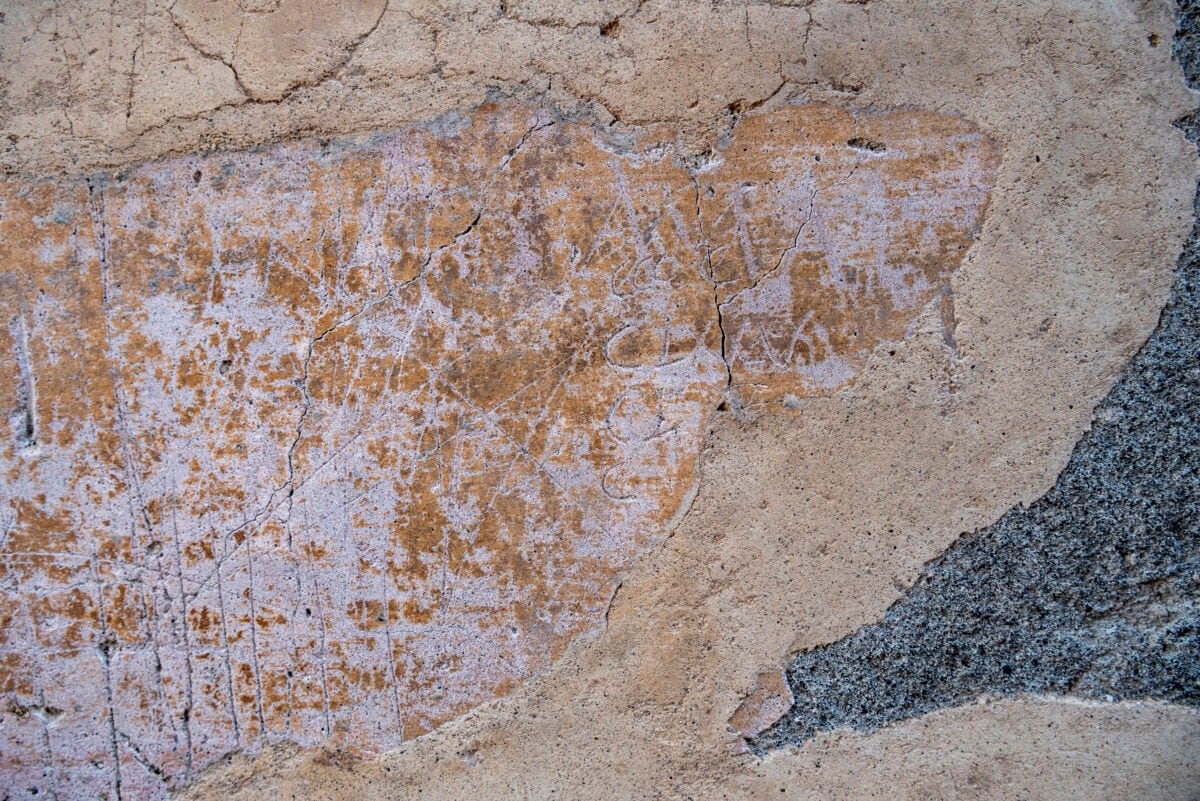
"The Erato graffiti is fragmentary, so we don't know who actually loves Erato," said Le Guennec. "Unfortunately, the name of his or her lover was destroyed by time."
Erato was one of the nine muses in Greco-Roman mythology, associated with love poetry. In ancient Rome, the name meant "beloved." Le Guennec explained that it was a name that freed people or slaves might have used, as slaves often had their names changed by their owners. Erato was one of the more common names given to enslaved individuals.
The declaration was also written in slang used by working-class Pompeiians, according to Le Guennec.
Lives of Ordinary People Depicted in Graffiti
The graffiti found in the corridor reflects the lives of people who are rarely represented in historical records or the remnants of grand villas. These inscriptions offer a rare glimpse into the experiences of enslaved, impoverished, and ordinary individuals who made up the majority of the population in the ancient world.
Among the findings are depictions of gladiator combat, portraits, and drawings of animals, ships, and the ubiquitous phallus that appears throughout the Roman world.
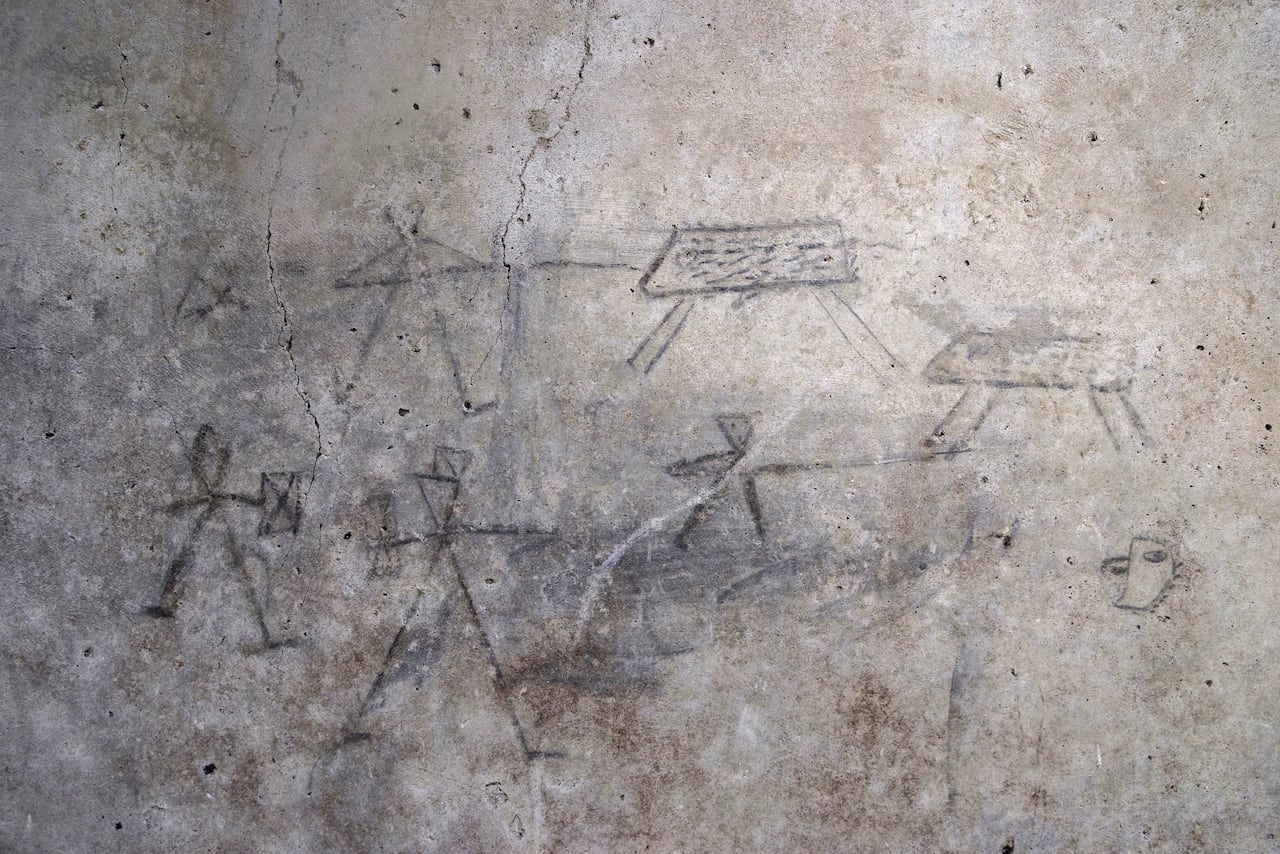
"In the Roman culture, sexual attributes were symbols of prosperity and fecundity, so it's not unusual to find them in a more comical way, with some exaggeration," Le Guennec said. "There’s a lot of feminine sexual representation, too."
The graffiti also provides insight into class and gender dynamics in the ancient city. Women appear in the inscriptions but rarely in posthumous tributes, and even rarer as authors, Le Guennec noted — a quiet reflection of limited access to education.
A Disaster That Preserved History
Pompeii, located near Naples in southern Italy, was devastated in AD 79 when Mount Vesuvius erupted, burying the city and its residents under volcanic ash and pumice. Today, it is a UNESCO World Heritage Site and home to the Archaeological Park of Pompeii.
Lorna Bieber, a visitor from New York, described the corridor as feeling strangely close to the present. "It's wonderful that common people were reacting just the way that people do now. That they were playful and obscene and funny and wanting to leave their mark," she said. "Never imagining that hundreds and hundreds of years later, other people who have done graffiti are taking a look at it."
Unearthing Drawings with New Techniques
The corridor itself ran between Pompeii’s Teatro Grande, where audiences watched Greek-style drama, and the smaller Odeion, used for music and recitations. Spectators passed through it during breaks; commercial people moved through it on errands; soldiers, enslaved people, and citizens leaned against its walls. Its surface was marked by the casual presence of all these groups.
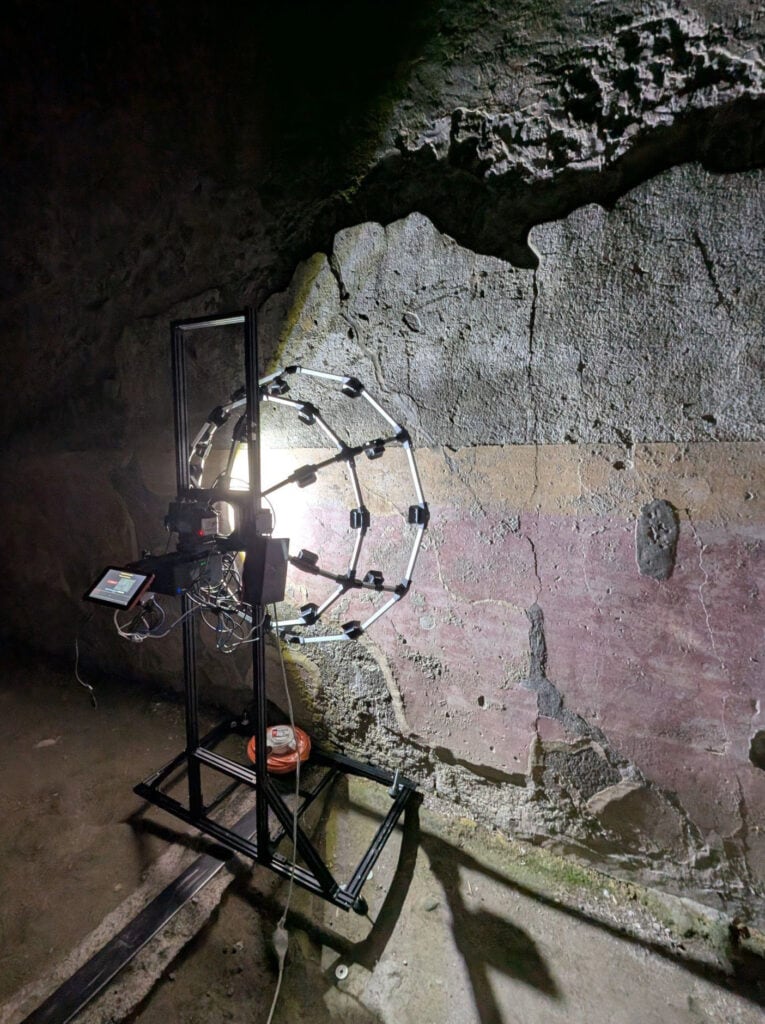
However, reading the marks proved challenging. Many were so faint that earlier scholars dismissed them as random scratches. The team's breakthrough came with a photographic technique called Reflectance Transformation Imaging (RTI). This method involves photographing a flat surface dozens of times under shifting light, then using a computer to create a 3D digital model. Researchers can move a virtual light across the surface, revealing faint inscriptions that are invisible to the naked eye.
The team worked at night inside the corridor itself, using an RTI acquisition dome built by the French imaging firm Mercurio Imaging.
For Pompeii archaeologist Giuseppe Scarpati, the drawings on the corridor walls serve as a kind of map of the daily world that surrounded them. "Pompeii sat closer to the coastline 2,000 years ago than it does today, with ships continually moving in and out of its port," he said. "What people saw they drew."
Across the broader archaeological site, uncovered some 230 years ago, more than 10,000 graffiti have been recorded. However, Gabriel Zuchtriegel, director general of the Archaeological Park of Pompeii, calls the corridor one of the most important spaces in the once-buried city. "It's a huge help in filling in the gaps of the ancient world," he said.
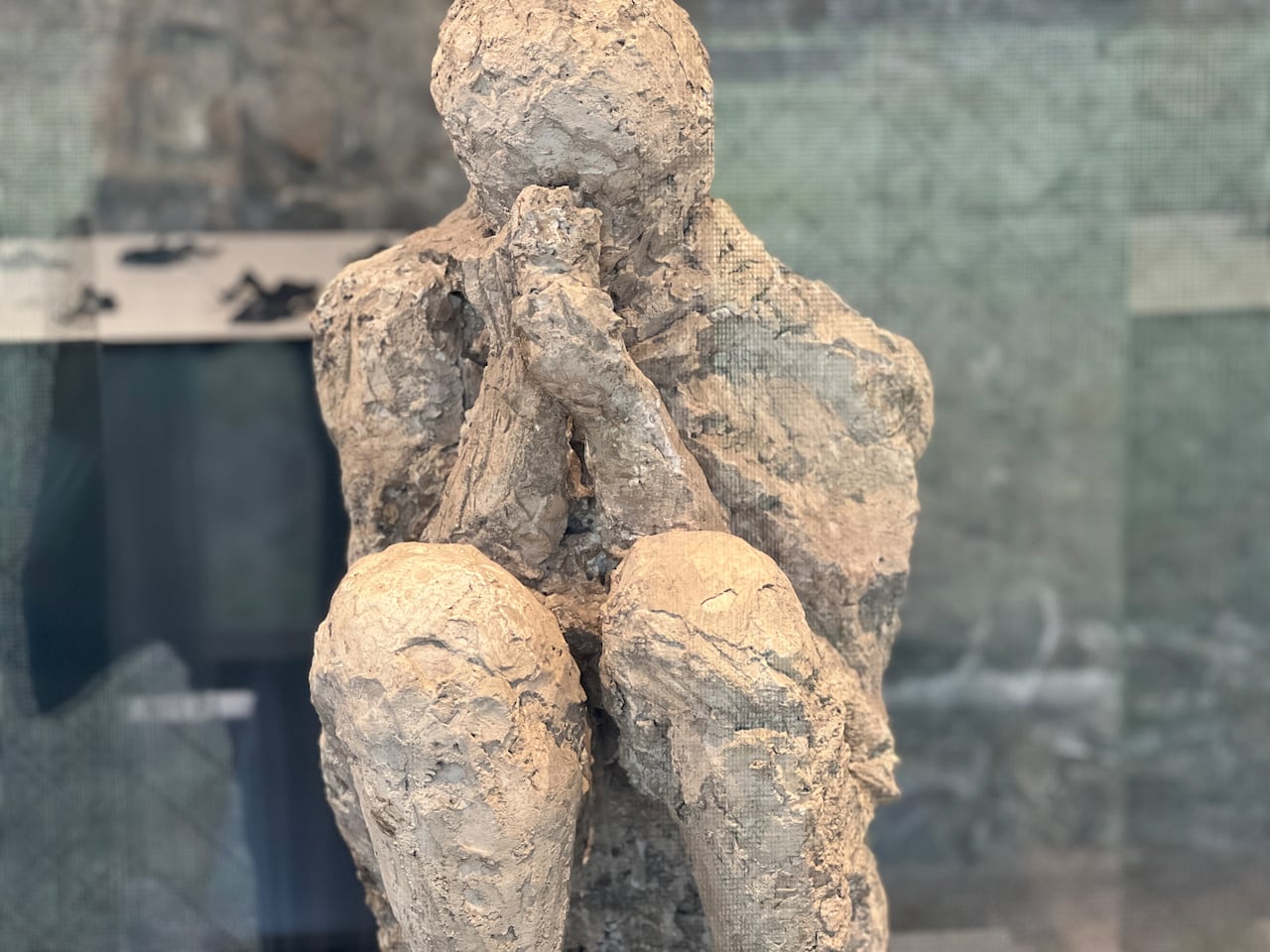
Artificial intelligence was not used in the corridor's analysis, but Scarpati notes that the park recently used AI to render an image of the remains of a man fleeing the eruption of Mount Vesuvius in AD 79 with a large terracotta bowl he likely used to protect his head from falling volcanic material. Scarpati is curious about what such tools might one day do for the graffiti. "I can’t wait to see some of these graffiti brought to life by AI," he said.
A Digital Platform for the Past
In June, the Bruits de couloir team plans to launch a public digital platform that will combine photogrammetry of the corridor with high-resolution RTI data and the entire epigraphic record. Anyone with a screen will soon be able to step inside the ancient corridor and put an ear to its 2,000-year-old whispers.