Astronomers Spot Atmosphere on Distant World
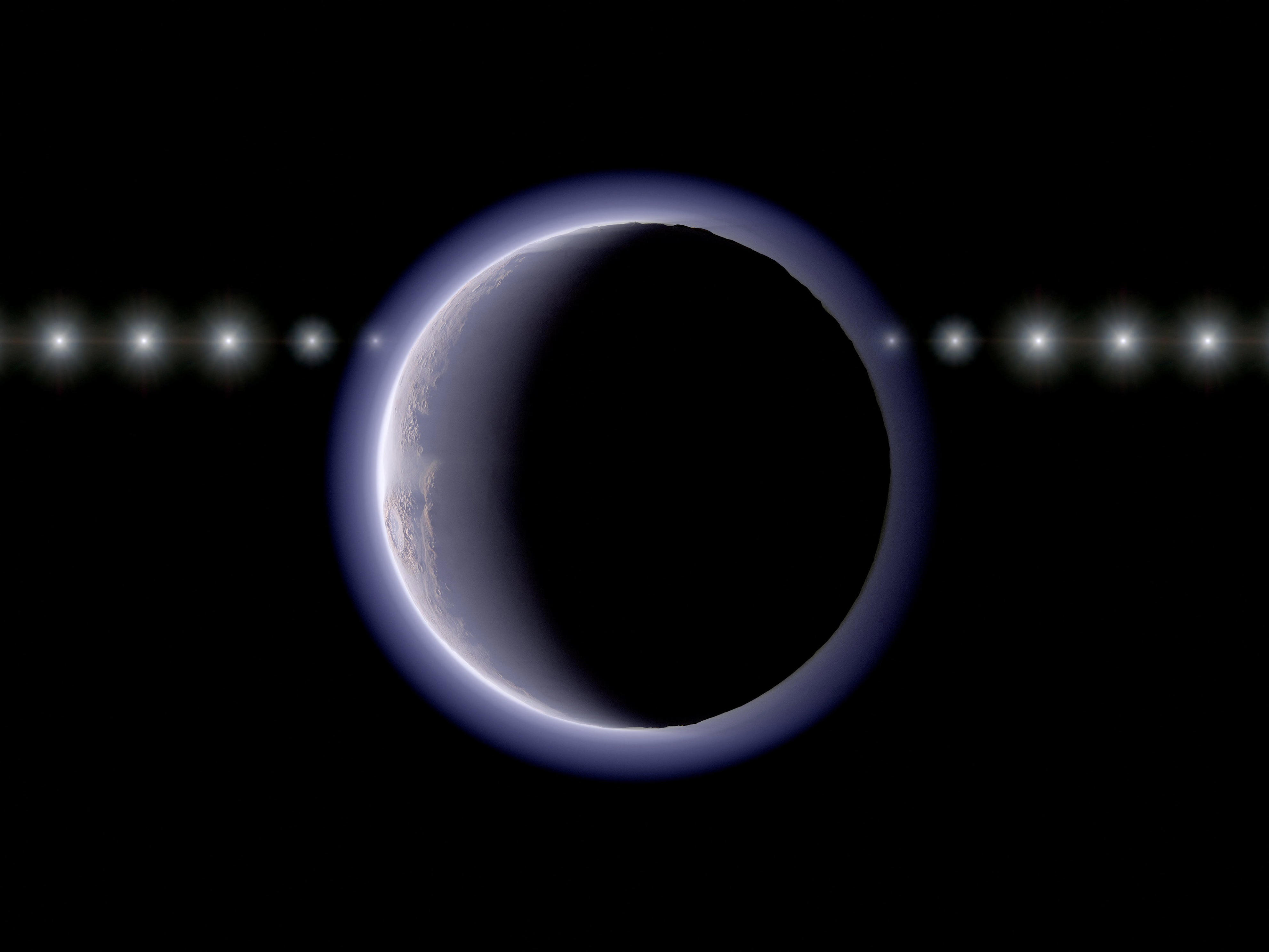
Beyond the orbit of Neptune, the outer edges of our solar system are home to thousands of icy objects, many of which resemble Pluto. For a long time, scientists believed that these bodies, known as trans-Neptunian objects, were too small and cold to maintain an atmosphere. However, recent research from a team in Japan has challenged this assumption.
What Are Trans-Neptunian Objects?
Trans-Neptunian objects are celestial bodies located beyond the orbit of Neptune. These ancient remnants from the early days of our solar system are not classified as planets because they don't meet the criteria for planetary status. They reside in a region called the Kuiper Belt, which is similar to the asteroid belt between Mars and Jupiter but much farther out.
Pluto, the most famous of these objects, was once thought to be the only trans-Neptunian object with an atmosphere. However, new findings suggest otherwise.
A Tiny Object With a Surprising Atmosphere
A Japanese team of astronomers has discovered evidence of a thin atmosphere around a small trans-Neptunian object named (612533) 2002 XV93. This object is roughly 310 miles in diameter, making it significantly smaller than Pluto. Despite its size, the researchers believe it has a tenuous atmosphere composed of gases like methane, nitrogen, or carbon monoxide.
This atmosphere is estimated to be 5 to 10 million times thinner than Earth's, according to reports from Reuters. The discovery was made using ground-based telescopes in Japan, as the object passed in front of a distant star from Earth's perspective.
The study was published on May 4 in the journal Nature Astronomy.
How Did the Atmosphere Form?
Most trans-Neptunian objects are too cold and lack sufficient gravity to sustain an atmosphere. The existence of one around such a small body raises important questions about how and when the atmosphere formed and why it has remained.
The researchers proposed two possible explanations for the presence of the atmosphere:
- One theory suggests that a cosmic event may have brought frozen or liquid gases from deep within the object to its surface.
- Another possibility is that a comet impact released gas, creating a temporary atmosphere.
Further observations are needed to determine the exact composition of the atmosphere and to understand how it has persisted over time.
Implications of the Discovery
This finding could change our understanding of trans-Neptunian objects and their potential to support atmospheres. It challenges the long-held belief that only larger bodies can maintain such features. Future studies may help scientists uncover more about the conditions in the outer solar system and the processes that shape these distant worlds.
As research continues, the scientific community will likely gain new insights into the nature of these icy bodies and their role in the history of our solar system.
