Bezos Proposes Moon Relocation for Polluting Industries and AI Data Centers
Jeff Bezos Advocates for Lunar Industrialization to Protect Earth
At the VivaTech conference in Paris, Jeff Bezos, founder of Amazon and Blue Origin, presented a bold vision for the future of humanity. He argued that relocating heavy, polluting industries to the Moon is essential to preserving Earth as a liveable "garden planet." According to Bezos, the Moon represents a geographic asset that could drive global economic growth while significantly reducing the environmental burden on our home planet.
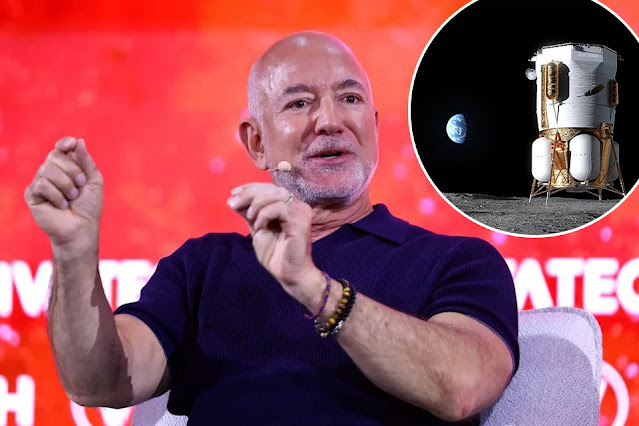
Jeff Bezos, founder of Amazon and Blue Origin, speaks during the 10th edition of the VivaTech technology startups and innovation fair in Paris, France, June 17, 2026. | REUTERS
Bezos emphasized that his long-term vision involves moving all polluting industries off-Earth. He highlighted the importance of restoring Earth to its pre-industrial revolution state, describing environmental degradation as one of the most significant ways the modern world has deteriorated over the past 500 years. This conference marks the first time Bezos has publicly advocated for large-scale industrialization of the lunar surface.
Shifting AI Data Centers into Orbit
One of the key components of Bezos’s plan involves shifting massive data centers required to power artificial intelligence into space. This strategy aligns with the ambitions of other aerospace entrepreneurs like Elon Musk, who has also proposed off-world AI infrastructure. Both Bezos and Musk believe that moving computing workloads into space is essential for scaling AI technology to its full potential.
However, Bezos diverges from common concerns about AI's impact on the global workforce. While many worry that automation will lead to mass unemployment, Bezos predicts the opposite: an unprecedented demand for human workers due to the labor shortages AI will create.
"I know there's a lot of concern that many people have, including many smart people, that AI is going to make humans redundant and so on," Bezos said. "I totally disagree with this point of view. And I think, in fact, AI is going to create a labour shortage."
Blue Origin’s Lunar Pipeline and Launchpad Setbacks
Despite these ambitious goals, Blue Origin faces several challenges. The company has already submitted a formal proposal to U.S. regulators to build a network of more than 50,000 satellites designed to support heavy AI workloads. Additionally, Blue Origin is deeply involved in NASA’s Artemis Program, which aims to return humans to the lunar surface by the end of the decade.
The firm has secured multi-billion dollar contracts to develop launch and landing vehicles for NASA, as well as a contract worth hundreds of millions of dollars to deliver rovers to support future astronauts on the Moon.
However, operational hurdles remain. Just days after securing the rover contract, Blue Origin’s flagship New Glenn rocket exploded during a routine test at a launchpad in Cape Canaveral, Florida. The explosion caused extensive damage to the billion-dollar facility, necessitating a major reconstruction effort. Despite this setback, Blue Origin CEO Dave Limp downplayed long-term delays, stating that repairs are being expedited and flight tests are expected to resume before the end of the year.
Future Prospects and Challenges
Bezos’s vision for lunar industrialization represents a significant shift in how we think about space exploration and environmental sustainability. By relocating polluting industries to the Moon, he envisions a future where Earth can be preserved as a habitable planet. However, the path to achieving this goal is fraught with technical and regulatory challenges.
As Blue Origin continues to push the boundaries of space technology, the success of its lunar initiatives will depend on overcoming these obstacles. With the support of NASA and private investors, the company remains committed to its mission of expanding human presence beyond Earth. Whether this vision becomes a reality will depend on the ability to navigate the complex landscape of space exploration and industrial development.
