China Launches Driverless Mining Truck with Crab-Walk Mobility
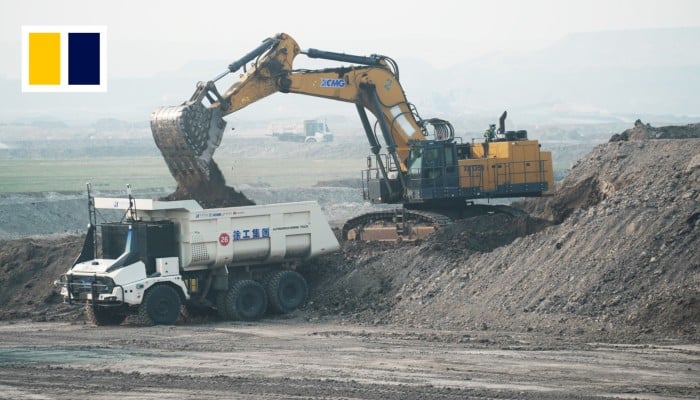
Introduction to the Shuanglin K7
The Shuanglin K7 is a groundbreaking innovation in the mining industry, marking a significant leap forward in technology and efficiency. This vehicle is the world's first mining truck capable of moving sideways and pivoting on the spot, enabling it to operate effectively in narrow pits and complex terrains. Its unique capabilities highlight China's commitment to modernizing its mining operations through advanced technological solutions.
Key Features and Capabilities
Measuring over five metres tall and wide and 13.79 metres long, the Shuanglin K7 was unveiled in Shanghai on April 18. Developed by the Shuanglin Group, a Shanghai-based automotive components manufacturer, in collaboration with Tsinghua University, this truck represents a fusion of engineering excellence and cutting-edge research.
One of the most notable features of the K7 is its ability to perform lateral translation and on-the-spot turns, which significantly reduces the time required for turning around in tight loading areas. This capability minimizes blind-spot risks that are common with traditional mining trucks. The K7 achieves this through a distributed electric drive-by-wire corner module, making it the first driverless mining truck to utilize this technology.
Each wheel of the K7 has its own compact unit for driving, steering, and braking. These modules are controlled electronically rather than mechanically, offering enhanced control and flexibility. According to Huang Jin, a professor at Tsinghua University's school of vehicle and mobility, this technology greatly improves operational flexibility and site adaptability in complex environments.
Safety and Efficiency
Huang also highlighted that full-wheel steering, combined with electronic and electrical redundancy, allows the vehicle to maintain up to 70 per cent of its hauling capacity even if part of the system fails. This feature provides a critical safety foundation for the large-scale use of driverless trucks in open-pit mines.
In terms of efficiency, the K7 is equipped with a 100-cubic metre cargo tray, boasting a rated payload of 158 tonnes and a maximum loaded speed of 29 km/h (18 mph). The truck supports a five-minute rapid battery swap and can recover up to 85 per cent of its kinetic energy through regenerative braking, facilitating 24-hour unstaffed operation.
Launch simulation data suggests that fleets using the K7 could increase transport efficiency by 35 per cent while decreasing the risk of typical safety incidents by around 90 per cent. This impressive performance underscores the potential of the K7 to revolutionize mining operations.
Broader Implications and Future Developments
The development of the K7 is part of a broader trend in China's efforts to electrify and automate its mining industry. The government has been promoting the transition towards reduced-staff and fully unmanned operations to better guard against major safety risks. A 2024 document jointly issued by the Ministry of Emergency Management and other departments outlines the goal of fully integrating smart technology, equipment, and automated management in the mining sector by 2030.
Progress in this area is already evident. Last May, state energy giant China Huaneng Group launched the world's largest fleet of driverless electric mining trucks in Inner Mongolia autonomous region, featuring 100 vehicles equipped with autonomous driving systems from Huawei Technologies. Similarly, in late April, nearly 300 driverless electric trucks were seen in operation at a large open-pit coal mine in the Gobi Desert of northern Xinjiang Uygur autonomous region.
These developments reflect a growing shift towards automation and electrification in the mining industry. In December, Tsinghua researchers announced a similar design: a fully modular, intelligent electric-drive heavy-duty vehicle that can move massive loads such as rocket bodies, transformers, and wind turbines. Like the K7, this prototype achieved a "full decoupling" of its wheels from mechanical linkages, enabling it to move diagonally and sideways. Its quiet electric operation also makes the technology suitable for military or urban transport.
Conclusion
The Shuanglin K7 represents a significant milestone in the evolution of mining technology. With its unique capabilities, enhanced safety features, and impressive efficiency, it sets a new standard for the industry. As China continues to invest in smart technology and automation, the future of mining looks increasingly promising, driven by innovations like the K7. The integration of such advanced vehicles into mining operations not only enhances productivity but also contributes to safer and more sustainable practices in the sector.
