Does the 2026 Dodge Charger EV deserve the hate? I have some thoughts after driving one for a week
If we go back just a few years, when EVs were in their early stages, many automakers were scrambling to make them more appealing to buyers on the fence. To do that, they tried to make them sound, look, and feel like “normal” cars. To do that, some cars were fitted with speakers that emulated engine sounds or simulated shifting. Some people loved them, some people venomously hated them because they weren’t “real” cars. There were even some claims that they represented the impending doom of cars as we know them.
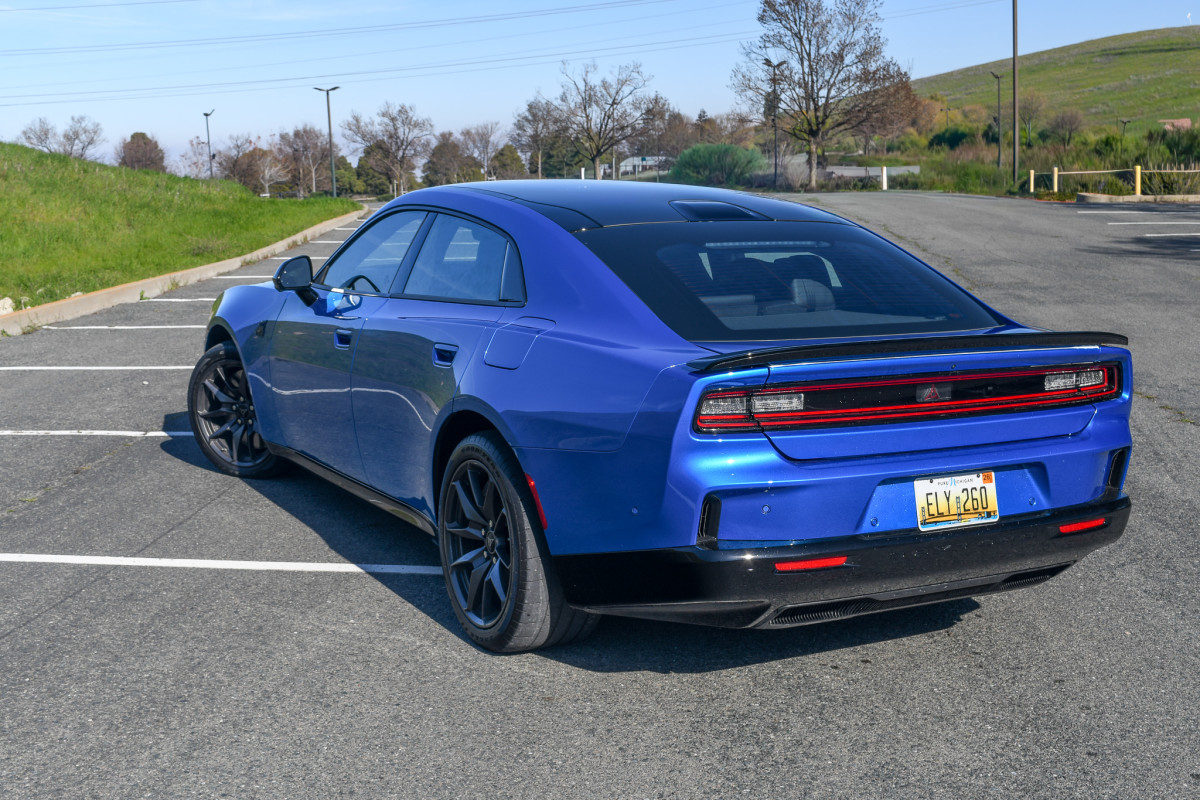
The 2026 Dodge Charger EV Daytona Scat Pack Track Package is one such EV. Dodge put speakers on it to sound like it had a burbling V8 that matched up to the RPMs, so when it was idling, it rumbled—and it worked in tandem with the sound system’s subwoofer to amplify the effect in the cabin. Many auto writers condemned it, saying it was cheesy and, if anything, hurt an otherwise decent EV. Before driving it, everything I heard about the Charger EV was negative. Do some of those negative opinions hold weight? Here’s what I think after a wheel behind the wheel.
Yes, it has a fake exhaust—though it certainly makes it unique (and fun)
The Monroney labels the “exhaust” system as a Fratzonic Chambered Exhaust. It’s Dodge’s over-engineered take on "active sound enhancement" that’s seen in other EVs, like the Porsche Taycan or Hyundai IONIQ 5 N. Unlike the Hyundai IONIQ 5 N, which uses an advanced synthesizer that reacts to torque and RPM, the Fratzonic system is a physical acoustic device installed on the rear of the car. Here’s how it works: a dedicated 600-watt amplifier sends signals to two high-bandwidth transducers (think of these as powerful speakers without the traditional paper cones).
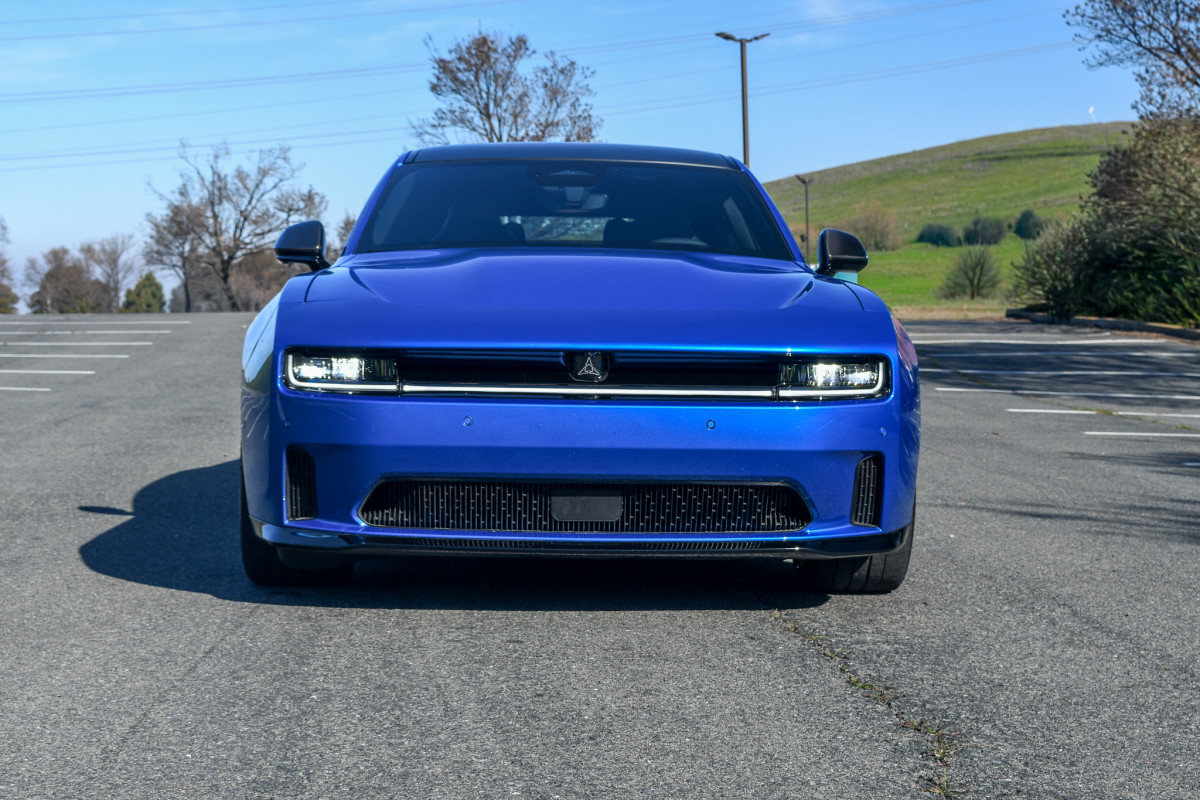
These transducers aren't just open to the air; they are housed in a tuned resonance chamber with passive radiators and "pipes" that mimic the internal geometry of a traditional muffler. The raw sound waves are physically moved through these chambers to create that deep, bassy rumble that reaches 126 dB in Track, Sport, or Drag mode—which, if you didn’t know, matches the volume of a Hellcat V8. To complete the "feel," Dodge added force generators (actuators) to the chassis. These vibrate the frame of the car in sync with the sound, so you actually feel the "idle" in your seat and steering wheel. Yes, it’s loud, and it’s proud. And that’s part of the appeal. At least for me.
This system is unique for a few reasons: the aforementioned EVs use engine sound simulators, but they’re much quieter than 126 dB, and they’re largely inward for the driver and passenger (like all EVs have, since it’s, you know, the law). From the outside, the only time the volume of the “engine” is increased is to make its presence known to pedestrians. The Charger EV is, then, the loudest EV on the road. Though if you really don’t like it, Auto or Stealth mode immediately subdues it. I’m sure my neighbors very much appreciated it.
Let’s cut to the cheesy chase
Here’s the cheesy part of it: even though from a design and engineering standpoint it’s a pretty cool system (at least I think so), the audio has a very noticeable loop when it’s idling. You can hear when the clip stops and restarts. And while it does sort of match the sound to the position of the accelerator, there’s an obvious delay. Plus, when you’re driving in Sport mode, the sound doesn’t change octave to sound like it’s shifting gears. Instead, it makes it sound like you left the car in first gear. Since there’s no obvious badging indicating that it’s the electric version of the Charger, people might hear that and wince, thinking you’re burning up the transmission.
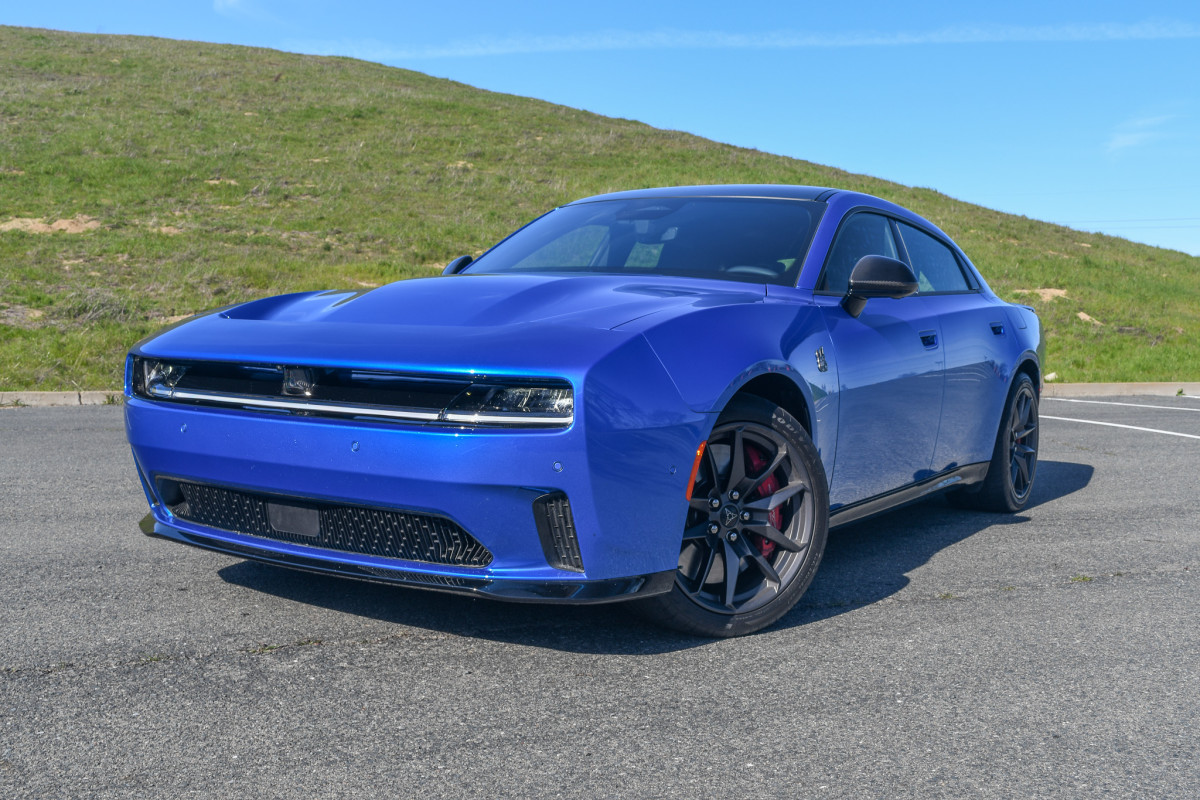
And there’s an interesting backstory for that. Unlike the Hyundai Ioniq 5 N, which uses N e-Shift to physically simulate the jolt and sound of an 8-speed dual-clutch transmission, the Dodge Charger Daytona is currently a single-speed setup. Dodge discussed "eRupt" shifting logic, but in early production and testing, many have noted exactly what you described—a linear "endless gear" drone rather than distinct shifts. Though this technology will reportedly be included in the upcoming 800-volt Banshee version. I drove the 400-volt version.
