In the global AI race, a sanctioned Chinese firm claims cheaper models can still win
The Evolving Landscape of AI Competition
Artificial intelligence (AI) has moved beyond the traditional tech sector, with platforms leveraging their financial and user advantages to dominate the market. Analysts highlight that this shift is reshaping the competitive dynamics in the AI industry.
SenseTime, a Hong Kong-listed company under U.S. sanctions, is betting on cost-effective models to capture market share despite quality gaps. According to cofounder Lin Dahua, the firm is actively expanding globally while maintaining its Middle East plans unchanged.
China's AI race shows no signs of slowing down. DeepSeek, Moonshot AI, Alibaba, and even consumer electronics giant Xiaomi have all launched new models recently, competing for top positions on leaderboards. From startups to established platform giants, companies are under pressure to innovate, expand their user base, and find sustainable revenue streams. At the same time, they must manage rising research and development costs and the expense of computing power and hardware.
SenseTime, one of China’s early AI pioneers, has evolved to stay relevant in the generative AI era. Known for facial and image recognition, the company now develops multimodal systems capable of processing text, audio, and visual data simultaneously.
Founded in 2014 in Hong Kong, SenseTime has faced U.S. sanctions over allegations related to surveillance in Xinjiang, which it has denied. Its latest model, SenseNova U1, integrates language and vision processing into a single system, improving speed and efficiency by eliminating the need to translate between different modes.
A Focus on Cost Efficiency
SenseTime is emphasizing cost efficiency as a key competitive advantage. Cofounder and chief scientist Lin Dahua noted that the company has taken inspiration from DeepSeek’s approach of delivering high-performing models under financial and technological constraints.
While OpenAI’s ChatGPT Images 2.0 produces "exquisite and beautiful" results, SenseNova U1 costs ten times less, according to Lin. He explained that in many cases, users may not need the top-tier model if it can handle most tasks effectively. Although there is still a gap between SenseTime’s models and international leaders like OpenAI’s GPT Image 2 and Gemini’s Nano Banana, the company’s lower cost makes it highly efficient.
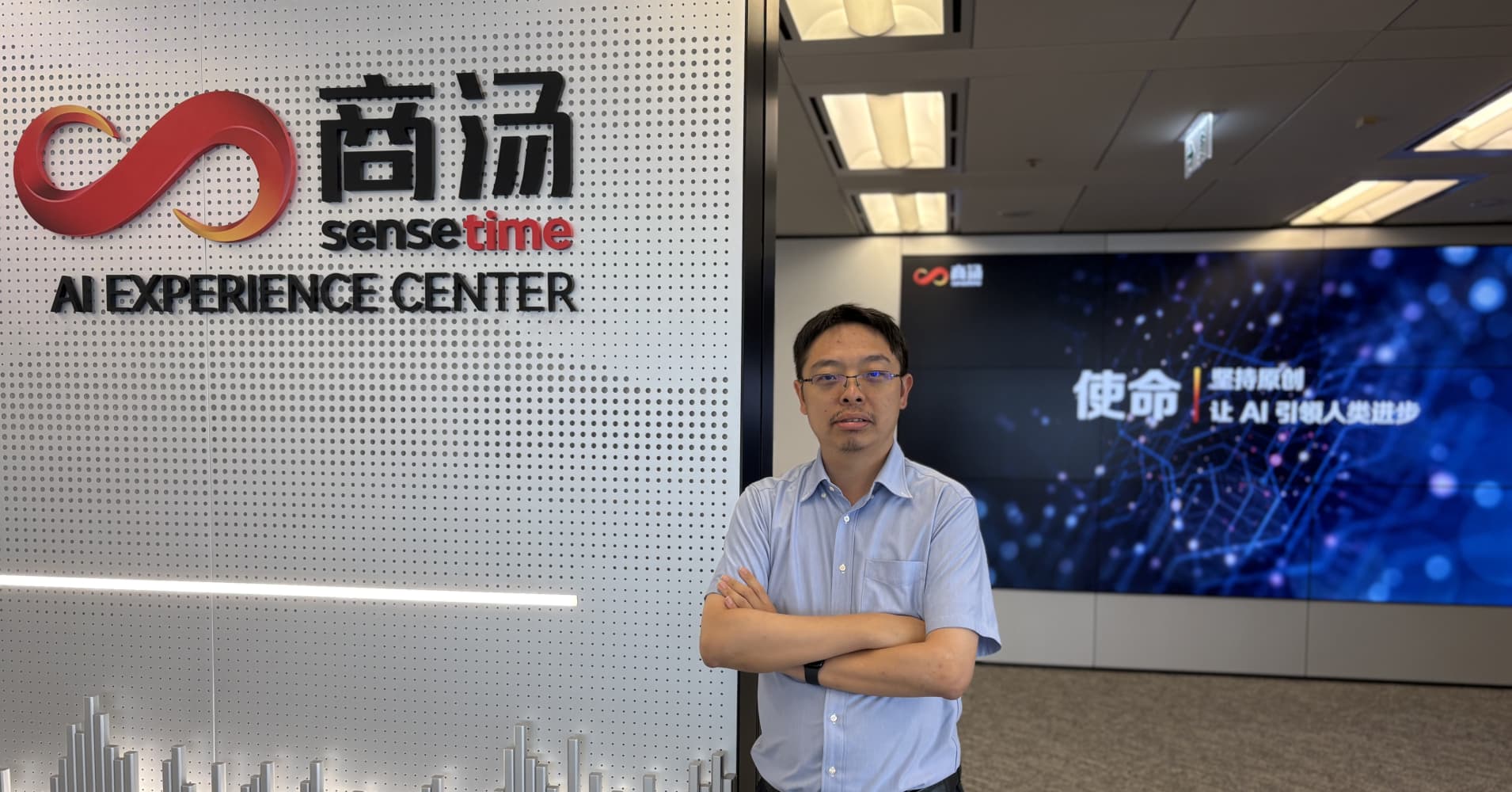
The real competition in the AI space may be more domestic than global. Lin mentioned that ByteDance’s AI video model Seedance initially posed a challenge. However, SenseTime has since integrated some of Seedance’s capabilities into its short-video tool Seko, combining Seedance’s background generation with its own audio functions.
Beyond the Model Race
Technology alone is not enough; business models are becoming increasingly important. OpenAI’s reported missed revenue and user targets, as reported by The Wall Street Journal, signal risks for both Chinese and American players, according to Jefferies.
Pure-play AI model companies face a tough equation: low customer loyalty, limited differentiation, a crowded field, and high training costs, Jefferies said. In contrast, large internet platforms have stronger cash flow, access to user data, and established customer bases to sell AI applications to.
In China, platform companies such as Alibaba, Tencent, and ByteDance can use their core businesses to subsidize AI development and enhance existing operations, said Vey-Sern Ling, a senior equity advisor at UBP.

"They are obviously in a better position than the standalone ones, which continue to be loss-making," Ling added, noting that heavy AI spending has weighed on profits even at larger players like Alibaba and Kuaishou.
To stand out, SenseTime has combined large AI models, applications, and infrastructure to improve service quality while lowering costs per use. Many of its products target enterprise clients, who often demand higher-quality services, are willing to pay more, and less likely to switch providers.
SenseTime narrowed its net loss by 58.6% last year and reported positive EBITDA in the second half for the first time since listing in 2021—a trajectory investors will closely watch. Lin said the company’s AI costs are "manageable" and largely focused on making models more efficient.
Shares of SenseTime rose 2% Wednesday in afternoon trade.
Pricing Strategies and Market Expansion
Pricing strategies vary across the AI sector. Some companies, including DeepSeek, have recently slashed prices and offered discounts to attract users. Others, such as Zhipu, have raised prices—signaling a push to commercialize advanced models.
The cloud units of Alibaba and Baidu have also increased prices amid surging demand for AI computing power. ByteDance is planning a subscription service for certain features of its popular AI chatbot Doubao.
"Price wars might serve a strategic function in short-term promotions, but sustainability in the long run depends on differentiated value," Lin said.
Analysts suggest that some AI companies may be following a familiar playbook given China’s massive market: bleeding cash to gain market share before raising prices later to monetize.
"They cannot keep subsidizing the usage of AI because it's very expensive," UBP’s Ling said. "Either they can paint a picture of huge future usage and demand and help investors understand that near-term losses are acceptable. Or they have to start monetizing much sooner."
Expanding Beyond Washington
Facing U.S. export and investment restrictions, SenseTime has focused its international expansion on markets such as Southeast and North Asia, the Middle East, and more recently, Brazil. The U.S.-Israeli war on Iran has caused short-term disruptions, impacting flights and interactions, but Lin said the company’s long-term strategy in the region remains unchanged.
Cost-efficiency and practical utility matter as much in overseas markets. "Oftentimes, the reason behind repeat buying is not about the technology being particularly advanced, but providing the best service at a competitive price," Lin said.
