Thailand Targets Russian Trade Expansion
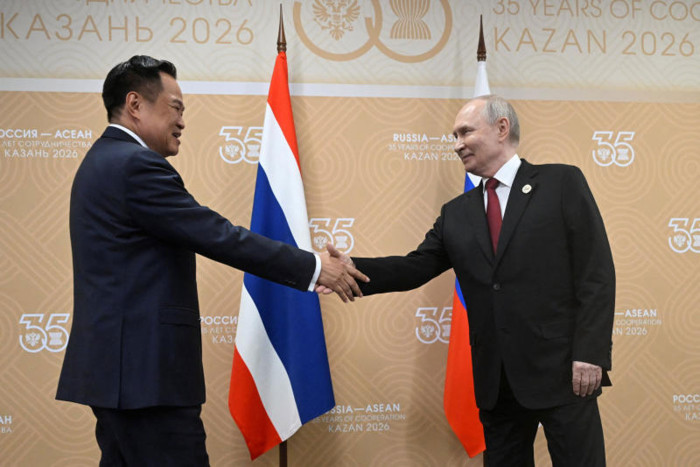
Strengthening Trade and Investment Between Thailand and Russia
Thailand and Russia are making significant efforts to enhance their trade and investment cooperation across various sectors, including energy, fertilizers, digital technology, and innovation. This initiative aims to foster a more robust economic relationship between the two nations, leveraging their respective strengths and market potentials.
Prime Minister Anutin Charnvirakul emphasized this during the Asean-Russia Business Forum, positioning Thailand as a strategic gateway for Russian businesses looking to access the Asean market, which boasts over 700 million people. This move underscores Thailand's role as a key player in facilitating economic ties between Russia and the broader Southeast Asian region.
Reviewing the Partnership and Future Cooperation
During the Asean-Russia Commemorative Summit, which marked the 35th anniversary of Asean-Russia relations, Foreign Affairs Minister Sihasak Phuangketkeow highlighted the importance of reviewing the partnership's development and discussing future cooperation. He noted that Russia plays a crucial role in regional security and has consistently shown its commitment to Asean, which is a central pillar of peace and stability in the region.
Mr. Sihasak pointed out that discussions with the private sector revealed that economic engagement between Thailand and Russia remains below its true potential, primarily due to trade barriers and restrictions. However, he expressed optimism that improved relations between Russia and Ukraine could unlock greater opportunities for trade and investment.
Current Bilateral Trade and Expansion Plans
Current bilateral trade between Thailand and Russia stands at around US$1 billion (approximately 32 billion baht). Mr. Sihasak mentioned that Prime Minister Anutin had met with representatives of Thai companies operating in Russia, signaling a growing interest in expanding business operations. The minister also stated that Thailand hopes to further expand investment opportunities in Russia.
Emerging Areas of Collaboration
Thailand is seeking closer cooperation with Russia in several emerging areas, including energy, space technology, information technology, science, innovation, and cybersecurity. Mr. Sihasak described these as promising fields for collaboration, emphasizing the potential for mutual growth and development.
In the energy sector, Russia has shown interest in increasing exports of energy products such as oil and natural gas to Asean countries, as well as fertilizers, which remain in high demand in Thailand. Mr. Sihasak added that Thailand would pursue proactive diplomacy to facilitate cooperation and expand existing trade ties.
Joint Commission Meeting and Future Visits
A meeting of the Thailand-Russia Joint Commission is scheduled for August to review the overall relationship, identify new opportunities, and address existing obstacles. Additionally, the prime minister is expected to make an official visit to Russia in the near future, which Mr. Sihasak believes will elevate bilateral relations to a new level.
Strategic Gateway for Russian Businesses
Separately, Mr. Anutin told the Asean-Russia Business Forum on Wednesday that Thailand was ready to serve as a strategic gateway linking Russia with Asean. He highlighted Thailand's strengths as a regional hub for trade, investment, and economic connectivity, inviting Russian businesses to use the country as a base to expand into the wider Asean market.
Mr. Anutin noted that Asean-Russia cooperation has continued to develop amid rapid changes in the global economy. Thailand, he said, is undergoing economic restructuring and regulatory reforms to create new opportunities. He identified three priority areas for Thai-Russian cooperation: connectivity, trade and investment, and people-to-people exchanges.
Conclusion
The growing emphasis on trade and investment cooperation between Thailand and Russia reflects a shared vision for economic growth and regional stability. By addressing current challenges and exploring new opportunities, both nations aim to strengthen their partnership and contribute to the broader economic landscape of Southeast Asia.
