China's Huaqiangbei Seeks AI-Driven Global Revival
Shenzhen's Electronics Hub Embraces the AI Revolution
Huaqiangbei, located in Shenzhen, China, is known as the world’s largest electronics marketplace. Recently, this area has transformed into a showcase for artificial intelligence (AI) technology, attracting foreign traders and tourists looking for the latest gadgets.
For first-time visitors like Abigail Slagveer from Rotterdam, Netherlands, the vastness of Huaqiangbei's electronics market is overwhelming. She mentioned that she had been exploring the area for an hour and was still in the early stalls. "I came here one and a half hours ago through that front door," she said, pointing to an entrance just a few meters away on the first floor of Huaqiang Electronics World, one of the major malls in the district. "I'm still stuck here [in the first few stalls]."
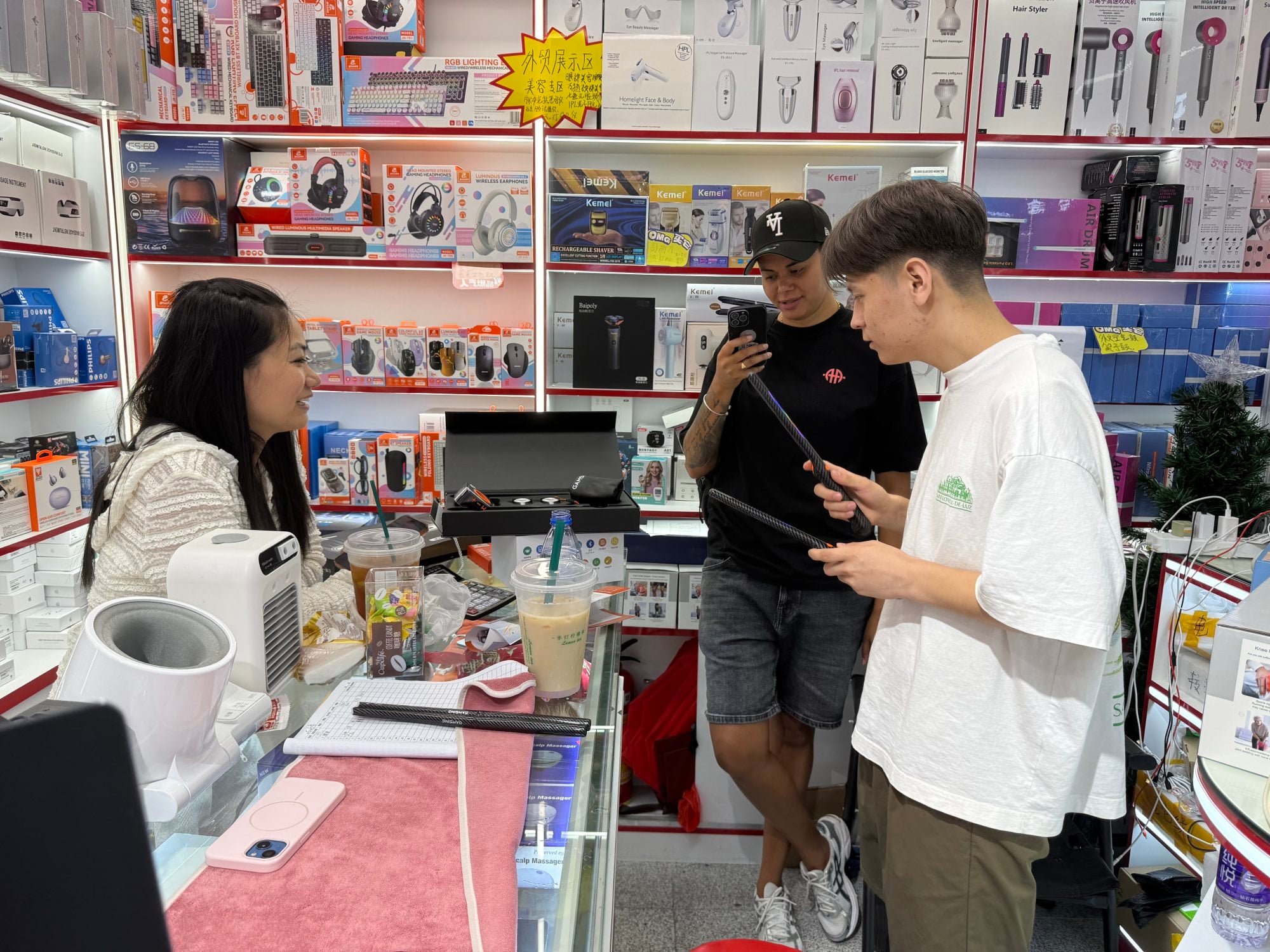
Slagveer, who is searching for gadgets to sell on her online store, spent half an hour at the stall of Red Hoho AI. There, a shop assistant named Kurmanjan demonstrated air drum kits and AI-powered educational robots in English. Manager Tina Liu explained that by owning the factory behind the products, they could offer the best price.
International buyers like Slagveer have been returning in greater numbers over the past year, with trade fair seasons being the busiest for Huaqiangbei, according to Kurmanjan. This trend aligns with China's broader efforts to attract global visitors through visa-free entry and expanded tax refunds, which boost consumption and reverse pandemic-era restrictions.
Shenzhen, home to domestic tech giants such as Huawei Technologies, DJI, and Tencent Holdings, is capitalizing on this momentum to position itself as a global showroom for next-generation AI hardware. The city is leveraging its strong supply chain to support this transformation.
"There was an obvious spike in international traffic last month during the Canton Fair," Kurmanjan said. "It's been quieter after the Labour Day holiday, but we still see a steady stream of foreign customers picking gifts or sourcing for their businesses."
Among the most popular items for international shoppers are AI-powered robots, smartwatches, smart rings, translating devices, and electric suitcases, according to merchants and staff who spoke with the South China Morning Post at Huaqiang Electronics World and SEG E-mart in the Huaqiangbei district.
Long known as "a maker's paradise" for electronic components, Huaqiangbei has also struggled with a reputation for knock-offs—an image that local authorities have been trying to change. Many of the small stalls remain packed with AirPods lookalikes and Dyson-inspired hairdryers, usually priced under 200 yuan (US$30), which are also among the most popular picks for international shoppers.
Shenzhen is aggressively working to shake off the copycat image by promoting curated lists of innovative products, from advanced drones to AI toys and smart glasses. Sales of the second batch of Huaqiangbei's "AI Top Eight"—a list of AI product categories—surged 50 per cent year on year during the Labour Day holiday, official data showed. The district hosted 850,000 visitors daily during the five-day holiday, including 8,000 foreign buyers per day, according to official data.
Merchants are betting that the resurgence of international traffic will continue. The Red Hoho AI shop has put up a job posting at the storefront for a new sales assistant, with "simple English communication" the only requirement. "The new hire will be responsible for our international clients in the future," Kurmanjan said.
