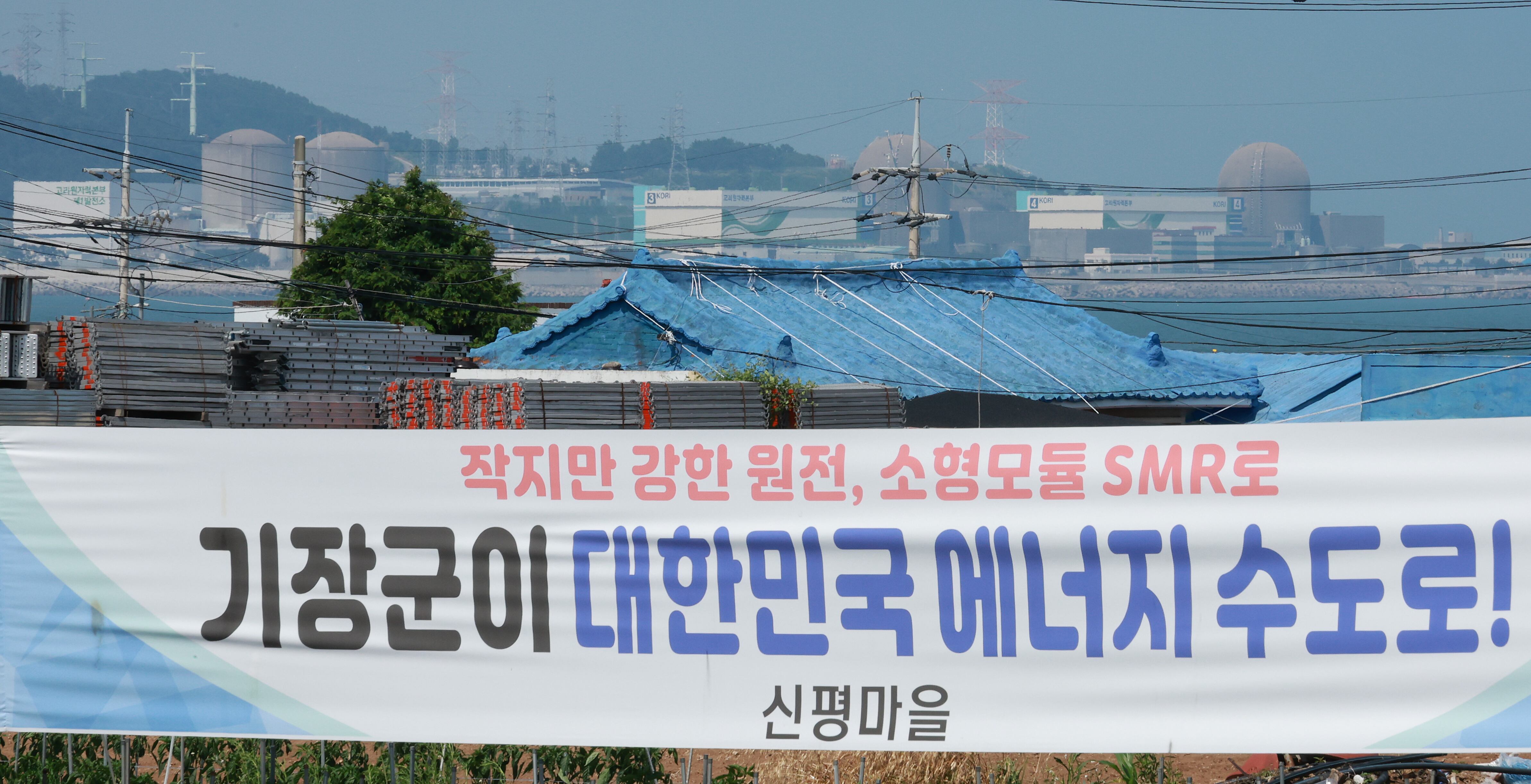
South Korea's Strategic Move in the Nuclear Energy Sector
South Korea has taken a significant step towards revolutionizing its energy landscape by finalizing Busan’s Gijang County as the site for the country’s first Small Modular Reactor (SMR). This decision marks the beginning of a journey that aims to achieve commercial operation by 2035. SMRs, known for their compact design and ability to be mass-produced in factories before being assembled on-site, are seen as a game-changer in the nuclear power industry. They shift the focus from traditional construction methods to advanced manufacturing, offering a more efficient and scalable approach.
The SMR planned for Gijang is particularly noteworthy because it represents a leap in energy sovereignty. It is the Korean innovative small modular reactor (i-SMR), which South Korea has independently designed and holds intellectual property rights for. The strength of South Korea's manufacturing and equipment supply chains has not gone unnoticed, with leading U.S. companies reaching out to collaborate. For instance, Doosan Enerbility has secured the equipment supply rights for NuScale Power, while SK and HD Hyundai have joined as key partners by investing in Bill Gates’ TerraPower.
Advantages of SMRs in Modern Energy Systems
One of the most compelling aspects of SMRs is their ability to address transmission and distribution challenges effectively. Traditional large-scale nuclear reactors often lead to social conflicts and high costs due to the need for ultra-high-voltage transmission towers from coastal areas to power demand centers. In contrast, SMRs, with their superior safety features, can serve as distributed power sources located near major cities or industrial complexes. Unlike renewable energy sources, which depend on weather conditions, SMRs provide a stable and consistent power supply.
If installed in strategic locations such as semiconductor industrial complexes in Yongin, Icheon, or Cheongju in Gyeonggi Province, SMRs can quickly resolve power instability issues. Moreover, in the event of an accident, natural cooling mechanisms can be employed, significantly reducing radiation leakage concerns and limiting potential damage. This reliability has earned SMRs recognition as a practical alternative for achieving carbon neutrality, even among environmentalists.
Global Market Dynamics and Strategic Alliances
Excluding China and Russia, which face restrictions in Western supply chains due to security concerns, the primary players in the SMR market aiming to address the AI-driven power crisis will be the United States and South Korea. While the U.S. possesses advanced design technology, its equipment supply chain has suffered from a 30-year construction hiatus. South Korea, on the other hand, boasts a robust construction and manufacturing ecosystem. A strategic partnership between the two nations—combining U.S. technology and finance with South Korea’s manufacturing capabilities—could be pivotal in capturing a global market valued at several quadrillion won (trillions of dollars).
Future Prospects and National Support
The first domestic SMR to be built in Busan’s Gijang will not only supply regional power but also serve as a powerful export platform. It will showcase the construction capabilities and safety standards of K-nuclear reactors to the world. To meet the 2035 operational target, the government must provide administrative support, including streamlining permits and exempting preliminary feasibility reviews. Additionally, the National Assembly must set aside ideological differences and swiftly provide legal backing. The success of SMRs will play a critical role in shaping the future of energy sovereignty and advanced industries.
Additional Information
For those interested in accessing more content, there are various membership options available. One such option offers a monthly subscription for 5900 won, with a discounted rate of 2900 won for newspaper readers. Another membership provides access to 8 different newspapers and magazines worth up to 55000 won, along with 7000 points that can be used like cash for shopping.
Komentar (0)