EU targets high-risk Chinese inverters over cyber risks
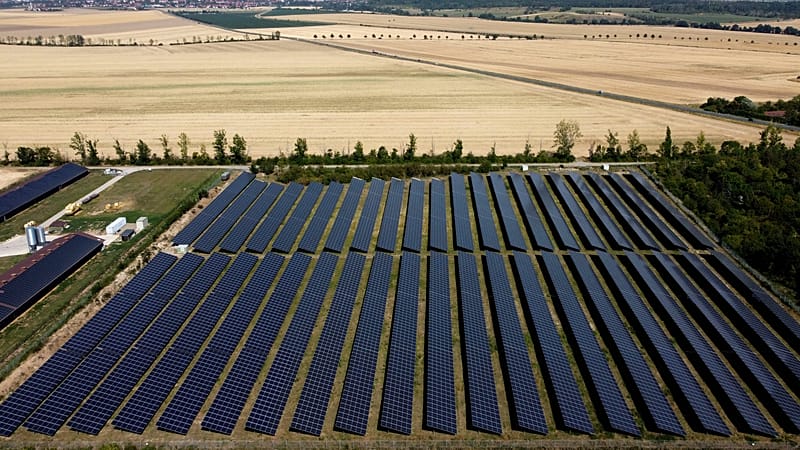
EU Takes Steps to Secure Energy Infrastructure
The European Commission has announced a significant shift in its approach to energy infrastructure, aiming to gradually phase out the use of Chinese-made inverters in EU-funded energy projects. This move is part of a broader strategy to safeguard critical energy systems from potential cyber threats that could lead to power outages.
Risks and Concerns
Analysts have raised concerns about Europe's heavy reliance on solar inverters produced by companies like Huawei and Sungrow. These components are essential for converting and regulating power from renewable sources such as wind and solar. The EU official, speaking anonymously, highlighted serious economic and cybersecurity risks associated with this dependence.
The findings suggest that certain countries, including China, Iran, North Korea, and Russia, could potentially undermine European energy infrastructure, leading to blackouts in a worst-case scenario. Inverters, often referred to as the "brain" of electricity networks, play a crucial role in managing power flow from renewable sources and storage systems.
Economic Security Over Industrial Policy
The EU’s decision is framed as an economic security measure rather than an industrial policy. This means that companies from trusted partners such as Japan and South Korea will remain eligible for EU-funded projects. The initiative aims to encourage EU countries and international partners to adopt similar approaches, with Lithuania already taking steps to restrict high-risk energy technologies.
This decision follows a policy outlined in December 2025, when the EU executive signaled it would use funding rules to reduce dependencies on suppliers deemed a security risk. As Europe accelerates its transition to renewable energy, ensuring the security of underlying technologies has become a priority.
Funding Restrictions
The new guidance applies across all EU funding instruments, including financing from the European Investment Bank and the European Bank for Reconstruction and Development. Rather than introducing new legislation, the Commission will enforce restrictions through existing tools, such as project-level policy checks and provisions under the EU’s financial regulation.
All EU-funded projects must now comply with updated cybersecurity requirements. A transitional period will run over the coming months for projects already at an advanced stage. By 1 November 2026, such projects will be assessed under the previous framework but may need to adopt additional cybersecurity measures or exclude high-risk suppliers.
A stricter phase-in will follow from April 2027, when new contracts and agreements will fully incorporate the restrictions. Limited derogations may be granted on political or security grounds.
Implementation Timeline
The Commission has set an ambitious implementation timeline. By 1 July 2026, all its services must review ongoing activities and propose how to integrate the new restrictions. A further assessment, due by 15 July, will evaluate whether alternative suppliers can meet demand and ensure sufficient production capacity.
Response from China Chamber of Commerce to the EU
The China Chamber of Commerce to the EU (CCCEU) rejected the EU's claims of potential energy weaponisation from Beijing. They stated that Chinese companies have long contributed to the bloc's energy transition through reliable, competitive, and widely deployed inverter and grid technologies.
The CCCEU spokesperson urged the EU to uphold the principles of technology neutrality and non-discrimination, avoid introducing non-market barriers into green finance and infrastructure cooperation, and continue fostering an open environment for global collaboration on the energy transition.
They also suggested that framing inverters in geopolitical terms risks over-securitising normal commercial technologies and could undermine fair competition, investor confidence, and the stable functioning of global supply chains in the clean energy sector.
Alternative Suppliers
Despite concerns over supply disruptions, officials expressed confidence that the market can adjust. While Chinese manufacturers currently dominate the global inverter market with an estimated 80% share, the Commission believes there is sufficient alternative supply capacity among producers in countries such as Japan, South Korea, Switzerland, and the United States.
“We have strong signals from industry that they would be able to ramp up capacity quite quickly,” the EU official said.
Impact on Prices
The expected impact on prices is limited. Inverters account for roughly 5% of the cost of large-scale solar installations, according to the Commission. Switching to non-high-risk suppliers is estimated to increase total project costs by less than 2%.
However, questions remain about existing infrastructure that already relies on equipment from high-risk suppliers. Officials acknowledged the issue but indicated that the current decision is a “first step” to be complemented by additional cybersecurity measures over time.
