Darkhive Attacks DJI with U.S.-Made Drones
The Rise of Darkhive and the Quest for Domestic Drone Manufacturing
In 2021, John Goodson and Steve Turner launched Darkhive in San Antonio with a clear objective: to reduce reliance on foreign-made drones in critical applications. They recognized a strategic vulnerability in the dominance of Chinese manufacturer DJI, whose Mavic series has become ubiquitous across both civilian and military sectors. With DJI controlling an estimated 80 percent of the global drone market, the need for domestically produced, affordable systems became apparent.
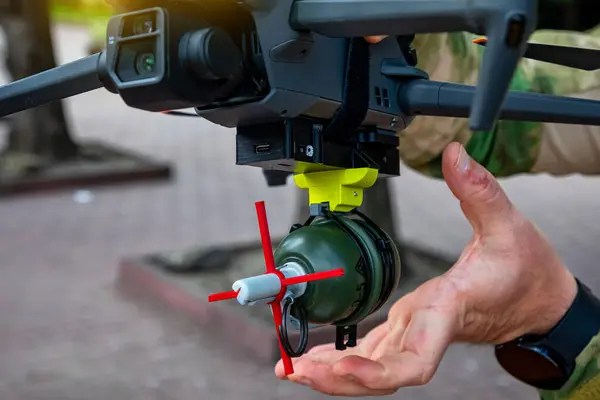
“We set out to build the easiest-to-use, most reliable, most affordable drone manufactured outside the borders of a potential adversary,” said Goodson. This guiding principle shaped the development of Darkhive’s Yellowjacket prototype, designed to offer operational simplicity, cost-effectiveness, and manufacturing rooted firmly within allied borders.
The Role of Drones in Modern Conflict
The ongoing conflict in Ukraine has highlighted the importance of such capabilities. Both Ukrainian and Russian forces have relied heavily on DJI’s Mavic 3 drones, which retail between $1,500 and $3,500, often preferring them over custom-built systems costing significantly more. The Mavic’s ease of deployment and accessibility have made it a staple in battlefield reconnaissance and targeting, despite the risks of using equipment sourced from a geopolitical rival.
Darkhive’s Yellowjacket aims to replicate this operational accessibility while adding the assurance of domestic production. The company’s target is a sub-$5,000 unit operable via smartphone, designed to be treated as expendable in high-risk missions. Such a price point positions it between consumer-grade drones and specialized military platforms, offering a balance of capability and affordability.
Expanding Military Contracts and Investment
Since 2022, Darkhive has secured progressively larger military contracts, culminating in substantial orders for 2024. This momentum attracted a $21 million investment from Ten Eleven Ventures, providing capital to scale manufacturing. Turner acknowledged the current price gap with DJI, stating, “You have to start somewhere. Our belief is that the Yellowjacket and other drone tech from Darkhive begins to empower the United States and its allies with a tool procured within friendly borders.”
Scaling Production for High-Volume Demand
The company’s production ambitions are notable: a capacity of 10,000 drones per month by 2025. This figure mirrors reported attrition rates in Ukraine, where drone losses have been estimated at up to 10,000 per month as of mid-2023. Achieving such output would require robust supply chain management, streamlined assembly processes, and a workforce capable of sustaining high-volume production without compromising quality.
Industry Trends and Strategic Shifts
Darkhive’s approach aligns with broader industry trends toward strengthening domestic drone manufacturing. In recent years, US defense and public safety agencies have increased procurement from American suppliers to mitigate security risks associated with foreign-made systems. This shift has been driven not only by geopolitical considerations but also by advances in materials, battery technology, and autonomous navigation algorithms that make competitive domestic products feasible.
From an engineering perspective, matching DJI’s combination of performance, user experience, and cost presents a formidable challenge. DJI benefits from economies of scale, vertically integrated manufacturing, and mature software ecosystems. For Darkhive, success will depend on leveraging modular designs, open architecture control systems, and rapid iteration cycles to close the gap.
Design Philosophy and Field Lessons
The Yellowjacket’s design philosophy—emphasizing simplicity, durability, and ease of operation—reflects lessons learned from the field. In high-intensity environments, operators value systems that require minimal training, can be deployed quickly, and are resilient to environmental stressors. Integrating secure communication links and ensuring compliance with military cybersecurity standards will be critical for adoption in sensitive missions.
The Future of Domestic Drone Manufacturing
As Darkhive ramps production, the interplay between cost, capability, and supply chain resilience will define its competitive position. The company’s trajectory suggests that US-made drones could soon play a larger role in both defense and public safety operations, offering an alternative to the entrenched dominance of foreign suppliers.
