Leonardo and Baykar Demonstrate In-Flight Control of Kizilelma Drone from M-346 Jet
A New Era of Drone and Fighter Collaboration
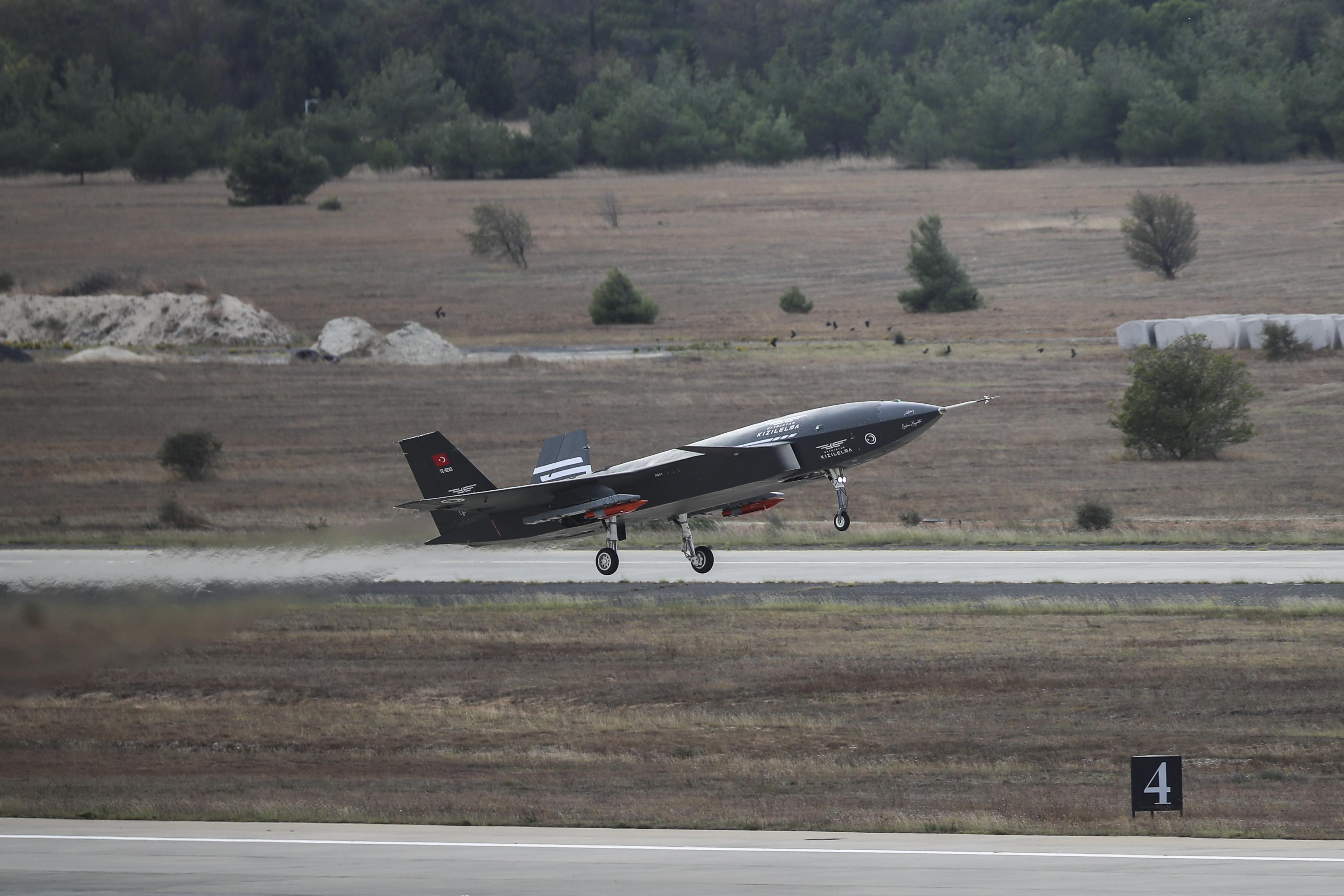
In a significant step forward for military aviation, an Italian M-346 jet trainer successfully controlled a Baykar Kizilelma drone in flight during a loyal wingman trial in Turkey. This test marked a key milestone in the collaboration between Italy's Leonardo and Turkey's Baykar, showcasing the potential of integrating crewed and uncrewed systems.
The Leonardo test jet flew alongside the Turkish drone at Baykar's flight and test center in Çorlu. The event followed the signing of a drone cooperation deal between the two companies last year, which aimed to construct Baykar drones in Italy equipped with Leonardo systems. This partnership is expected to enhance both companies' capabilities in developing advanced unmanned systems.
During the flight test campaign in Turkey, two Leonardo M-346 jets were involved. One was a Leonardo-owned M-346 Fighter Attack Variant, while the other was an Italian Air Force trainer acting as a chase aircraft. Alongside them was the Kizilelma drone. After an autonomous taxi and take-off, the Kizilelma autonomously linked to the M-346 using an advanced radio frequency data exchange system to synchronize data.
The test flight included a series of missions designed to evaluate algorithms, tactics, and procedures developed by Leonardo in Italy. These tests focused on improving the integration of autonomous systems with manned aircraft, ensuring seamless operation and rapid deployment.
"Kizilelma's advanced autonomy capabilities greatly simplified the integration process, allowing for seamless implementation and rapid deployment," Leonardo stated. The company emphasized that this development marks a major milestone in the advancement of Crewed/UnCrewed Teaming (CUC-T) and swarm tactics capabilities.
Leonardo highlighted the importance of refining AI technology, algorithms, and collaborative procedures. These advancements are expected to enable uncrewed systems to transition from remote piloting to greater autonomy, reducing pilot workload and increasing mission efficiency while maintaining full control and decision-making.
Looking ahead, new tests are planned in the coming months, with increasing complexity and additional functions. These tests will further explore the potential of integrating autonomous systems into military operations.
Baykar contributed its Smart Fleet Autonomy capabilities, which were integrated into the crewed/uncrewed teaming algorithms using its own software and hardware infrastructure. This collaboration underscores the growing importance of autonomous systems in modern warfare.
As a partner on the GCAP fighter program, Leonardo aims to refine its skills in deploying Loyal Wingman drones, which are envisioned as a key aspect of GCAP operations. This initiative highlights the strategic value of integrating unmanned systems with manned aircraft to enhance operational effectiveness.
Another notable effort in Europe to integrate crewed fighters with collaborative uncrewed systems was the Franco-German-Spanish FCAS program. This program aimed to develop remote carrier loyal wingman drones operating alongside a next-generation manned fighter. However, the FCAS Next Generation Fighter component was terminated in June 2026 after Germany and France failed to resolve industrial disagreements. Despite this setback, other elements of the FCAS program, such as a Combat Cloud, are expected to continue.
This successful test in Turkey demonstrates the progress being made in the field of autonomous and crewed aircraft collaboration. As technology continues to evolve, the integration of these systems will play a crucial role in shaping the future of military aviation.
