The Race for HBM4E Leadership
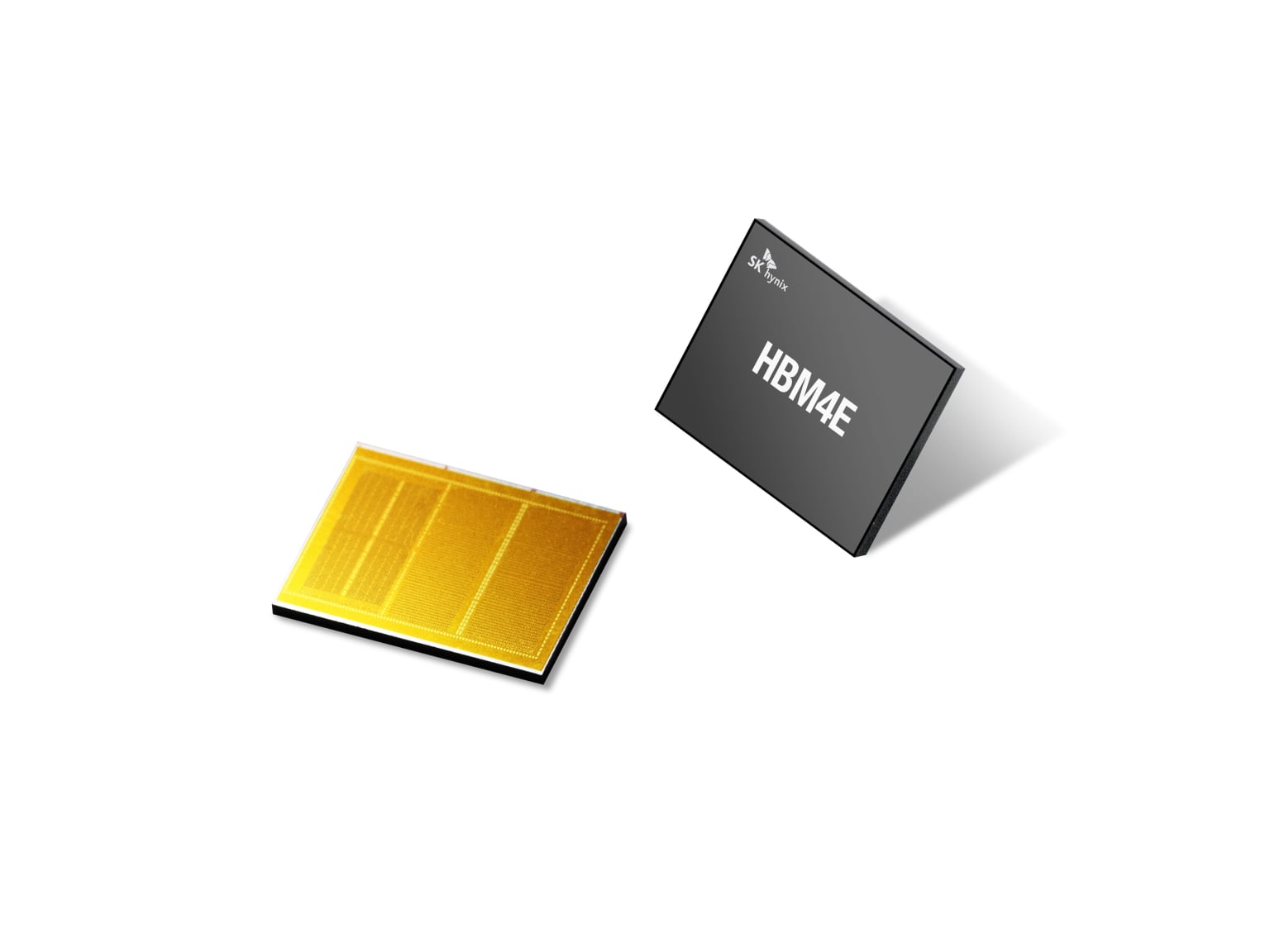
SK Hynix has started delivering samples of its 7th-generation high-bandwidth memory (HBM4E) to major clients. This move comes shortly after Samsung Electronics announced that it was the first company globally to supply 12-layer HBM4E samples. SK Hynix’s entry into this next-generation product race highlights the growing competition between the two South Korean tech giants in the AI semiconductor memory market.
On the 18th, SK Hynix revealed that it had already begun supplying 12-layer HBM4E samples to key customers. HBM is a type of memory semiconductor that stacks multiple DRAMs vertically, significantly boosting data processing speeds. It plays a crucial role in AI accelerators, such as those developed by NVIDIA. HBM4E is the successor to HBM4 and will be used in NVIDIA’s upcoming AI accelerator, "Vera Rubin," which is scheduled for release in the second half of this year. Another model, "Vera Rubin Ultra," expected to launch next year, will also incorporate HBM4E.
SK Hynix claims that HBM4E offers improved performance and power efficiency over its predecessor, HBM4. It achieves a maximum data processing speed of 16Gbps and improves energy efficiency by more than 20%. While SK Hynix previously used 10-nanometer-class 5th-generation (1b) DRAM for HBM4, the new product uses 10-nanometer-class 6th-generation (1c) DRAM. Samsung Electronics started using 1c DRAM with HBM4 and continued with HBM4E, but SK Hynix has now introduced an even more advanced generation.
With SK Hynix's HBM4E sample supply, the competition between the two companies for HBM market leadership is expected to intensify. Historically, SK Hynix has dominated the HBM market. However, Samsung Electronics has recently accelerated its development and supply of HBM4 and HBM4E, leading to a heightened rivalry for next-generation products. Although SK Hynix secured a dominant market share in the HBM3E competition, Samsung Electronics has been catching up by supplying HBM4 to NVIDIA first. In February, Samsung Electronics announced that it had started mass-producing and supplying HBM4 to customers. Earlier this month, during NVIDIA CEO Jensen Huang’s visit to South Korea, it was reported that SK Hynix had completed quality testing for HBM4 and would begin formal shipments.
Industry analysts observe that while Samsung Electronics has narrowed the technological gap, SK Hynix still leads in production volume. Samsung has regained technological competitiveness by advancing its HBM4 and HBM4E supply timelines, but SK Hynix maintains market leadership due to its long-standing supply relationships with key clients like NVIDIA and its ability to secure large volumes. If Samsung’s early release of next-generation products marks the start of its pursuit, SK Hynix is defending its position by leveraging proven mass production experience and customer supply volumes.
However, SK Hynix, which previously monopolized the market, now faces pressure to share its volume with Samsung Electronics. Additionally, the surge in HBM demand from companies like Google and AMD, which are developing their own GPUs and CPUs, complicates the competitive landscape. In the first quarter of this year, SK Hynix held a 58% market share, while Samsung Electronics had 21%. However, UBS predicts that by next year, both companies could each hold a 40% share, tying for dominance.
Key Players in the HBM Market
-
SK Hynix: Known for its strong market presence and advanced manufacturing capabilities, SK Hynix continues to lead in HBM production. Its recent introduction of HBM4E demonstrates its commitment to staying ahead in the AI memory market.
-
Samsung Electronics: Has made significant strides in HBM development, narrowing the technological gap with SK Hynix. Samsung's focus on timely product launches and strong R&D efforts positions it as a formidable competitor.
-
NVIDIA: A key client for both SK Hynix and Samsung, NVIDIA relies heavily on HBM for its AI accelerators. The competition between the two chipmakers is driven in part by NVIDIA's demand for high-performance memory solutions.
Future Outlook
The HBM market is set for continued growth as demand for AI and high-performance computing increases. Both SK Hynix and Samsung Electronics are investing heavily in research and development to maintain their competitive edge. As they vie for market leadership, the outcome of this competition will likely shape the future of AI semiconductor technology.
Market Share Projections
- Current Market Shares (Q1 2024):
- SK Hynix: 58%
-
Samsung Electronics: 21%
-
Projected Market Shares (2025):
- SK Hynix: 40%
- Samsung Electronics: 40%
This shift in market dynamics reflects the growing strength of Samsung Electronics and the evolving landscape of the HBM industry. As both companies continue to innovate and expand their offerings, the competition is expected to remain fierce in the years to come.
Komentar (0)