The X-59 Breaks the Sound Barrier, Paving the Way for Supersonic Passenger Flights
On the afternoon of June 5 at Edwards Air Force Base in California, the X-59 aircraft achieved a significant milestone. Taking off by thrusting into the ground, it reached an altitude of 43,400 feet (approximately 13,228 meters). A display reading “M 1.077” appeared on the cockpit monitor, indicating that the aircraft was flying at a speed approximately 7.7% faster than the speed of sound. During this flight, the X-59 recorded a top speed of Mach 1.1.
The X-59 is a low-noise supersonic aircraft developed jointly by NASA and Lockheed Martin. It successfully broke the sound barrier for the first time during its flight. NASA plans to soon challenge Mach 1.4 flight by raising the X-59 to an altitude of 55,000 feet (approximately 16,764 meters), which represents the actual mission condition.
Commercial Flights Expected Around 2030
NASA and Lockheed Martin are working together to develop the next generation of supersonic passenger aircraft. Private companies have also made significant progress with test flights. The aviation industry is now exploring whether the era of passenger aircraft matching the speed of fighter jets can return. Twenty-three years after the retirement of the Concorde, the world’s fastest civilian supersonic passenger aircraft, efforts to develop supersonic passenger aircraft are gaining momentum, leading to predictions that next-generation supersonic passenger aircraft will soon reappear in the aviation market.
Noise and safety issues, which plagued the Concorde, are now being addressed through technological advancements.
The Future of Supersonic Travel
According to experts involved in the X-59 project, including Dr. Jonathan Rathsam (NASA aerospace research engineer) and Lori Ozoroski, deputy manager of NASA’s High-Speed Flight Project’s Civil Supersonic Program, as well as Adam Pilarski, president of U.S. aviation industry consulting firm Avitas, the global aviation industry expects supersonic passenger aircraft to begin limited operations around or before 2030.
Pilarski noted in a video interview that he believes within four years, several commercial supersonic passenger aircraft will begin operations. There is already sufficient potential demand willing to pay high costs for flights.
Solving the Noise Problem
One of the biggest challenges in developing supersonic passenger aircraft has been noise, particularly the sonic boom generated when an aircraft flies at supersonic speeds. This issue was a major factor in the Concorde’s failure. When the Concorde passed overhead, the noise was so intense that it could break windows and shake buildings. To avoid this, the Concorde had to fly only over the ocean, which was not cost-effective.
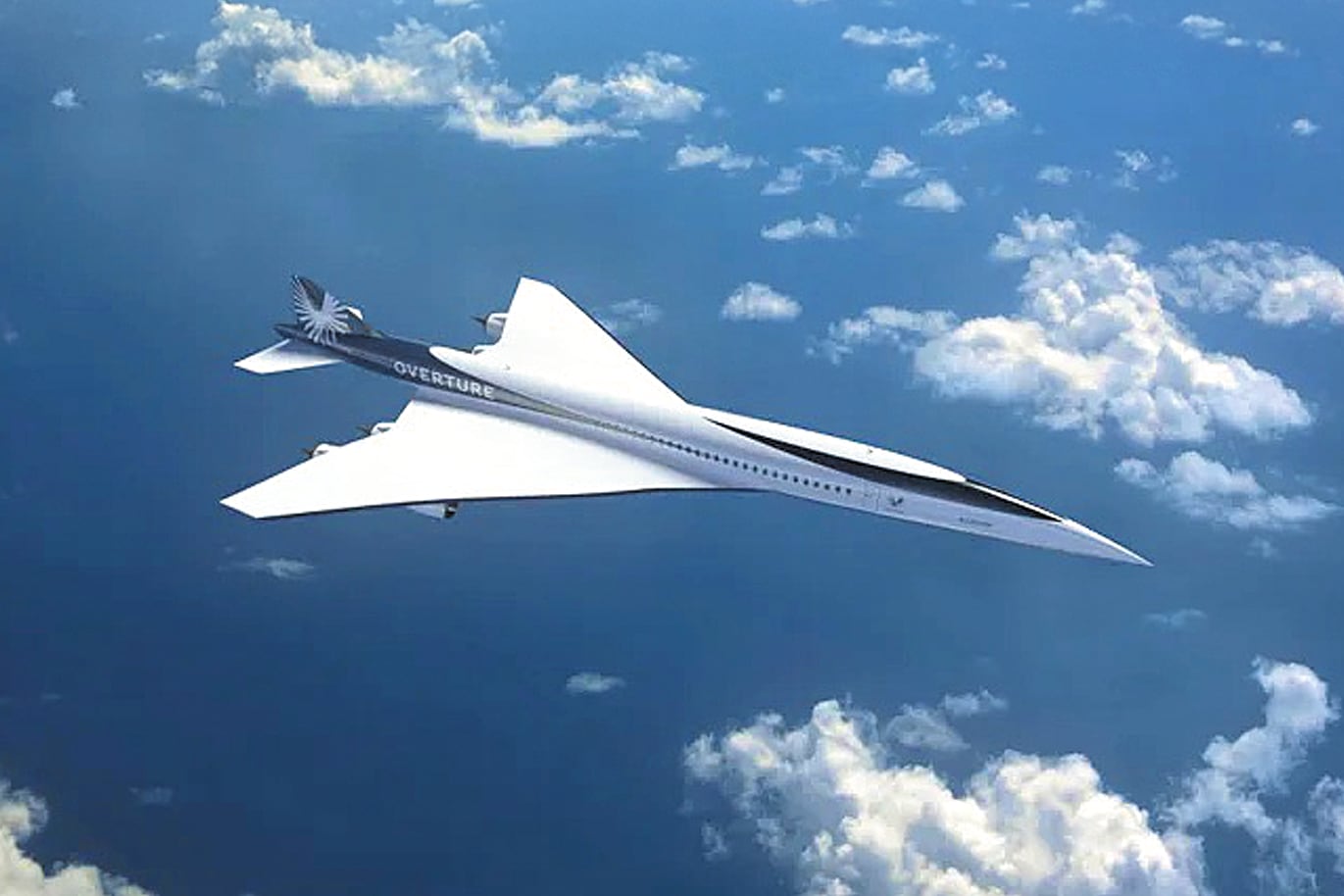
Recent advances in aircraft design have significantly reduced noise. Companies like Boom Supersonic, founded in 2014, are leading the way in commercializing supersonic passenger aircraft. They are developing the Overture, which can carry 64 to 80 passengers and fly at a maximum speed of Mach 1.7 (approximately 2,080 km/h), with plans to commercialize it by 2030.
Advancements in Technology
Boom Supersonic’s prototype, the XB-1, successfully achieved its first supersonic flight last year, reaching Mach 1.122. In June of the same year, they completed the Overture production plant in Greensboro, North Carolina, and plan to expand production capacity to 66 units per year.
NASA and Lockheed Martin are conducting the QueSST (Quiet SuperSonic Technology) mission to develop low-noise supersonic flight technology. The X-59 is the core aircraft of this project. The two companies successfully conducted the first test flight of the X-59 in October last year and have since conducted 15 additional flights. On the 5th of this month, they also successfully completed their first supersonic flight.
China has also entered the supersonic passenger aircraft development race. Researchers at the Commercial Aircraft Corporation of China (COMAC) revealed in a paper published in the domestic academic journal “Aeronautics” last year that they are developing the supersonic aircraft C949, which can fly at Mach 1.7. China plans to complete the commercialization of the C949 by 2049, the 100th anniversary of the founding of the People’s Republic of China.
Reducing Sonic Booms
Sonic booms have been the biggest challenge in the development of supersonic passenger aircraft. NASA and Lockheed Martin found the key to solving the problem in the aircraft shape. The X-59 has a long, slender nose that accounts for about one-third of the fuselage. This design helps disperse shockwaves without compressing them.
The engine is not mounted under the wings like typical jet aircraft but on the upper fuselage. This helps reduce sonic boom by directing the shockwaves generated by the engine upward rather than toward the ground. The main wing is designed to prevent shockwaves from reaching the ground, and the small T-shaped tail fin is also effective in reducing rear shockwaves.
Lower Fares and Eco-Friendly Innovations
The returning supersonic passenger aircraft are expected to initially target high-income business demand, just like the Concorde. However, the industry believes fares will be much lower compared to the Concorde era. For example, the Overture is expected to cost between $4,000 and $5,000 for the New York-London route, which takes about 3.5 hours, less than half the Concorde’s $12,000.
Next-generation supersonic passenger aircraft are also standing out in terms of environmental friendliness. Boom Supersonic announced plans to collaborate with British engine manufacturer Rolls-Royce to create an engine 75% more efficient than the Concorde. They also plan to reduce carbon emissions by using Sustainable Aviation Fuel (SAF).
Challenges Ahead
To fully commercialize supersonic passenger aircraft, three major challenges must be overcome: high costs, safety concerns, and insufficient demand. Experts are most concerned that high engine costs may make it difficult for airlines to secure profitability.
Resolving safety concerns is also a challenge for supersonic passenger aircraft manufacturers. Although the Concorde crash was not caused by a mechanical defect or pilot error, it became a decisive factor in the Concorde’s retirement. The process of obtaining approval from regulatory agencies such as the U.S. Federal Aviation Administration (FAA) is also expected to be challenging.
The Dream of Global Travel in Four Hours
The aviation industry’s dream goal is to enable round-trip travel anywhere in the world within four hours and fly for just $100 (approximately 150,000 Korean won) within the next decade.
If price competitiveness is supported, a virtuous cycle can be expected. Lower fares attract more passengers, increased demand leads to expanded airline operations and increased production by manufacturers, which in turn lowers unit costs.
Membership Offers
5900원 멤버십, 신문 독자에게는 2900원, 조선멤버십
55000원 상당의 신문-잡지 8종 마음껏 보기, 조선멤버십
현금처럼 쓸 7000포인트 받아 알뜰한 쇼핑, 조선멤버십
Komentar (0)