US Navy partners with AI company to train underwater drones for mine detection in Strait of Hormuz
The U.S. Navy's New AI Initiative for Undersea Mine Detection
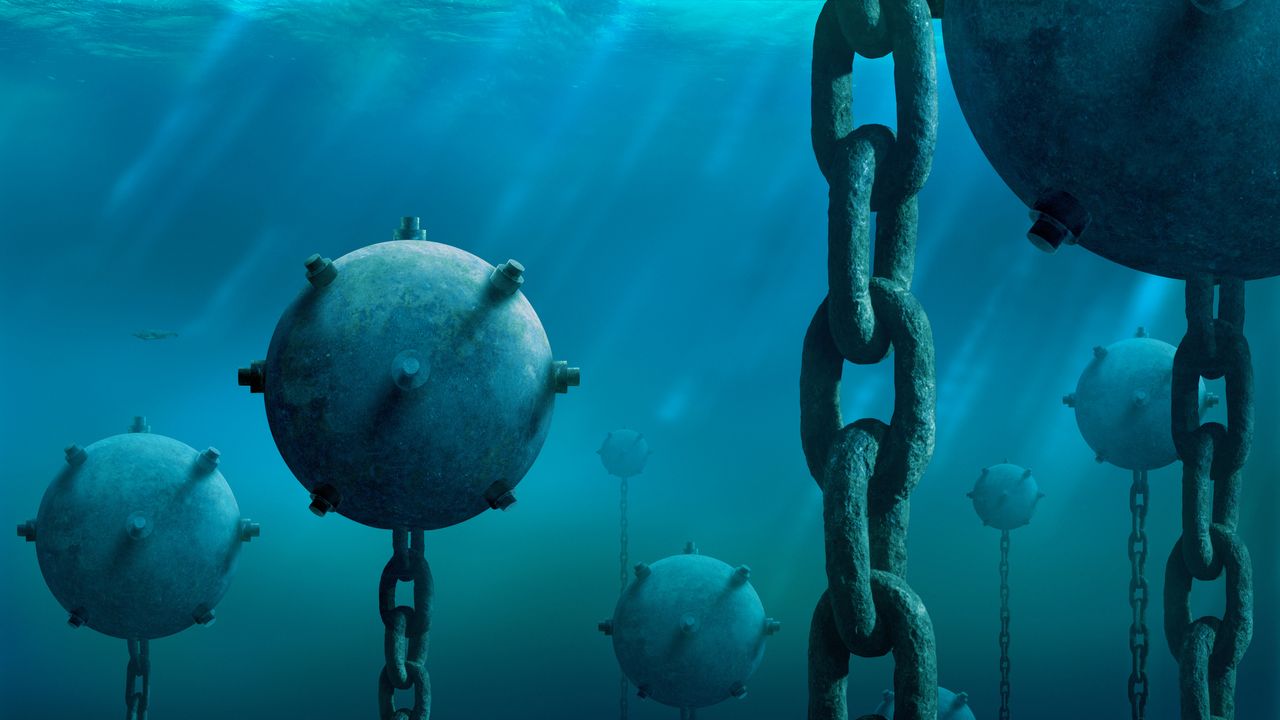
The U.S. Navy has recently entered into a significant $99.7 million contract with Domino Data Lab, a San Francisco-based startup, to develop advanced artificial intelligence (AI) technology. This innovation aims to enhance the capabilities of undersea minesweepers by enabling them to identify and learn about new and previously unseen mines in a matter of days rather than months.
This development is particularly relevant given the strategic importance of the Strait of Hormuz, a critical chokepoint in global sea lanes. Since the beginning of the U.S.-Iran conflict earlier this year, Iran has been known to mine this area, restricting the movement of oil and cargo ships. The new AI technology is expected to play a vital role in ensuring safe passage through this region.
How the Technology Works
The software will leverage multiple sensor suites, including side-scan sonar and visual imaging systems, to monitor various AI detection models operating in the field. This approach allows operators to detect failures and implement corrections in real-time, rather than waiting for information to be sent back to a lab for model retraining. This capability significantly reduces the time required to adapt to new threats.
Thomas Robinson, CEO of Domino Data Lab, emphasized the shift from traditional methods to AI-driven solutions. He stated, "Mine-hunting used to be a job for ships. It's becoming a job for AI. The Navy is paying for the platform that lets it train, govern, and field that AI at a speed required for contested waters that block global trade and imperil sailors."
Robinson also highlighted the potential impact of this technology on future operations. For instance, if unmanned underwater vehicles (UUVs) were trained on Russian mines in the Baltic Sea and needed to be deployed to the Strait of Hormuz to detect Iranian mines, the Navy could be ready in a week rather than a year.
Expanding AI Use in the Pentagon
The Pentagon has increasingly turned to AI to enhance its military capabilities. Recently, the Department of War announced deals with seven AI tech companies, including SpaceX, OpenAI, Google, Nvidia, Reflection, Microsoft, and Amazon Web Services. These partnerships aim to deploy large language models (LLMs) across classified networks. These tools are designed to process vast amounts of data and identify patterns that would be impossible for humans to detect in such a short timeframe, thereby improving data analysis and decision-making processes.
In addition, the Defense Advanced Research Projects Agency (DARPA), the Pentagon's independent research arm, has called for proposals to develop next-generation deep-sea underwater drones that can be built quickly. This initiative underscores the growing importance of AI in modern naval operations.
High-Risk Operations in the Strait of Hormuz
The U.S. and Iran have experienced an on-again, off-again ceasefire over the past several weeks. This situation makes mine-clearing operations in the Strait of Hormuz particularly high-risk, as strikes could occur at any moment without warning. Deploying AI technology on undersea drones will help mitigate these risks by significantly speeding up the detection and removal of mines.
Conclusion
The integration of AI technology into undersea mine detection represents a significant advancement in naval capabilities. By enabling faster identification and response to new threats, this technology not only enhances operational efficiency but also improves the safety of sailors and the security of global trade routes. As the U.S. continues to invest in AI-driven solutions, it is clear that the future of naval warfare will be shaped by these technological innovations.
