45 Years Later: DOS Source Code Found in Garage Printouts
Microsoft Releases Historical DOS Code on GitHub
Microsoft has taken another step in preserving the early chapters of its operating system history by making some of the original source code available to the public. This week, the company announced that Tim Paterson's DOS listings, which include the source code for the 86-DOS 1.00 kernel, several PC-DOS 1.00 pre-release kernels, and utilities, as well as the Microsoft BASIC-86 Compiler runtime library, are now accessible on GitHub.
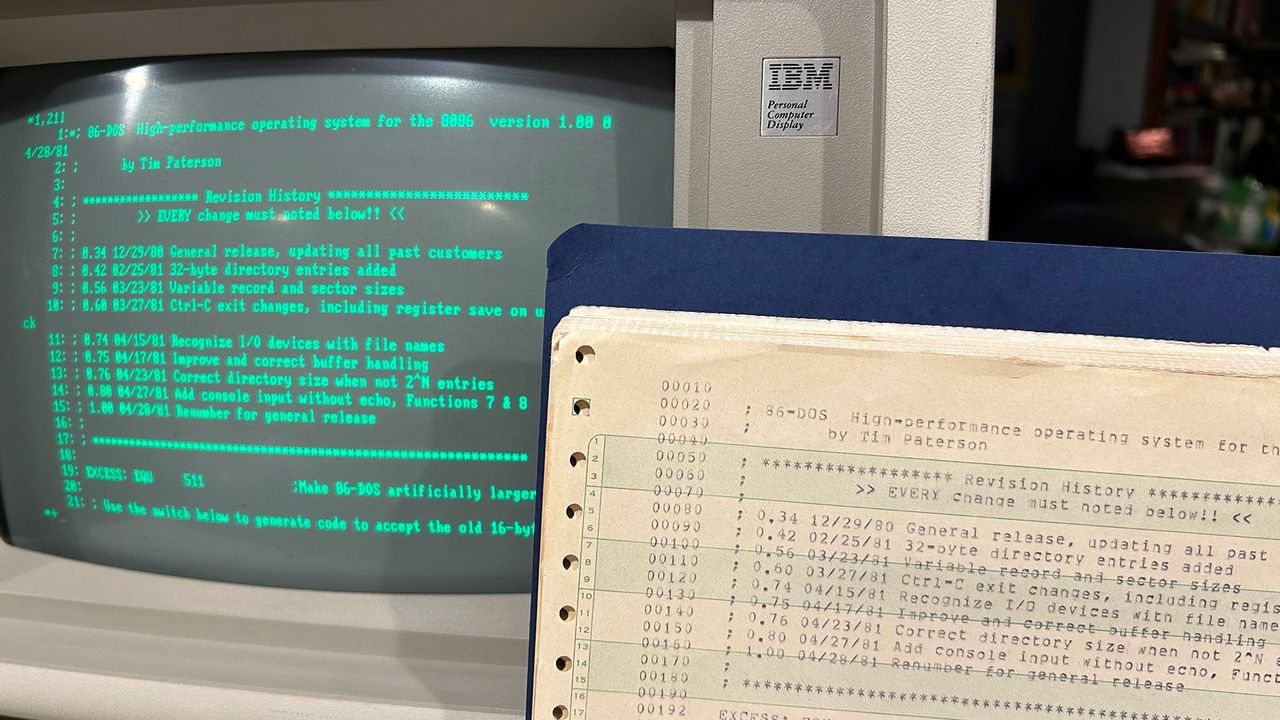
The release coincided with the 45th anniversary of 86-DOS 1.00. Microsoft VP Scott Hanselman highlighted the significance of this milestone, noting that the code was transcribed from old dot matrix printouts found in Tim Paterson’s garage. He emphasized that the code is "perfect" and recompiles byte for byte to the original binaries.
This move marks a significant moment in software archaeology, offering researchers, historians, and enthusiasts an opportunity to study, preserve, and explore the origins of one of the most influential operating systems in computing history.
The Origin of the Code
The earliest DOS source code was discovered on printer paper in Tim Paterson’s garage. This discovery led to the open-sourcing of the code on the 45th anniversary of 86-DOS 1.00. The release has sparked interest among those curious about how the code was recovered and what it reveals about early software development.
If you visit the GitHub page, you will find a photo of Tim Paterson standing in his garage with a pile of yellowed dot matrix printouts. These pages contain the code for the software mentioned earlier, and you can access the original scans in PDF and PNG formats via a link to the Internet Archive. These documents also include the coder’s handwritten notes, adding a personal touch to the historical archive.
For tinkerers and developers, the transcription of the printed code is a valuable resource. Tips on how to compile and assemble the sources are also available on Paterson’s GitHub, making it easier for enthusiasts to experiment with the code.
From 86-DOS to MS-DOS
For those unfamiliar with the role of 86-DOS and Tim Paterson in Microsoft's history, a brief refresher is helpful. Microsoft gained a foothold in the OS market by purchasing 86-DOS from Seattle Computer Products and inventor Tim Paterson for approximately $75,000.
In the GitHub repository, you can trace the evolution of 86-DOS into the PC-DOS 1.00 kernel. The repository also includes code for utilities like CHKDSK, which are still used today. According to the Microsoft blog, this release offers rare insight into the development of MS-DOS/PC-DOS and the methods used at the time, rather than how they were later reconstructed.
A Continued Legacy
Microsoft has previously released other versions of DOS under open-source licenses. In April 2024, the company made the code for MS-DOS 4.00 available under the MIT License, allowing tinkerers to explore and modify it freely. Earlier in 2018, the code for MS-DOS 1.25 and 2.11 was also released.
In 2024, there was also coverage of a video demo featuring 86-DOS version 0.1C being tested via the Internet Archive. Now, version 1.00 of this OS has been added to GitHub, directly from the files stored in Tim Paterson’s garage.
Despite these efforts, many users are still waiting for any version of Windows to be open-sourced. For those interested in exploring the source code for older Windows versions, such as Windows XP, they may have to rely on leaks or other unofficial sources.
