Ariane 6 Launches 32 Satellites for Amazon's LEO Network in Canada
A New Era for European Space Launches
The Ariane 6 rocket, the most powerful version of Europe's space launch vehicle, successfully launched on Thursday from Europe's spaceport in Kourou, French Guiana. This mission carried 32 satellites for the Amazon Leo network, a project aimed at competing with Elon Musk's Starlink. The launch marks a significant milestone for Amazon Leo, as it is the first time the network has been deployed using the Ariane 6.
Amazon, the US-based company founded by billionaire Jeff Bezos, is the primary commercial partner for the Ariane 6. Despite this, the rocket is seen as a symbol of European sovereignty in the space industry. The Ariane 6 was upgraded for this mission, featuring four strap-on boosters instead of the two used in its first five flights. These additional boosters provide extra thrust, enabling the rocket to carry about 21.6 metric tons into low Earth orbit—more than double the capacity with just two boosters.
Enhanced Capabilities and Environmental Considerations
The four boosters consume 142,000 kilograms of solid propellant in just over two minutes before burning out. This significant amount of fuel is necessary to achieve the required altitude and speed for the satellites to reach their intended orbits. With 175 satellites already in orbit, Amazon Leo aims to expand its constellation to 3,200 satellites. In comparison, Starlink, the satellite internet service operated by SpaceX, currently has nearly 9,400 satellites in orbit.
In the past year, the European rocket focused on institutional missions, including the deployment of a French military reconnaissance satellite, a French weather satellite, and European Union-sponsored Earth observation radar and navigation satellites. These missions highlight the versatility and importance of the Ariane 6 in supporting various space-related objectives.
International Collaboration and Technical Details
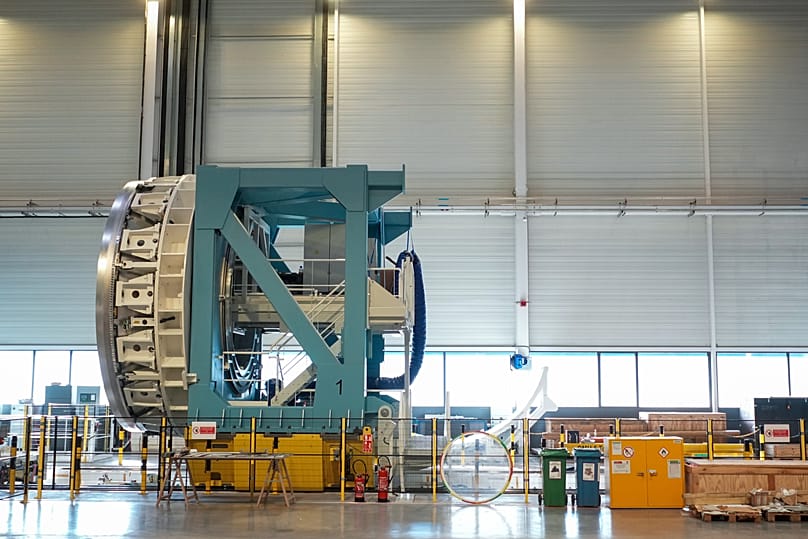
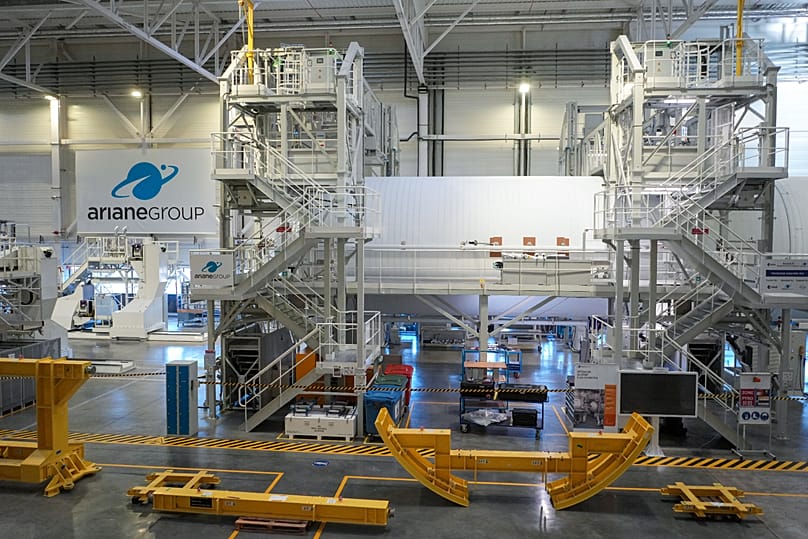
The Ariane 6 programme is supported by 13 nations that are members of the European Space Agency (ESA). Building the rocket involves the expertise of approximately 600 subcontractors led by ArianeGroup. The core stage of the rocket is assembled in Les Mureaux, west of Paris, while the upper stage is constructed in a factory in Bremen, Germany. Each rocket consists of roughly 300,000 individual components, showcasing the complexity of the project.
The core stage, upper stage, and boosters were transported across the Atlantic to French Guiana on a cargo ship equipped with sails. This innovative approach helps reduce emissions and save fuel, reflecting the commitment to environmental sustainability in space exploration.
Technical Specifications and Mission Timeline
Ariane 64, the upgraded version of the rocket, stands 62 metres tall, with a core stage that is 5.4 metres wide. The mission is expected to last 1 hour and 54 minutes, from liftoff to the separation of all satellites. The rocket is powered by one main engine at the base of its core stage, which uses supercooled hydrogen and oxygen as fuel.
Once the upper stage escapes Earth's gravity, a second engine ignites, placing the satellites into their precise orbits. This engine can re-ignite up to four times during the flight, allowing for multiple orbital adjustments. The combination of advanced technology and careful planning ensures that the satellites are deployed accurately and efficiently.
