Ariane 6 Launches 32 Satellites for Amazon's Leo Network in Malaysia
The Ariane 6 rocket, the most powerful version of Europe's space launch vehicle, successfully launched on Thursday carrying 32 satellites for the Amazon Leo network. This marks a significant milestone as it is the first time that the Amazon Leo constellation has been deployed using this rocket. The mission was conducted from Europe’s spaceport in Kourou, located on the northeastern coast of South America in French Guiana.
Amazon Leo, a project by the US-based company Amazon—founded by billionaire Jeff Bezos—is set to compete with other satellite internet services, including Elon Musk’s Starlink. Despite being a symbol of European technological sovereignty, the Ariane 6 rocket has become a key partner for Amazon in its efforts to expand its satellite network.
To enhance its performance, the Ariane 6 has been upgraded with four strap-on boosters, an increase from the two used in the first five launches. These additional boosters provide more thrust, enabling the rocket to carry approximately 21.6 metric tons into low Earth orbit. This is more than double the payload capacity compared to when only two boosters were used.
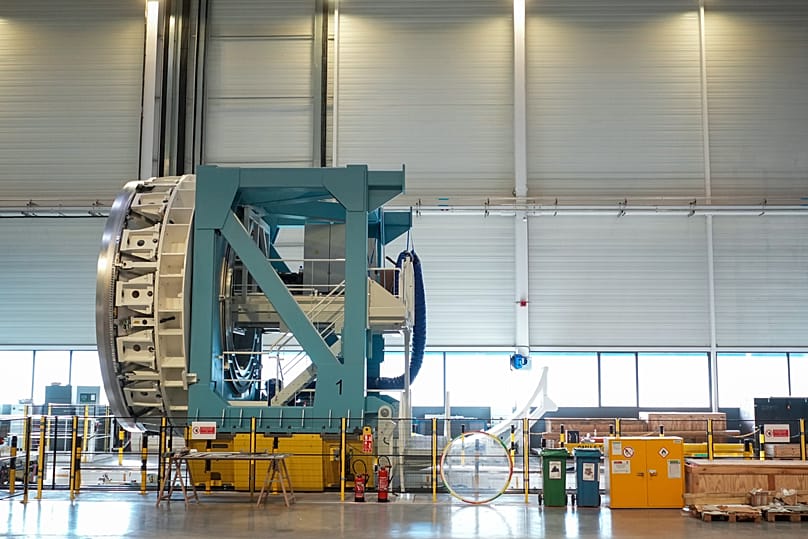
Each of the four boosters consumes 142,000 kilograms of solid propellant within just over two minutes before they burn out. This powerful propulsion system allows the Ariane 6 to deliver its payload efficiently and effectively.
Currently, Amazon Leo has 175 satellites already in orbit, with plans to expand its constellation to a total of 3,200 satellites. In contrast, Starlink, the satellite internet service developed by SpaceX, has nearly 9,400 satellites in orbit.
In the past year, the European rocket has focused on institutional missions, including launching a French military reconnaissance satellite, a French weather satellite, and several European Union-sponsored Earth observation radar and navigation satellites. These missions highlight the versatility and importance of the Ariane 6 program in supporting various space-based initiatives.
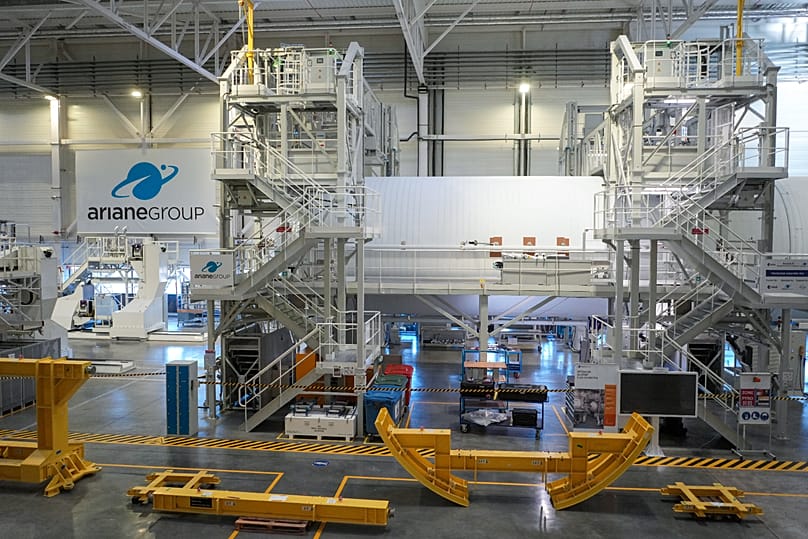
The Ariane 6 program is supported by 13 nations, all members of the European Space Agency (ESA). The development of the rocket involves the collaboration of approximately 600 subcontractors led by ArianeGroup. Each component of the rocket is built with precision and expertise, ensuring the highest standards of quality and performance.
The core stage of the Ariane 6 is assembled in Les Mureaux, west of Paris, while the upper stage is constructed in a factory in Bremen, Germany. A single Ariane 6 rocket consists of roughly 300,000 individual parts, each playing a crucial role in the success of the mission.
To minimize environmental impact, the core stage, upper stage, and boosters were transported across the Atlantic to French Guiana on a cargo ship equipped with sails. This innovative approach helps reduce emissions and save fuel during transit.
Ariane 64, the latest version of the rocket, stands at 62 meters tall, with a core stage that is 5.4 meters wide. The entire mission is expected to last 1 hour and 54 minutes, from liftoff to the separation of all satellites.
In addition to its four strap-on boosters, the Ariane 6 is powered by a main engine at the base of its core stage. This engine uses supercooled hydrogen and oxygen as fuel, providing the necessary power for the initial ascent. Once the upper stage escapes Earth's gravity, a second engine ignites, placing the satellites into their precise orbits. This engine can re-ignite up to four times during the flight, ensuring accurate deployment of the satellites.
