Bucharest Tech Hub and Bosch Launch Mobility Engineering Lab
A New Era in Intelligent Mobility
Bucharest Politehnica University and Bosch Group Romania recently unveiled the Software Defined Vehicles laboratory, a state-of-the-art educational and research facility focused on developing software systems for intelligent vehicles and autonomous driving. This initiative marks a significant step forward in the collaboration between academia and industry, particularly in the field of smart mobility.
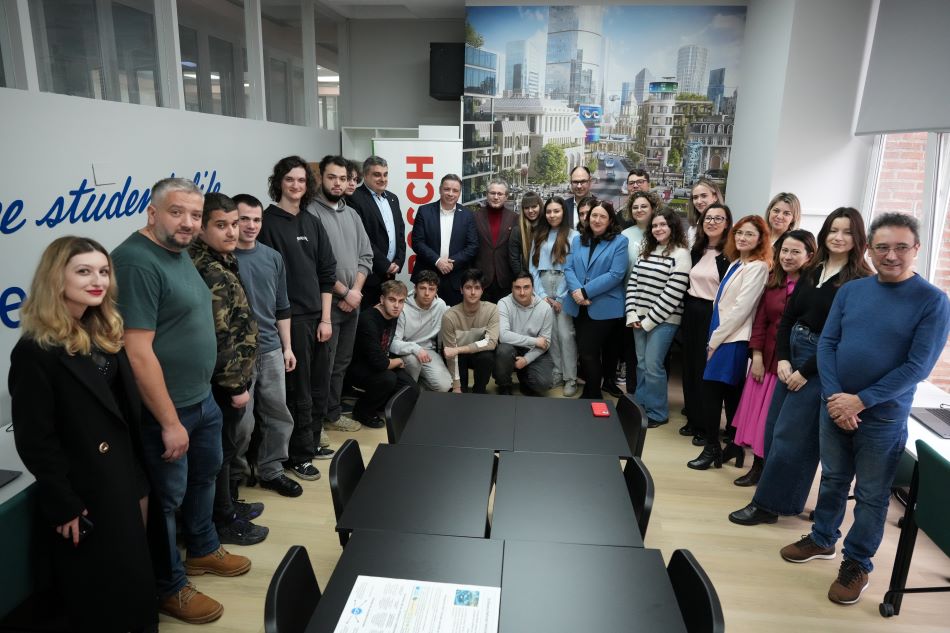
The laboratory was established with the support of Bosch and is integrated into the infrastructure of the Department of Automation and Industrial Informatics within the Faculty of Automation and Computers. The inauguration event brought together university leadership, faculty members, students, and Bosch representatives, highlighting the importance of this partnership in shaping the future of transportation technology.
The Concept of Software Defined Vehicles
According to the press release, the concept of Software Defined Vehicles is reshaping the automotive industry. In this model, vehicles are no longer defined solely by their hardware components but by the sophisticated software that manages their operation, safety, and connectivity. Key developments include centralized onboard computers that replace multiple electronic control units, middleware platforms that connect hardware and applications, and advanced cybersecurity systems to protect connected vehicles.
This shift underscores the growing importance of software in modern vehicle design and functionality. It also reflects the broader trend of digital transformation across industries, where software plays a central role in innovation and efficiency.
Romania's Strategic Role in Bosch’s Global Network
Romania holds a strategic position in Bosch’s global network through the Bosch Engineering Center in Cluj. This center is responsible for developing algorithms for autonomous driving and software solutions for Smart Mobility. The establishment of the Software Defined Vehicles laboratory further strengthens this role, providing a platform for cutting-edge research and development.
“The inauguration of this laboratory represents an investment in the future of intelligent mobility and in Romania’s ability to train engineers who contribute to global technologies,” said Mihnea Costoiu, rector of Politehnica University. This statement highlights the university’s commitment to preparing students for the evolving demands of the automotive industry.
State-of-the-Art Facilities and Educational Opportunities
The new laboratory is equipped with high-performance computing equipment and a real-time simulator, creating a working environment that mirrors the standards of the global automotive industry. It will serve students at various academic levels, including bachelor’s, master’s, and doctoral programs.
Activities conducted in the laboratory will cover a wide range of topics, such as:
- Analysis and synthesis of industrial information systems
- Artificial intelligence techniques
- Real-time software design
- Testing and quality assurance
- Cybersecurity
- Solutions for autonomous driving and predictive maintenance
These activities aim to provide students with hands-on experience and practical skills that are essential in today’s tech-driven world.
A Commitment to Future Engineers
Dan Lăzărescu, General Manager of Robert Bosch SRL and representative of the Bosch Group in Romania, emphasized the significance of the laboratory. “This laboratory represents more than an investment in cutting-edge technology; it is a firm commitment to the future of intelligent mobility and to the training of the new generation of engineers. By integrating Bosch expertise into the university curriculum and by facilitating students’ access to equipment and concrete projects, we aim to create a solid bridge between the academic environment and the demands of industry.”
This collaboration not only enhances the educational experience for students but also ensures that they are well-prepared to meet the challenges of the automotive industry. The integration of industry knowledge and resources into academic settings fosters innovation and prepares students for successful careers in intelligent mobility.
Conclusion
The inauguration of the Software Defined Vehicles laboratory at Bucharest Politehnica University signifies a major milestone in the development of intelligent mobility. With its advanced facilities and strong industry partnerships, the laboratory is poised to play a crucial role in shaping the future of automotive technology. As the automotive industry continues to evolve, initiatives like this will be essential in training the next generation of engineers and driving innovation forward.
