Europe's quantum leap begins at absolute zero
A New Era in Computing
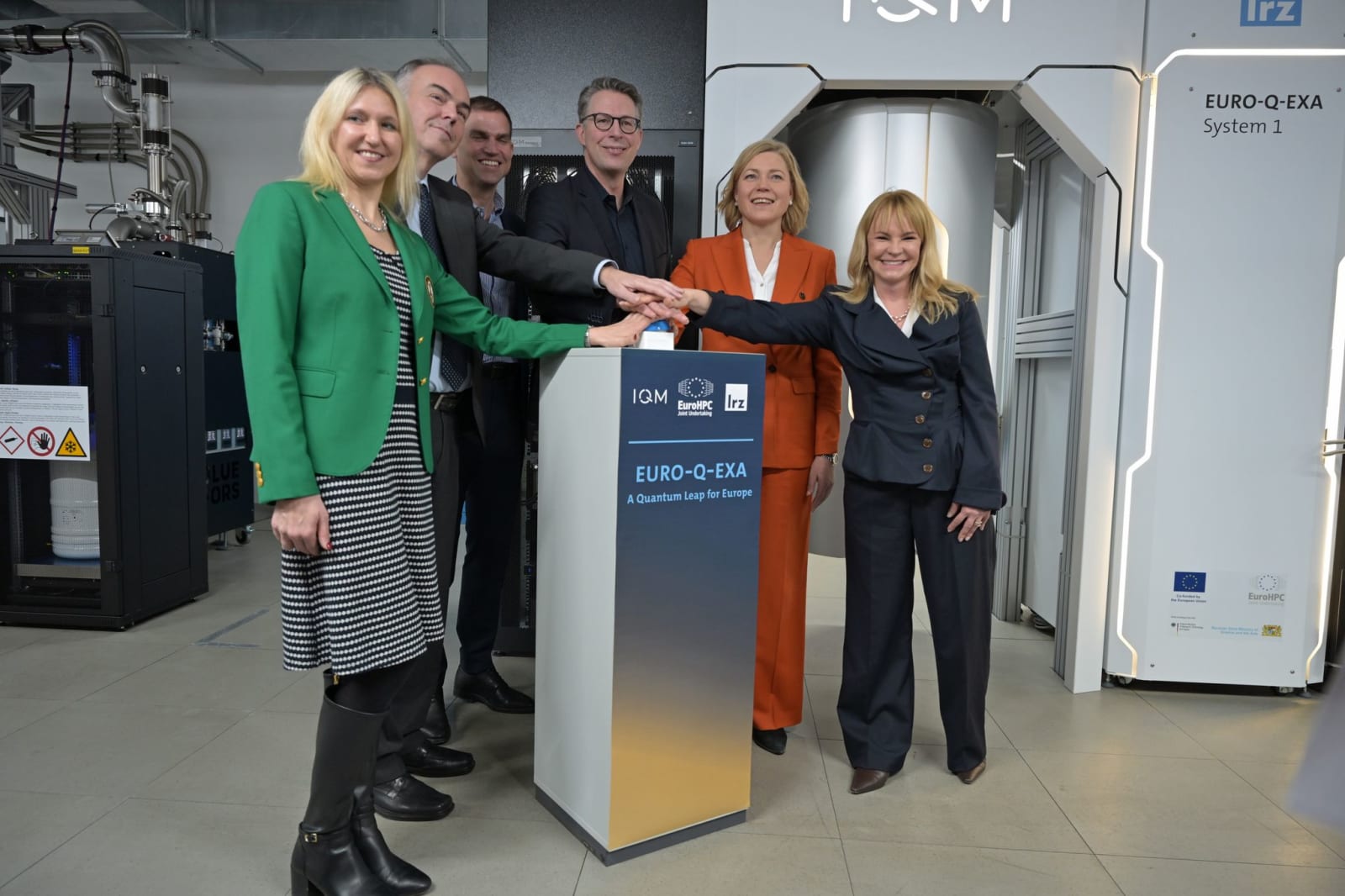
A groundbreaking quantum computer has officially begun operations at the Leibniz Supercomputing Centre (LRZ) of the Bavarian Academy of Sciences, located near Munich in southern Germany. This new system is being hailed as a step into uncharted territory, opening up possibilities that were previously unimaginable.
Euro-Q-Exa is one of six quantum systems developed under an EU initiative, designed to be integrated into European high-performance computing networks. These systems are managed by the European High-Performance Computing Joint Undertaking (EuroHPC JU). The goal of the project is to ensure Europe remains at the forefront of this rapidly evolving field and to develop independent computing capabilities.
A Computer Colder Than Space
The quantum computer in Garching, which is part of the local supercomputer SuperMUC-NG, uses technology from the German-Finnish start-up IQM Quantum Computer. It features 54 quantum bits (qubits), making it a powerful tool for complex computations. To function effectively, the machine is cooled to temperatures below -273 degrees Celsius. This temperature is just a fraction above absolute zero, the lowest possible temperature in the universe. For reference, space itself has a temperature of approximately -270 degrees Celsius.
By the end of the year, Euro-Q-Exa is expected to be upgraded with another quantum computer capable of handling around 150 qubits. This expansion will significantly enhance its computational power and versatility.
Advancing Scientific Exploration
Dieter Kranzlmüller, the head of LRZ, emphasized the importance of combining quantum computing with traditional supercomputing. "With Euro-Q-Exa, we combine the strengths of quantum computing with those of supercomputing. Researchers thus have the opportunity to test new approaches, implement groundbreaking calculations, and thereby explore new scientific dimensions," he said.
Quantum computers have the potential to revolutionize various industries, including trade and logistics, finance, and microchip design. They can efficiently solve complex problems that classical computers struggle with. For example, even with just 10 locations, there are several million possible connections. With 58 locations, the number of combinations jumps to an astronomical figure known as a tredecillion—a number with 78 digits in European long-scale usage. Classical methods would find such calculations extremely time-consuming and impractical.
A Collaborative Effort
The company IQM, responsible for building the quantum computer at LRZ, is a Finnish-German spin-off from Aalto University. The project also received attention from EU Vice President for Technology Henna Virkkunen, who is from Finland and was present at the launch.
A Significant Achievement for Europe
This development marks a significant milestone for Europe. German Research Minister Dorothee Bär stated, "In line with Germany's High-tech Agenda, we will become a top technology country in the key technology of quantum technologies."
Bavarian Science Minister Markus Blume highlighted the importance of the project, saying, "Projects like this show that Bavaria is ready to take responsibility for Europe's digital future."
Anders Jensen, executive director of the EuroHPC JU, described the system as a major step forward in creating a world-class European quantum computer infrastructure.
Financial Investment
The total cost of the system is €25 million ($34.05 million). Funding comes from multiple sources: the federal government contributes €12 million, the European Union provides €10 million, and Bavaria covers €3 million. Additionally, the German federal-level Ministry of Research finances the necessary personnel and materials.