IDF's AI Robot Cleans Tanks in 2 Hours, Cutting Workload by 90%
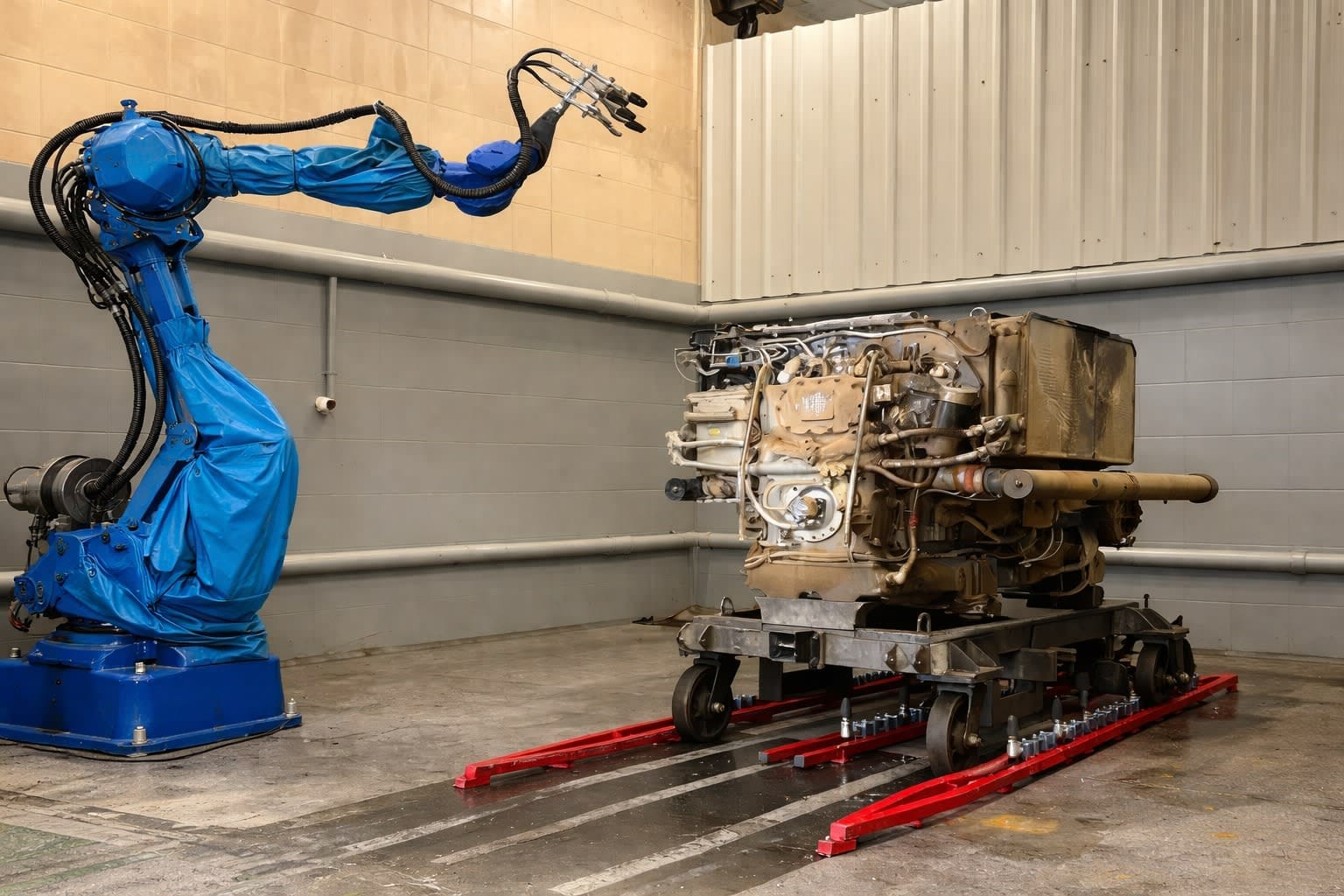
A New Era of Military Robotics
The Israeli Defense Forces (IDF) have introduced a groundbreaking robotic system that revolutionizes tank maintenance. This advanced technology allows mechanics to complete 48 hours of maintenance tasks, including fault detection and equipment cleaning, in just two hours. The system is designed to enhance efficiency while minimizing the risks faced by soldiers.
Developed by the Israeli company Ruby AI, this robot has a unique design reminiscent of an animated movie character. It features multiple robotic arms, similar to a mechanical octopus, which enables it to access the tank's engine, clean, wash, scan, and perform various operations that previously required human intervention.
Autonomous Operation for Safety
One of the most significant advantages of this robot is its ability to operate autonomously. It can work in dangerous environments without the presence of soldiers, protecting them from exposure to chemicals, oils, and extreme heat. This feature not only enhances safety but also improves operational efficiency.
Daniel Ben Dov, CEO of Ruby AI, founded the company in the Bar Lev High-Tech Park in Northern Israel. Prior to establishing Ruby AI, he worked in the space and defense industries, holding management positions at companies such as Gilat Satellites and Elbit. The company currently employs around 20 people, primarily engineers specializing in software, hardware, aerospace, and physical artificial intelligence.
Advanced Capabilities of the Robot
Ruby AI's robotic tank cleaner is a testament to the company's innovation. As Ben Dov explains, "We are developing both the robotic arms themselves and their brains." The company has created a Physical AI core that can learn elements of the physical world, understand what it sees, and perform precise actions. Unlike traditional factory robots, this one is designed to operate in challenging environments such as mud, dust, heat, and cold.
The system was developed during the war to take soldiers out of dangerous maintenance chores, and according to Ben Dov, it is now fully operational. This marks a significant step forward in military technology.
Expanding Applications Beyond Cleaning
While the tank cleaner is a notable achievement, Ruby AI's capabilities extend beyond just cleaning robots. Founded in 2020, the company has been working with clients worldwide, with one of its most prominent products being the United Arab Emirates' refueling robots.
This robot is the only one in the world that can perform a full refueling process without any human contact, in an explosive environment, and with strict safety standards. Ben Dov notes, "If a robot knows how to refuel, it also knows how to deal with hazardous materials." This opens up a wide range of possibilities for military maintenance.
Future Developments and Tasks
Among the developments in the pipeline are robots that will assist in replacing heavy wheels on tanks and bulldozers, a task that currently requires enormous physical effort and poses an injury risk. These robots are capable of handling weights over 100 kilos, performing the operation with precision, and working alongside soldiers to take on the most dangerous chores.
Ben Dov emphasizes, "We are not developing cute robots that fold laundry." Instead, the focus is on difficult, repetitive physical work in environments where humans should not be present.
Addressing Dangerous Missions
One of the company's main objectives is to develop a robot capable of clearing underground tunnels, a task that is extremely dangerous for soldiers. Tunnels are ideal environments for mission robots because they are close to dangerous areas. Ben Dov explains, "A humanoid robot eighty meters tall won't go in there. It can't crawl, it can't work in mud and water. We design the robot according to the mission, not according to how it looks."
The company is also exploring applications in military medicine, with the development of five-fingered bionic arms that could perform precise therapeutic operations, from physiotherapy to working in dangerous environments such as areas affected by chemical or biological warfare agents.
Conclusion
The IDF is examining these developments cautiously, but it's clear that the direction has been set. The robots are not coming to fight in the place of soldiers, but to relieve them of burdens, risks, and drudgery. With ongoing advancements, the future of military robotics looks promising, offering new solutions to age-old challenges.
