Ukrainian Forces Shatter British Brigade in Massive NATO Drone Drill
Ukraine's Military Simulation Highlights the Power of Drones
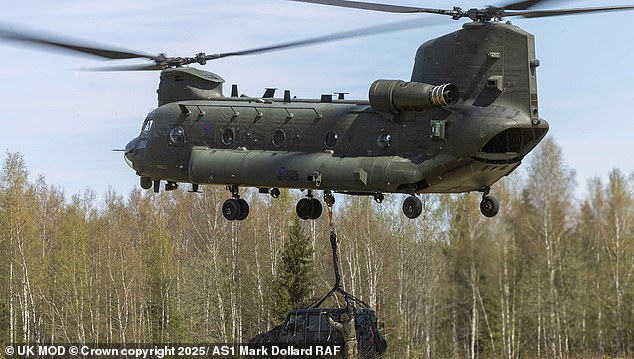
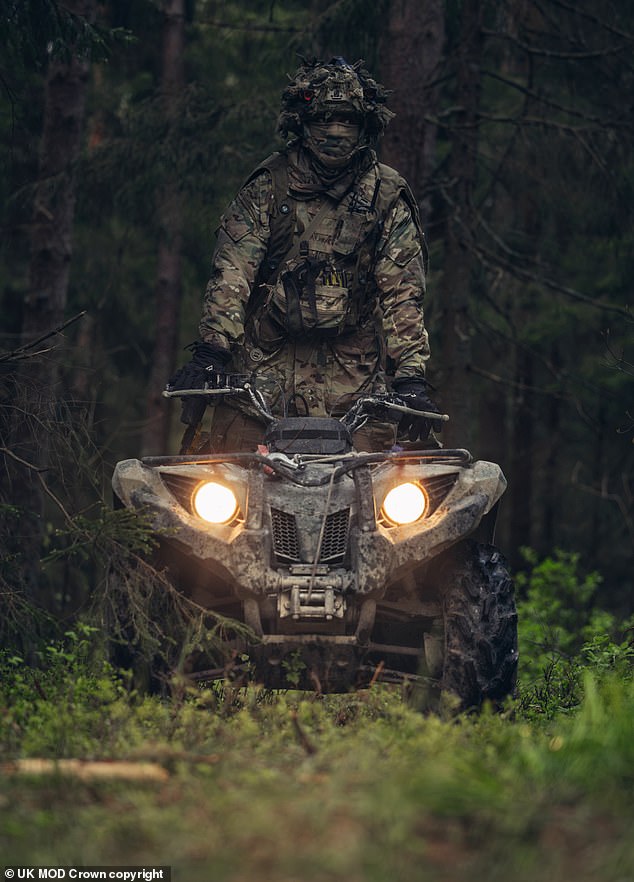
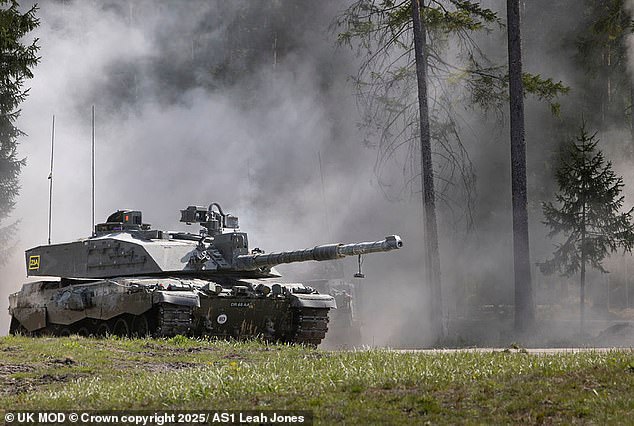
A recent military exercise in Estonia has revealed how Ukrainian forces can outmaneuver and overpower NATO troops in a simulated battlefield scenario. The exercise, known as Hedgehog 2025, involved over 16,000 soldiers from 12 NATO countries and aimed to test their ability to adapt under pressure.
According to Lt Col Arbo Probal, head of the unmanned systems programme for the Estonian Defence Forces, the simulation was designed to create "friction" and cognitive overload for the participating units. The battlefield was imagined as "contested and congested" with various drones, mimicking the early years of the Ukrainian war rather than the current static front lines.
In this scenario, a British brigade and an Estonian division were part of a battle group that faced off against Ukrainian forces. The outcome was described as a "horrible" result for NATO, with one participant noting that the battle group was "just walking around, not using any kind of disguise, parking tents and armoured vehicles."
The Ukrainian team used Delta, a battlefield-management system that allowed real-time intelligence gathering and AI-driven coordination of strikes. This system enabled them to identify targets, analyze data, and execute precise attacks. In one instance, a team of 10 Ukrainians acting as the enemy carried out 30 mock "strikes" over half a day, destroying 17 armored vehicles.
Aivar Hanniotti, an Estonian systems coordinator who led another unit on the opposing side, described the results as "horrible" for NATO. He noted that it was easy to locate and eliminate vehicles and mechanized units using strike drones. "Two battalions were eliminated in a single day," he said, confirming that the NATO forces were no longer able to fight after that.
One commander reportedly said, "We are f****d," after observing the drill. The simulation has highlighted the growing importance of drones in modern warfare, with analysts estimating that they account for approximately 70% of casualties in the Ukraine war.
As a result, European allies have started producing drones and training their forces in unmanned warfare. The first strike drone jointly produced by Ukraine and Germany was recently revealed by Ukrainian President Volodymyr Zelensky. At the Munich Security Conference, he emphasized the significance of the technology, stating, "This is modern Ukrainian technology. Battle-tested. Powered by AI. It will strike, it will scout, it will protect our soldiers."
Britain has also recognized the importance of drones, announcing a £2 billion investment to make its forces "battle-ready." The country's defense review, released a month after the Estonia simulation, identified drones as an essential component of land warfare, urging the Army to invest in a mix of unmanned aerial vehicles.
Meanwhile, the United States continues to push for a resolution to the conflict in Ukraine. US President Donald Trump recently set a June deadline for Russia and Ukraine to negotiate peace, claiming that Russia is willing to end the war through a peace deal. However, his remarks have been met with mixed reactions, especially after US Secretary of State Marco Rubio missed a key meeting with European leaders on the war in Ukraine.
Despite this, a new round of peace negotiations involving Ukraine is scheduled between February 17 and 18 in Geneva. The Russian delegation will be led by Vladimir Medinsky, a presidential aide to Vladimir Putin. However, his previous comments comparing the war in Ukraine to the Great Northern War have raised concerns among Ukrainian officials.
The Ukrainian delegation will be led by Rustem Umerov and Kyrylo Budanov, senior advisors to President Zelensky. As the situation continues to evolve, the role of drones and technological advancements in warfare remains a critical focus for both NATO and Ukraine.