Ariane 64 Launches with Amazon Satellites in Europe's Space Push
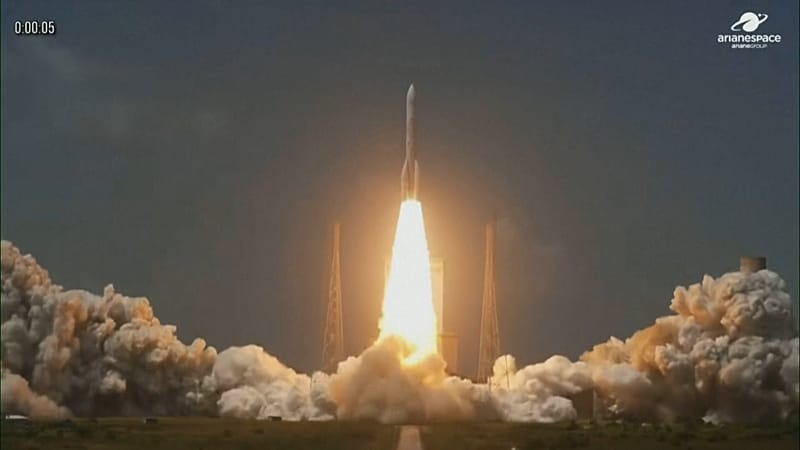
The most advanced version of Europe's Ariane 6 rocket was launched on Thursday, carrying 32 satellites for the Amazon Leo network. This initiative is designed to compete with Elon Musk's Starlink project, which has been making significant strides in the satellite internet market.
The Ariane 64, named for its four boosters, made its first launch from the European spaceport located in Kourou. This event marks a significant milestone for the European aerospace industry and highlights the growing competition in the global satellite deployment sector.
Amazon, a US-based company founded by billionaire Jeff Bezos, plays a crucial role as the primary commercial partner in the Ariane 6 program. Despite this collaboration, the Ariane 6 is often seen as a symbol of European technological independence in the space sector. The partnership between Amazon and the European Space Agency (ESA) underscores the importance of international cooperation in advancing space exploration and satellite technology.
The Ariane 6 program has received support from 13 nations, all of which are members of the European Space Agency. This collaborative effort demonstrates the commitment of European countries to maintain a strong presence in the space industry. Thursday's mission is expected to successfully place 32 Amazon Leo satellites into orbit, contributing to the expansion of the Amazon Leo network.
Key aspects of the Ariane 6 program include:
- Technological Innovation: The Ariane 6 represents a significant advancement in rocket technology, featuring improved efficiency and cost-effectiveness compared to its predecessors.
- Strategic Importance: The program is vital for Europe's ability to launch satellites independently, reducing reliance on other global space powers.
- Economic Impact: The development and operation of the Ariane 6 contribute to job creation and economic growth within the participating European nations.
The successful launch of the Ariane 64 is not only a technical achievement but also a strategic move that positions Europe as a key player in the global satellite internet market. With the Amazon Leo network aiming to provide high-speed internet access to remote areas, the collaboration between Amazon and the European Space Agency could lead to groundbreaking advancements in connectivity.
As the Ariane 6 program continues to evolve, it will be interesting to see how it impacts the broader landscape of space exploration and satellite technology. The partnership between private companies and government agencies highlights the potential for innovation when different sectors work together towards a common goal.
In addition to the technical and strategic benefits, the Ariane 6 program also serves as a platform for scientific research and technological development. The satellites deployed through this program can be used for various purposes, including weather monitoring, environmental studies, and communication services.
Overall, the launch of the Ariane 64 and the deployment of the Amazon Leo satellites mark a significant step forward in the quest for global satellite internet coverage. It reflects the ongoing efforts of European nations to assert their presence in the space industry while fostering international partnerships that drive technological progress.
