Astronomers uncover strange 'inside-out' solar system
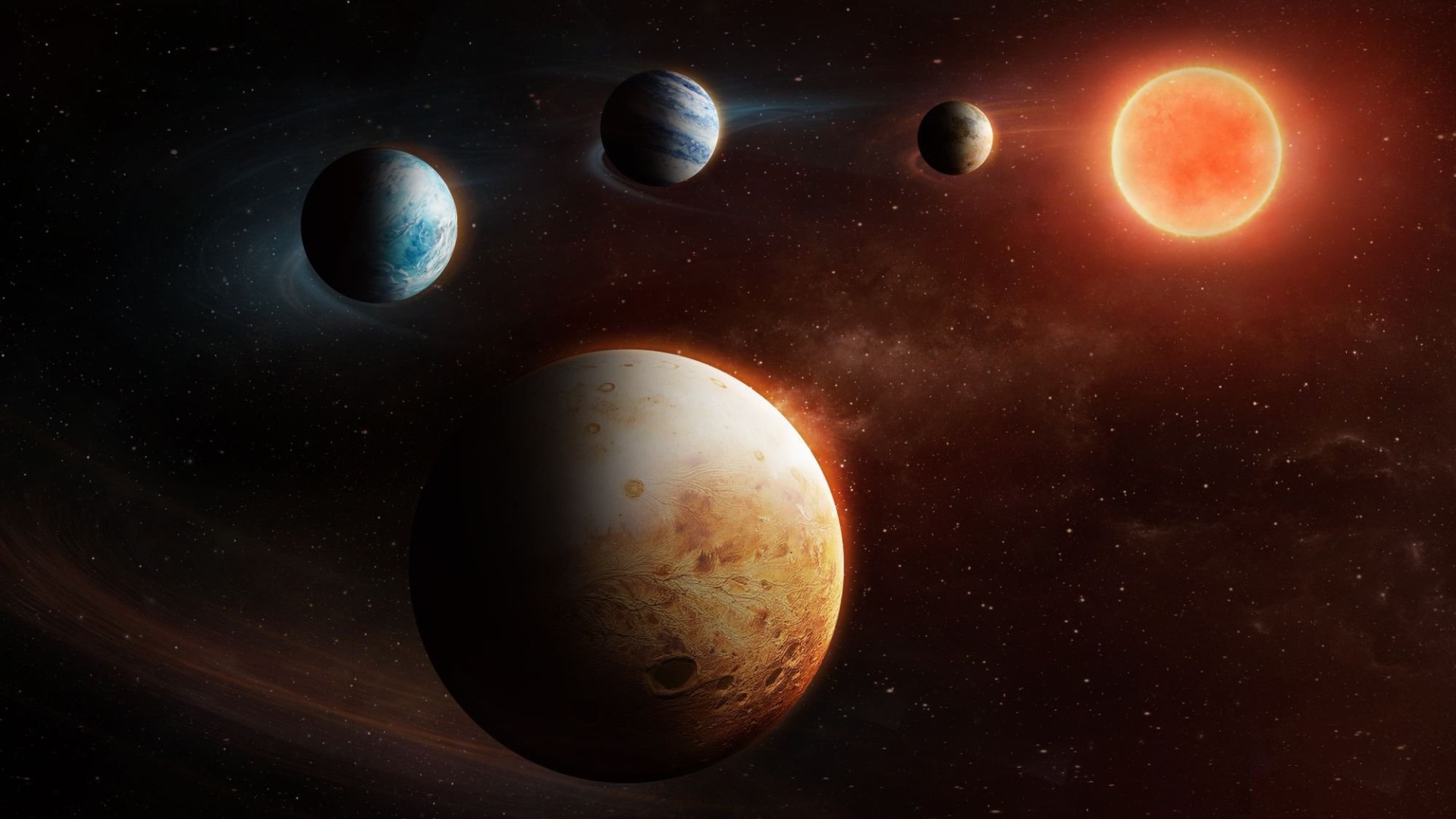
Scientists have made a groundbreaking discovery that challenges long-held assumptions about the structure of star systems. They've identified an "inside out" star system, which defies the typical pattern observed in most planetary systems.
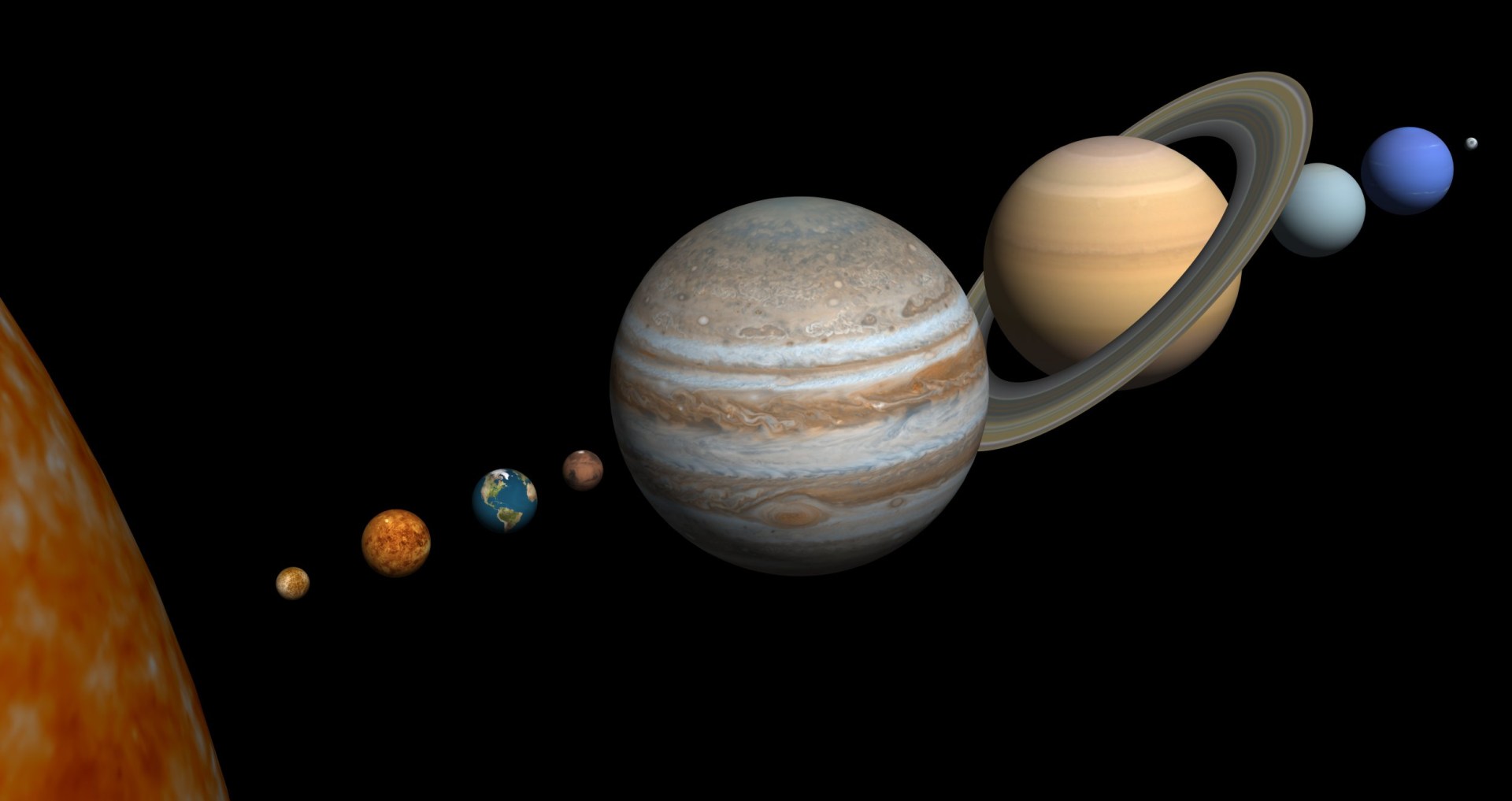
In our own solar system, the four planets closest to the sun are rocky, while the four farther away are gas giants. This arrangement—rocky planets near the star and gassy ones further out—is common in other star systems as well. However, a recent study has revealed a unique system located 116.27 light-years from Earth, where this pattern is completely reversed.
The system, named LHS 1903, consists of a red dwarf star orbited by three planets. The innermost planet is rocky, followed by two gas planets. What makes this system remarkable is the presence of a fourth planet, which was discovered by an international team led by Thomas Wilson from the University of Warwick. Unlike the others, this fourth planet is also rocky, not gassy.
Wilson explains that this discovery is significant because it challenges previous notions about how planetary systems form. He states:
“This system really opens up what a star system should look like. Before our study, we thought that smaller planets were only in the inner system and larger planets were further away. But now LHS 1903 breaks this thinking and unveils that a whole wide range of systems could be out there for us to discover.”
Why Is This Star System 'Inside Out'?
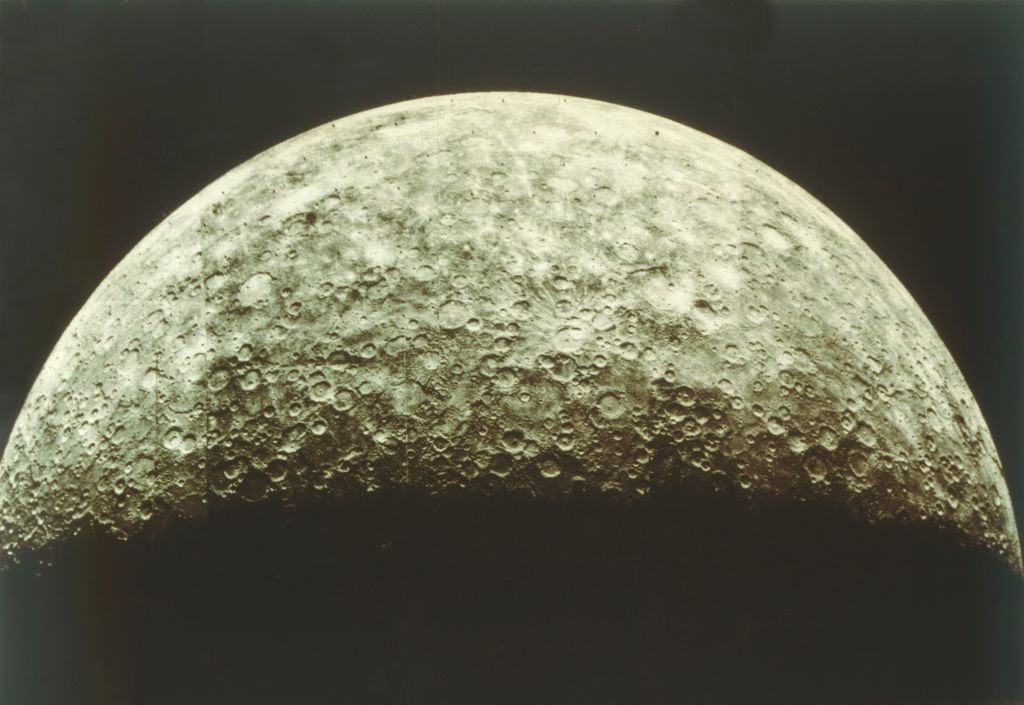
Stars emit radiation that can strip away a planet's atmosphere, especially if the planet is close to the star. Mercury, for example, is so close to the sun that its atmosphere is nearly nonexistent. In contrast, planets farther from the star can retain their atmospheres, leading to the formation of gas giants like Saturn or Uranus.
Despite being a red dwarf, LHS 1903 still emits enough radiation to affect its planets. So, why is the outermost planet in the system rocky rather than gassy?
Wilson and his team suggest that the fourth planet may have lost its atmosphere or never formed one in the first place. According to Wilson, the planets in the system likely formed in a process called "inside-out planet formation." This means that the planets were born at different times and in different environments, leading to variations in their characteristics.
To illustrate the significance of this discovery, Wilson compares it to a scenario where our solar system were inside out. He says:
“If Jupiter and Saturn were closer to the sun, they would gravitationally throw around the other planets, either out of the system, into each other, or into the sun. If Earth survived this, it’ll likely be very far from the Sun and so very cold.”
How Did Scientists Discover This?
The team used the European Space Agency’s CHaracterising ExOPlanet Satellite (Cheops) to identify this unusual system. While Cheops isn’t designed to find new exoplanets, it helps scientists better understand the properties of known ones.
Max Guenther, a project scientist at the European Space Agency, explains that determining whether a planet is rocky or gassy is more complex than it seems. He compares it to calculating a person’s body mass index (BMI):
“You measure a human in terms of size and mass but once you start to draw and describe the person, they become a person. What you see in the images is an interpretation of the actual measurements.”
The data comes from a technique called transmission spectroscopy, also known as the blink method. Guenther likens this to using a smartphone camera:
“Cheops is no different from a smartphone camera – just way more expensive and stable. If you take a photo on a cloud-free night, you’ll see white dots on a black background. That’s the same pictures that we’re taking.”
By taking multiple photos of the same area of the sky every 30 seconds, scientists can detect small changes in light caused by a planet passing in front of its star. These subtle shifts, sometimes as small as 1%, help identify potential exoplanets.
Additionally, astronomers can estimate a planet’s mass by observing how much it tugs on its star as it orbits. Combining these measurements allows them to determine whether a planet is rocky or gassy.
A New Era of Discovery
This discovery highlights the complexity of planetary systems and shows that our understanding of them is still evolving. While we once believed that all star systems follow a predictable pattern, LHS 1903 proves that this isn't always the case.
Guenther notes that being proven wrong is actually a positive outcome in science. He says:
“It doesn’t mean that everything is wrong. It just means it was too simplistic because we had limited data so far.”
As technology advances and more data becomes available, scientists will continue to uncover new and surprising discoveries about the universe. The LHS 1903 system is just one example of how much we still have to learn.
