Claude's Free Memory for All Users with Easy AI Switching Tool
The Challenge of Starting Fresh with AI Assistants
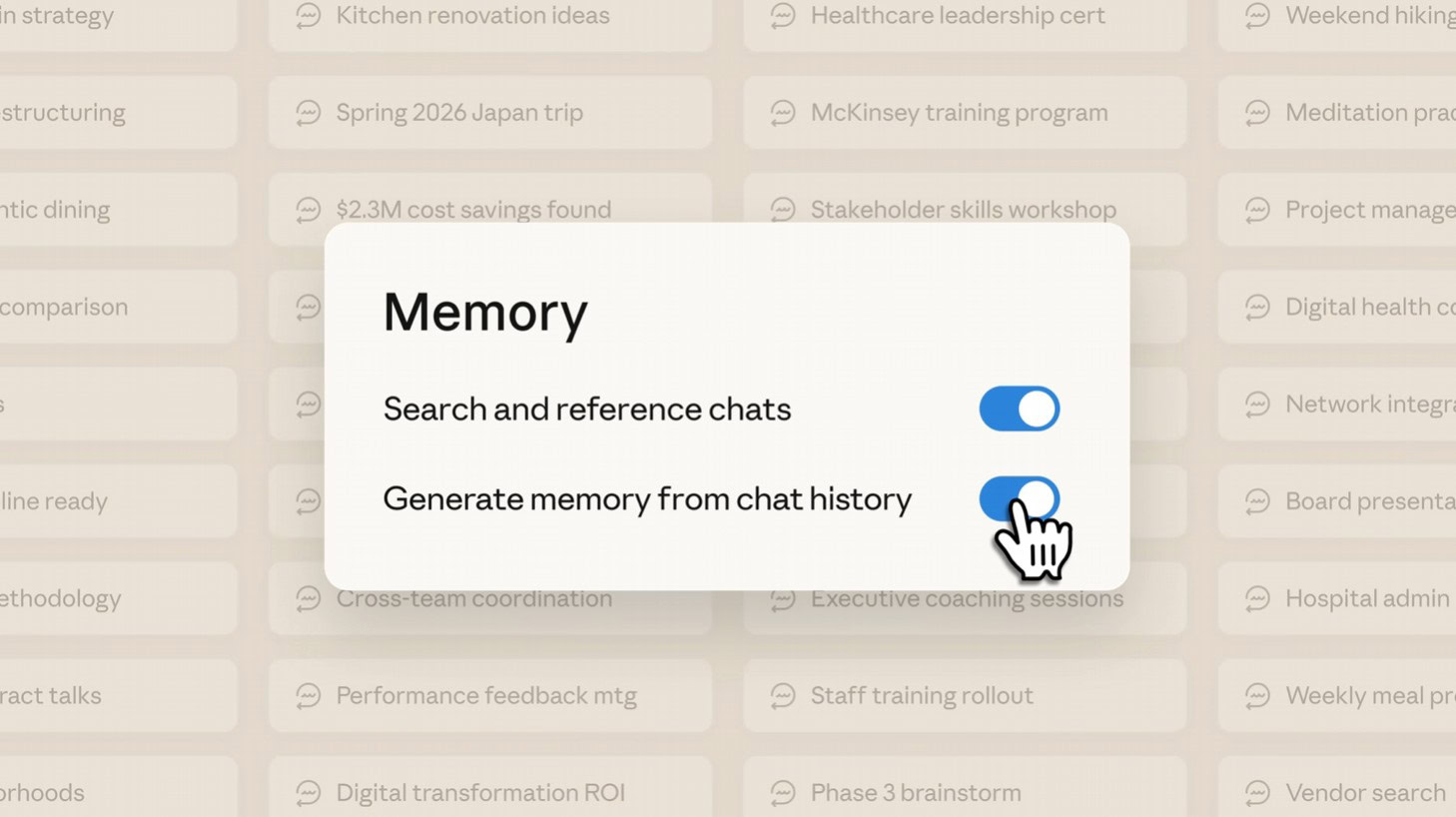
One of the biggest challenges when trying a new AI assistant is the “fresh start” problem. It can be frustrating to re-explain your job, your writing style, or your project goals to a new chatbot. This often keeps users locked into one ecosystem. Anthropic is now tackling this by rolling out its Memory feature to the free tier of Claude.
Previously a perk for paying subscribers, “Memory” allows the AI to remember your preferences and past interactions to provide more personalized answers over time. Interestingly, Google made a similar announcement for Gemini a few hours ago. However, Anthropic’s implementation also includes an “import tool” that allows you to move your interaction history with rival AI platforms to Claude.
A Digital Passport for Your AI Data
With the new memory import tool, Anthropic is essentially offering a “digital passport” for your AI data. The company has even provided a specific prompt designed to “extract” everything a competitor like ChatGPT or Gemini knows about you.
The process is surprisingly manual but effective: you paste a specialized prompt into your current chatbot, which then generates a code block containing your stored memories, preferences, and personal details. You then copy that block into Claude’s settings, and just like that, Claude is caught up on your life and work. It is the AI equivalent of porting your phone number to a new carrier.
How to Migrate Your Memory Data to Claude
The prompt you need for migrating your Memory data from other AI chatbots to Claude is below:
“I’m moving to another service and need to export my data. List every memory you have stored about me, as well as any context you’ve learned about me from past conversations. Output everything in a single code block so I can easily copy it. Format each entry as: [date saved, if available] – memory content. Make sure to cover all of the following — preserve my words verbatim where possible: Instructions I’ve given you about how to respond (tone, format, style, ‘always do X’, ‘never do Y’). Personal details: name, location, job, family, interests. Projects, goals, and recurring topics. Tools, languages, and frameworks I use. Preferences and corrections I’ve made to your behavior. Any other stored context not covered above. Do not summarize, group, or omit any entries. After the code block, confirm whether that is the complete set or if any remain.”
Momentum Amidst Controversy
This rollout comes at an interesting timing for Anthropic. The US Pentagon recently labeled it as a “supply chain risk” due to a dispute over military safeguards. However, Claude has seen a massive surge in popularity. The app recently hit the #1 spot on the US App Store’s free charts. Plus, the company reports that its free user base has grown by 60% since the start of the year.
So, the firm’s announcement does not seem to be a coincidence. Anthropic is actively trying to capitalize on this mainstream momentum. One of the best ways to achieve this is to make premium features like Memory and third-party connectors (such as Slack and Figma) available for free. They are betting that if they remove the friction of switching, users will choose Claude based on his performance and ethical branding rather than just habit.
Privacy and Control
Of course, giving an AI a “long-term memory” raises valid privacy questions. Anthropic has included tools to manage this: you can pause the memory feature at any time or completely delete your stored data from their servers.
For users, this move toward interoperability is a significant win. It forces the major AI players—Google, OpenAI, and Anthropic—to compete on the actual quality of their models rather than relying on user “lock-in.” If you’ve been waiting for a reason to see if the grass is greener on Claude’s side, the barrier to entry just disappeared.
