Europe's Energy Grid Struggles to Power AI Data Hubs
The Growing Energy Appetite of AI Data Centres
Every time you ask an artificial intelligence chatbot a question, a complex and energy-intensive process is set in motion. Somewhere across the globe, a warehouse filled with powerful computers works tirelessly to provide you with an answer. This process requires a staggering amount of electricity, raising concerns about the sustainability of such operations.
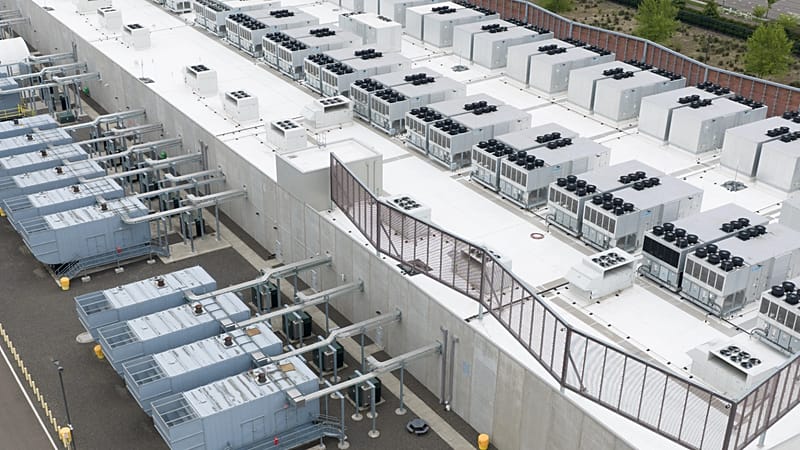
Data centres, which house the supercomputers and other components that power AI advancements, are essential in today's data-driven world. However, their increasing demand for energy is becoming a significant challenge. These facilities are expanding rapidly, both in number and size, leading to a surge in power consumption that matches their growth.
The United States currently leads the global data centre landscape, with approximately 5,400 facilities compared to around 3,400 in Europe. Despite this, Europe is making efforts to close the gap. However, doing so comes at a considerable energy cost, as the continent's electricity grid is already under pressure from existing demands.
A recent study by Maria Nowicka at Interface, a European energy and digital policy think tank, highlights the growing tension between Europe's AI ambitions and its energy infrastructure. The report warns that without urgent reforms, Europe's AI initiatives could become costly stranded assets, consuming excessive power and public funds while being overshadowed by more viable alternatives elsewhere.
The Power Consumption of AI Clusters
To understand the scale of energy use, consider that a typical European household consumes around 3,600 kilowatt-hours of electricity annually. In contrast, the data centre behind your AI assistant can consume the daily equivalent of tens of thousands of those homes before breakfast.
"The power capacity of top AI clusters is increasing from around 13 MW in 2019 to an estimated 280–300 MW for xAI's Colossus in 2025 — comparable to the demand of roughly 250,000 European households," the report explains. This level of consumption places immense pressure on the electricity grid, which was not designed to handle such large-scale demands.
Europe's electricity grid, a vast network of power lines, substations, and transmission infrastructure, is struggling to keep up with the rising energy needs of AI. When a single new facility demands hundreds of megawatts at once, it strains the entire system, potentially forcing costly upgrades and limiting access for other users.
The Impact on Grid Infrastructure
The energy required to train advanced AI models is also alarming. For instance, the training of ChatGPT-4 reportedly consumed around 46 GWh of energy — enough to power the entire Brussels Capital Region for over four days. As AI models become more sophisticated, their energy consumption is expected to rise significantly.
According to the International Energy Agency, global data centre electricity use is projected to more than double by 2030, largely due to AI workloads. Traditional server farms were built around modest, flexible power loads, but AI clusters require specialized chips running at near-maximum intensity for extended periods, behaving like "electro-intensive industrial plants connected to constrained grids."
Grid connection capacity, connection lead times, local congestion, and energy prices have already become binding constraints, delaying or redirecting large deployments despite initial investment interest.
Challenges in Key Markets
Nowhere is this issue more apparent than in Europe's most sought-after data centre markets, known as the FLAP-D cities: Frankfurt, London, Amsterdam, Paris, and Dublin. The queues for grid connections have grown so long that they have effectively become a ban on development.
"In the FLAP-D markets... new facilities wait on average 7 to 10 years for a grid connection, rising to 13 years in the most congested primary markets," the report states. Ireland has imposed a de facto moratorium on new data centres in Dublin until 2028, while the Netherlands and Frankfurt have effectively banned new connections until at least 2030.
The report notes that OpenAI has been "putting their UK and Norway investments on hold due to high electricity prices," indicating that even well-funded AI companies are facing challenges due to Europe's energy constraints.
What Needs to Change
Europe's electricity grid is already contending with the demands of electrifying transport and heating, the uneven rollout of renewables, and the risks of "tight gas and power markets," further strained by geopolitical conflicts. The report recommends integrating European facilities into national and EU grid planning from the outset, with siting decisions tied to renewable energy availability.
Piling on hundreds of megawatts of AI infrastructure risks making these challenges even more difficult and expensive. The long-term value and acceptability of large AI compute clusters will depend on whether they are conceived, regulated, and operated as critical energy infrastructure distinct from traditional data centres.
