Gen-Z's Critical Thinking Shines at a Rosalía Concert
A Night of Artistic Revelation
The stage setup before Rosalía’s first of two headline shows at the O2 Arena is a striking visual. It features the back of a huge canvas, bearing just her signature and the stamp of her 2025 album, Lux. As the audience waits impatiently for the concert to begin, many are left wondering what lies on the other side of this mysterious canvas—what the completed picture might look like.
Rosalía spends much of Lux questioning this very idea. I called it a masterpiece in my review last year, and I stand by that, not least after watching her perform it in real time. Set against a tremendous sonic palette that includes orchestra, flamenco, and traditional fado singers, these songs explore themes of faith, God, sainthood, love, lust, materialism, and sacrifice. The album demands study but never feels like homework. The 18,000 or so fans in attendance have clearly done theirs, as they sing along to lyrics in Spanish, French, Arabic, and Italian.
The Impact of Technology on Critical Thinking
In an era where AI and the widespread use of tools like ChatGPT have become commonplace, there is growing concern over our diminishing capacity for critical thinking. From university research to deciding what to order in a restaurant, technology has made it easier to rely on quick answers rather than deep analysis. This has led to a multi-generational decline in literacy and reading comprehension. There is more information than ever, but a fundamental lack of engagement or analysis remains.
Millennials and Gen-Z, who were raised with this technology, often bear the brunt of criticism. They are labeled as lazy, entitled, apathetic, bored, stupid, and vapid. Social media encourages us to think in binaries—emotion over reason—while nuance is rendered obsolete due to sensationalism, inane chatter on morning breakfast shows, and international outrage over insignificant events, such as two people caught embracing on a jumbotron or a celebrity rehoming their dog.
A Transcendent Experience
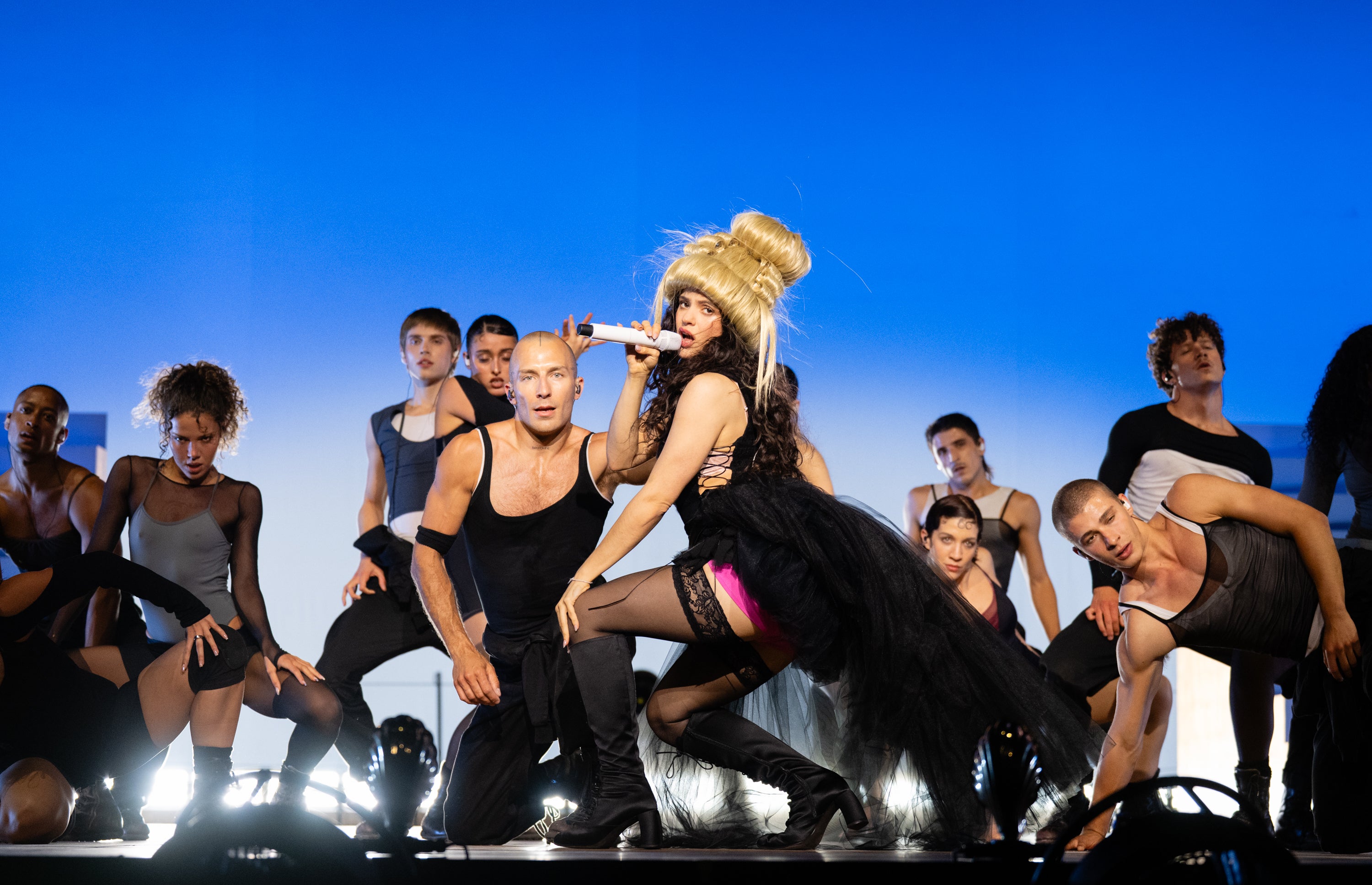
I cannot convey to you the transcendent joy of being in the audience for Rosalía’s show. Virtually every phone was stored away as she appeared onstage in a tutu and ballet shoes, with a live orchestra led by Cuban conductor Yudania Gómez Heredia before her, and surrounded by a superb troupe of dancers.
On the otherworldly “Divinize,” she sings in diaphanous falsetto about the idea that her own body is something sacred: “Each vertebra reveals a mystery/ Pray on my spine, it’s a rosary.” On “Reliquia,” over flurries of violin, she narrates pilgrimages around the world in which she lost and found parts of herself: “In Japan, I cried, and my eyelashes unraveled/ And in the City of Glass, that’s where I got my hair cut off/ But hair grows back, and purity too/ Purity is in me and it’s in Marrakech/ No, no, I’m not a saint, but I’m blessed.”
Far from lecturing or pontificating, Rosalía frequently engages with religion in a playful way. She sets up a confessional booth with guest star Lola Young, who proceeds to tell her about an older guy she was getting serious with, only to discover (via a Bluetooth speaker snafu) that he was married with kids. “What is… ‘doing the deed’?” Rosalía asks Young, eyes wide. The concept is clear: add a glass of wine and this would be any night out with your friends, ranting about your latest situationship. Is there so much difference between a Sunday confessional and your weekly congregation over cocktails?
A Balance of Depth and Humor
In a similar way, having silenced the arena during a spectacular vocal performance on “Mio Cristo Piange Diamanti,” she brings us back to earth with a bump for the waltzing “La Perla,” arguably the most eviscerating of any breakup song, with her withering assessments of an ex: “The local disappointment, national heartbreaker/ An emotional terrorist, the greatest disaster in the world.” Acknowledging her own indulgences (“I love things,” she said happily in one recent interview), she performs a dazzling rendition of “La Combi Versace” from Lux’s 2022 predecessor, Motomami, as well as “Saoko,” in which she takes ownership of her contradictions and her right to do as she pleases: “I’m very much me, I transform/ A butterfly, I transform/ Drag queen makeup, I transform.”
She steps into a picture frame, with a background emulating that of the Mona Lisa, and poses for a group of gawking tourists (her dancers), singing (of all things), Franki Valli’s “Can’t Take My Eyes Off You.” But then she walks out of it, climbing down to meet the others. She’s not a completed portrait. She’s like them, human, fallible. She’s a work in progress.
A Celebration of Human Experience
In the manner of the female saints she namechecks on Lux, Rosalía understands that real achievement demands practice, effort, sacrifice. Listening to Lux, and now watching her perform it live, reminds me what a joy it is to learn. She views music, and life, through the same lens of her faith: it requires dedication, passion, curiosity. She understands that this is the fundamental core of the human experience… or at least it should be. She celebrates that, encourages it in others. And that is something AI will never be able to replicate.
