Google broadens TPU sales as Nvidia leads in AI chips
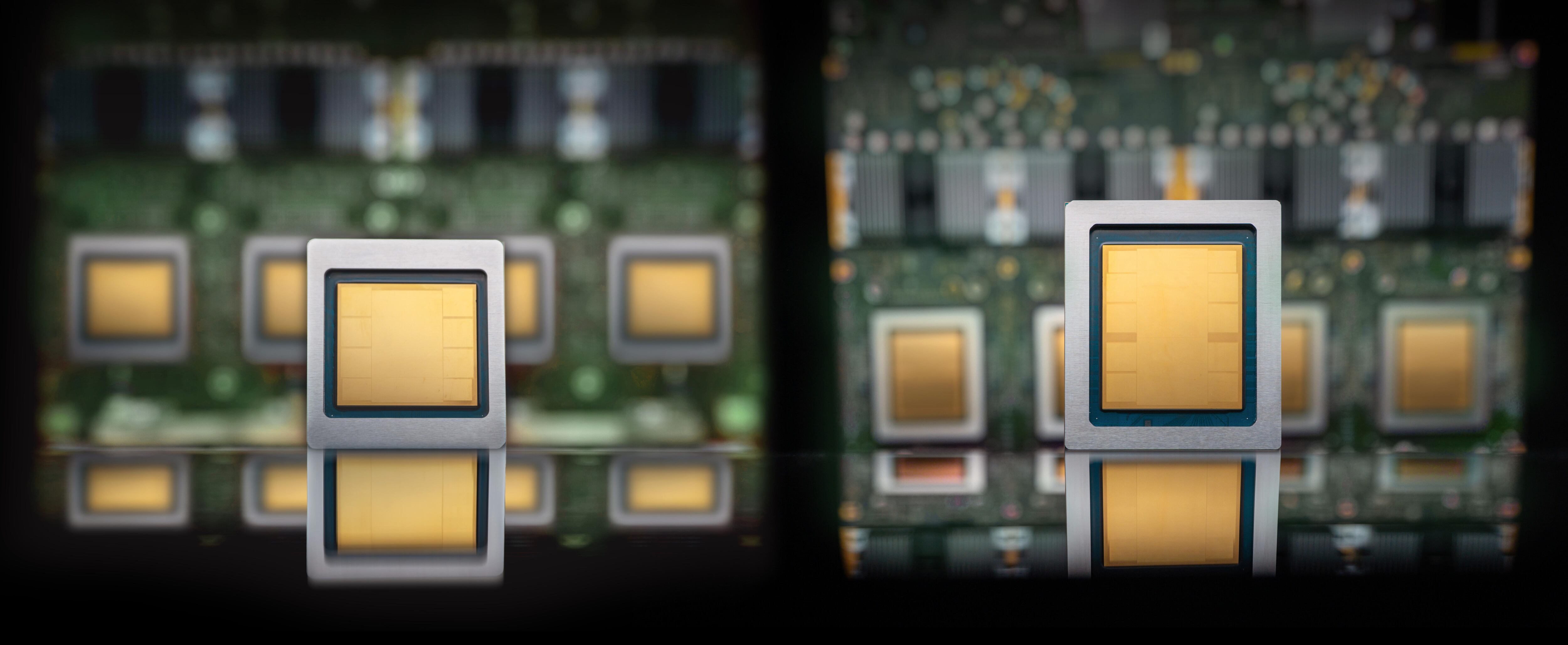
Major AI Data Center Operators Not Rushing to Adopt Google’s TPU
Major artificial intelligence (AI) data center operators have indicated that they do not plan to adopt Google’s proprietary AI chip, the Tensor Processing Unit (TPU), in the near future. While Google has announced the sale of its 8th-generation TPU models to external data centers after previously using them internally, many operators—especially those heavily reliant on Nvidia as a core supplier and investor—remain hesitant to embrace this new product.
Analysts believe that despite growing efforts by major tech companies to develop their own chips, Nvidia continues to hold a strong position in the AI chip market. According to reports, leading U.S. AI data center operators such as Nebius, Lambda, and CoreWeave have stated that they have no immediate plans to adopt TPUs.
Google had primarily used its self-developed TPUs internally for training and inference of its AI model “Gemini” until last year. However, following the success of “Gemini 3,” which outperformed competing AI models, Google officially expanded its TPU sales to external customers.
The market’s lukewarm response to Google’s expansion strategy is largely attributed to the continued high demand for Nvidia’s graphics processing units (GPUs), which dominate the AI chip market. Chuck Fisher, CFO of Lambda, made an overt reference to Nvidia’s signature color during an event when asked about TPUs, saying, “We have green blood at Lambda.” This statement highlighted the company’s reliance on Nvidia GPUs.
Marc Boroditsky, CRO of Nebius, revealed that 99% of his company’s customer demand is for Nvidia GPUs. Nick Robbins, vice president of corporate development at CoreWeave, also stated, “If 99% of the market wants GPUs, even if that demand drops to 90%, we’ll still focus on GPUs.”
Another factor contributing to the resistance against TPUs is what The Information refers to as the “Nvidia watch” phenomenon. The report noted that Nvidia is a key supplier and major investor for leading U.S. AI data center operators, all deeply tied to the company.
Nvidia’s dominance in the AI chip market is expected to remain unchallenged for the foreseeable future. While Google and other companies are developing in-house AI chips to compete with Nvidia, demand in the AI data center market remains concentrated on GPUs, and existing customers are strongly locked in.
Despite this, Google continues to push forward with its TPU sales strategy. According to reports, Google agreed in February with a major investment firm to establish a joint venture leasing TPUs to customers. Additionally, the company is discussing financing options with financial partners to create a special purpose vehicle (SPV) that would purchase and lease TPUs to clients.
Market Dynamics and Future Outlook
The reluctance of major data center operators to adopt TPUs highlights the challenges Google faces in breaking into a market dominated by Nvidia. While Google’s TPU technology is advanced, the entrenched relationships between data centers and Nvidia, along with the widespread use of GPUs for AI workloads, present significant barriers.
Moreover, the shift toward in-house chip production by major tech companies does not necessarily translate into immediate adoption of alternative chips like TPUs. Many data centers continue to rely on established suppliers due to factors such as compatibility, support, and cost-effectiveness.
As the AI chip market evolves, it will be interesting to see how Google’s efforts to expand TPU sales impact the broader landscape. For now, however, Nvidia’s grip on the market appears to be unshaken.
