New Mars Shortcut Could Cut Travel Time in Half
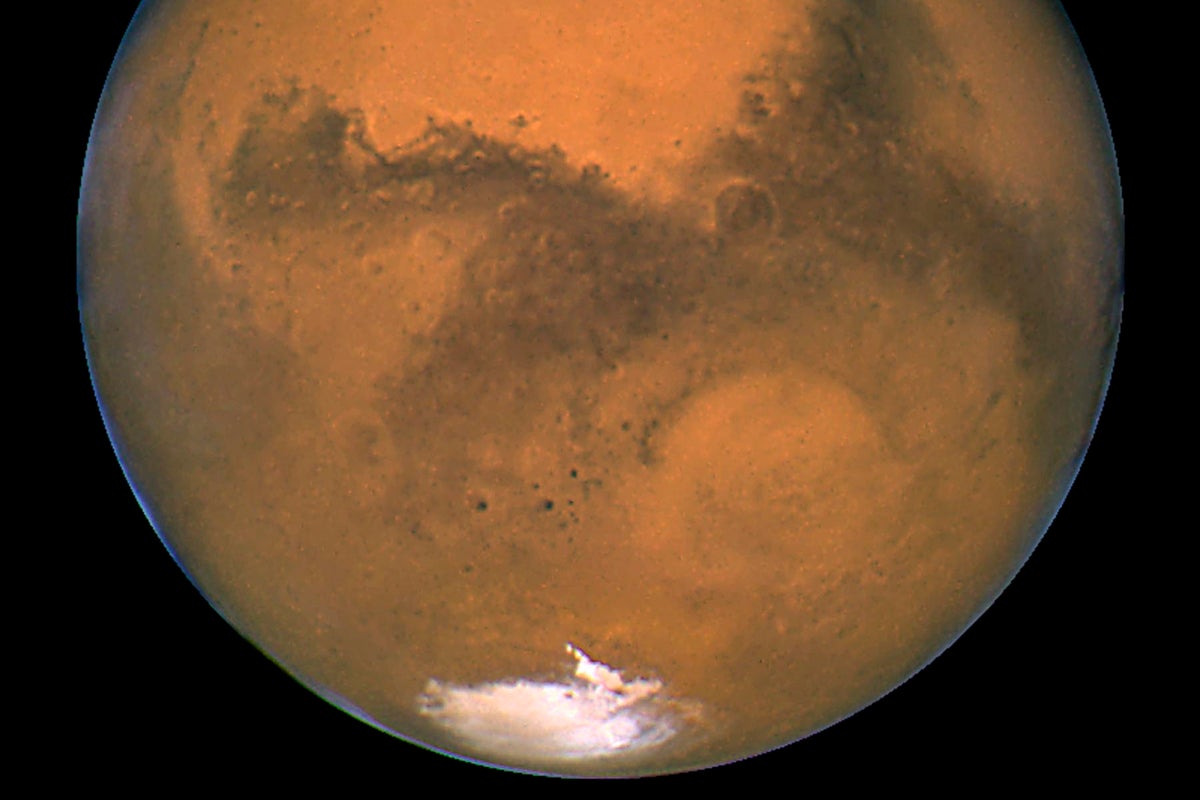
Astronomers have uncovered a potential shortcut that could significantly reduce the time required for a journey to Mars, utilizing a path previously taken by asteroids. This discovery could potentially save hundreds of days on future space missions, making interplanetary travel more efficient and feasible.
The distance between Earth and Mars is not constant; it fluctuates based on the orbital positions and velocities of both planets as they revolve around the Sun. The closest approach occurs during a phenomenon known as "Mars opposition," when Earth is directly positioned between the Sun and Mars. This event happens approximately every 26 months and represents the optimal window for launching missions to the Red Planet.
Even with the most advanced spacecraft currently available, a trip to Mars can take between seven and ten months. However, the newly discovered corridor, which becomes accessible during a close approach between the two planets, could cut this time down to just 153 days. This significant reduction in travel time could revolutionize future space exploration efforts.
Traditionally, space agencies plan planetary missions by analyzing the trajectory data of planets to determine optimal routes and fuel requirements. However, the latest discovery was made by studying the orbital data of asteroids, specifically the asteroid 2001 CA21. This asteroid's predicted path crosses the orbits of both Earth and Mars, making it an ideal candidate for further investigation.
Researchers focused on the asteroid's close approach to Mars, exploring whether a spacecraft could use this trajectory to take a more direct route to the planet. They then evaluated the Mars oppositions from 2027, 2029, and 2031 to identify the best conditions for a shorter mission. Among these, 2031 was found to offer the most favorable alignment between the Earth-Mars geometry and the asteroid's orbital plane.
"The 2031 Mars opposition supports two complete sub-year round-trip missions consistent with the CA21-anchored plane, illustrating how early small-body orbital data may contribute to the early identification of rapid interplanetary transfer opportunities," the researchers stated in a new study published in the journal Acta Astronautica.
From their analysis, two quick round-trip paths were identified: a 153-day rapid transfer corridor and a 226-day feasible path. These findings suggest that traditional methods of mission planning might overlook faster flight paths, highlighting the importance of alternative approaches.
"This study presents a novel geometric screening methodology for rapid interplanetary mission design," the researchers wrote, emphasizing the significance of their findings.
The team hopes that future studies of near-Earth asteroid paths will aid in the rapid design of interplanetary missions. By leveraging the orbital data of asteroids, scientists may uncover more hidden shortcuts in space, paving the way for more efficient and cost-effective space travel.
The Independent is the world’s most free-thinking news brand, providing global news, commentary and analysis for the independently-minded. We have grown a huge, global readership of independently minded individuals, who value our trusted voice and commitment to positive change. Our mission, making change happen, has never been as important as it is today.
